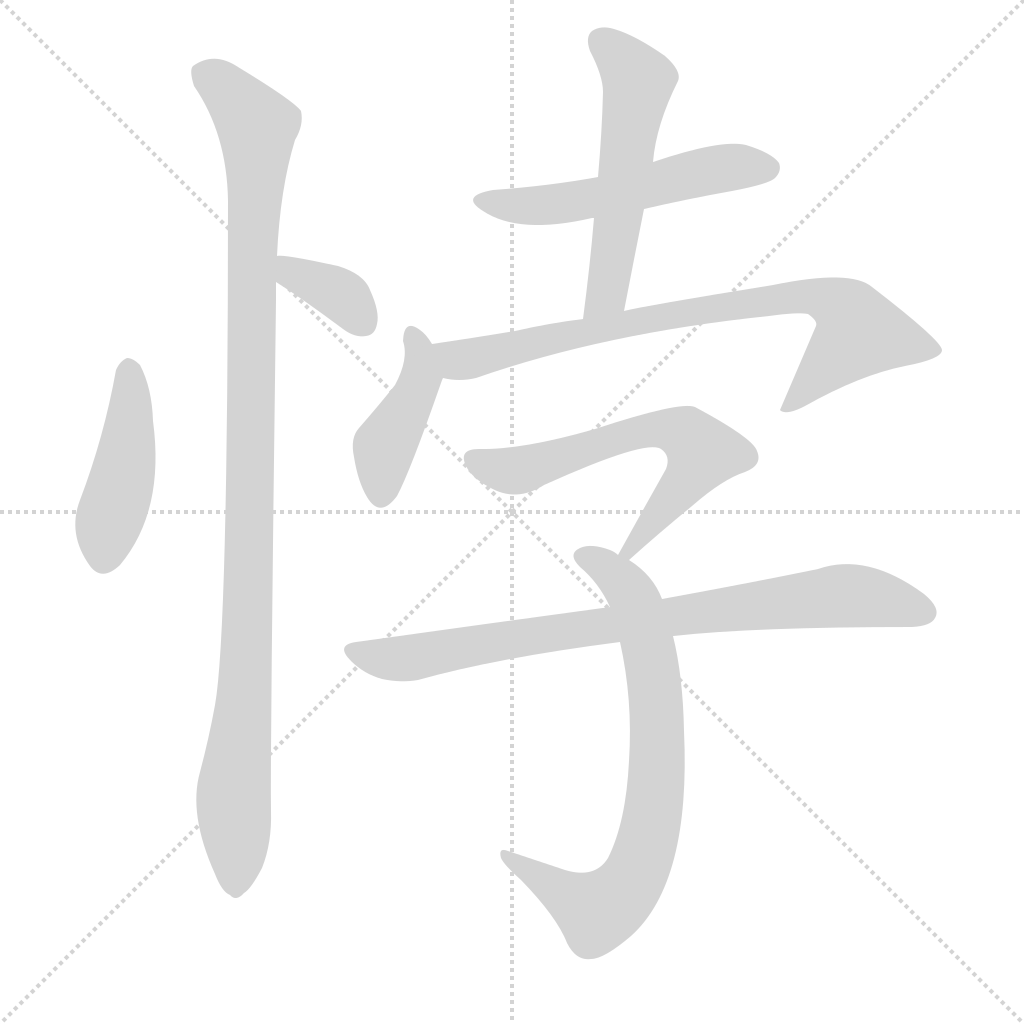
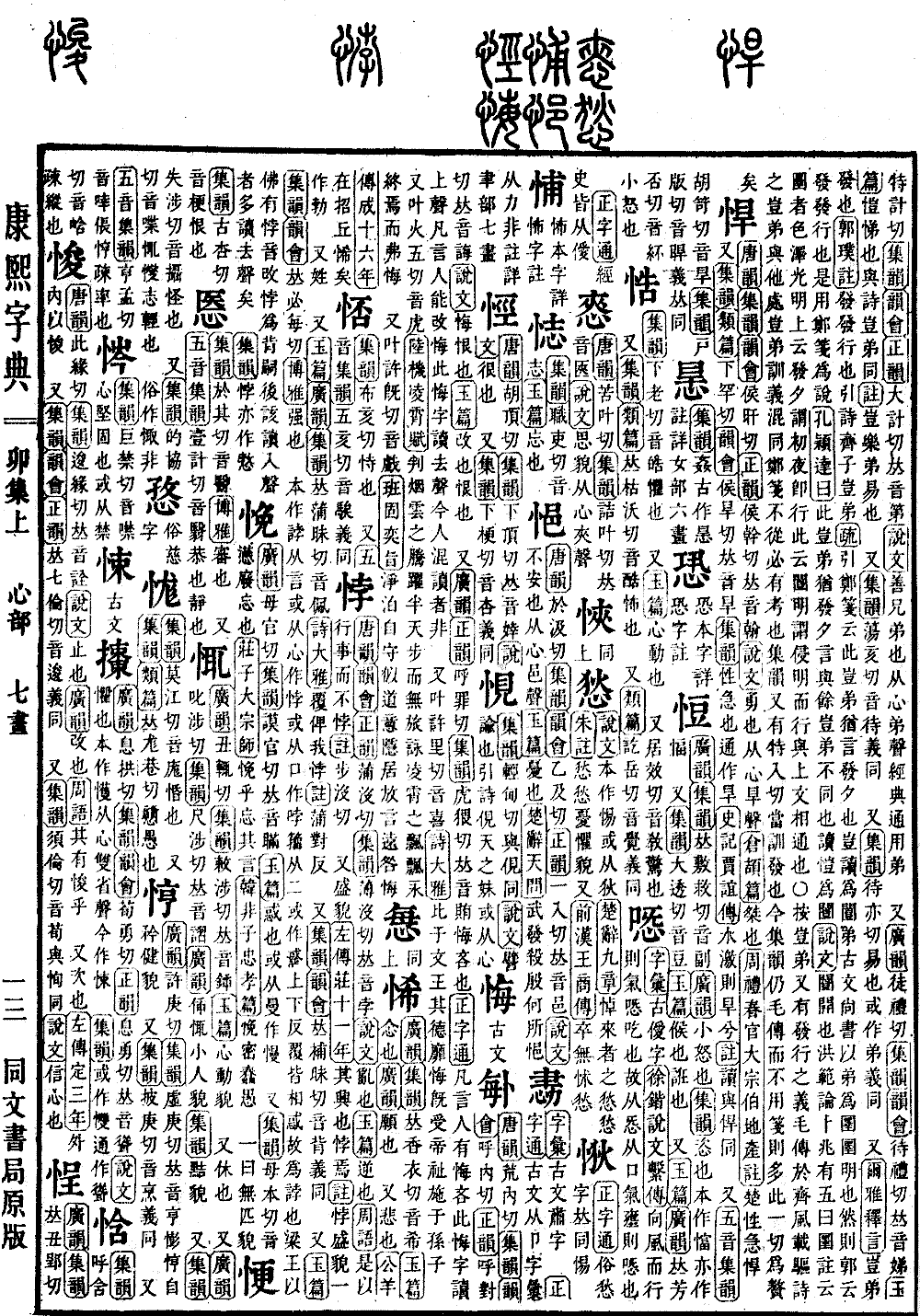
Mao Collection, Upper Volume
Radical: Heart (xīn)
Kangxi stroke count: 11
Page 387, Entry 22
Pronounced bo.
According to the Explanation of Simple and Compound Characters (Shuowen Jiezi), it means to be in chaos.
According to the Jade Chapters (Yupian), it means to be contrary.
According to the Discourses of the Zhou (Zhouyu), therefore the affairs of state are carried out without contradiction.
Also denotes a flourishing appearance.
According to the Zuo Commentary (Zuo Zhuan), Year 11 of Duke Zhuang, its rise is also flourishing. It is also written in the form bo.
Also a surname.
Pronounced pei (falling tone).
According to the Book of Odes (Shijing), Great Odes, it causes me to be unreasonable.
Pronounced bei (falling tone). The meaning is the same.
Pronounced mei.
According to the Expanded Gloss (Boya), it means strong.
The original form of the character was written with the speech radical, as bu. Some write it with the heart radical as bo, or with the mouth radical as bo. The ancient seal script form was written with two instances of the character huo, placed one above the other in an inverted orientation, representing mutual confusion, thus denoting unreasonableness. King Liang, because the word bo had an unrefined sound, changed bo to bei. Subsequently, many characters that should have been read with an entering tone were read with a departing tone.
The character bo is also written in the form bo.
Editorial note: Regarding the citation from the Discourses of the Zhou (Zhouyu), the phrase has been corrected to read affairs of state rather than state of affairs to align with the original text.