Zi Collection, Page Position: Lower
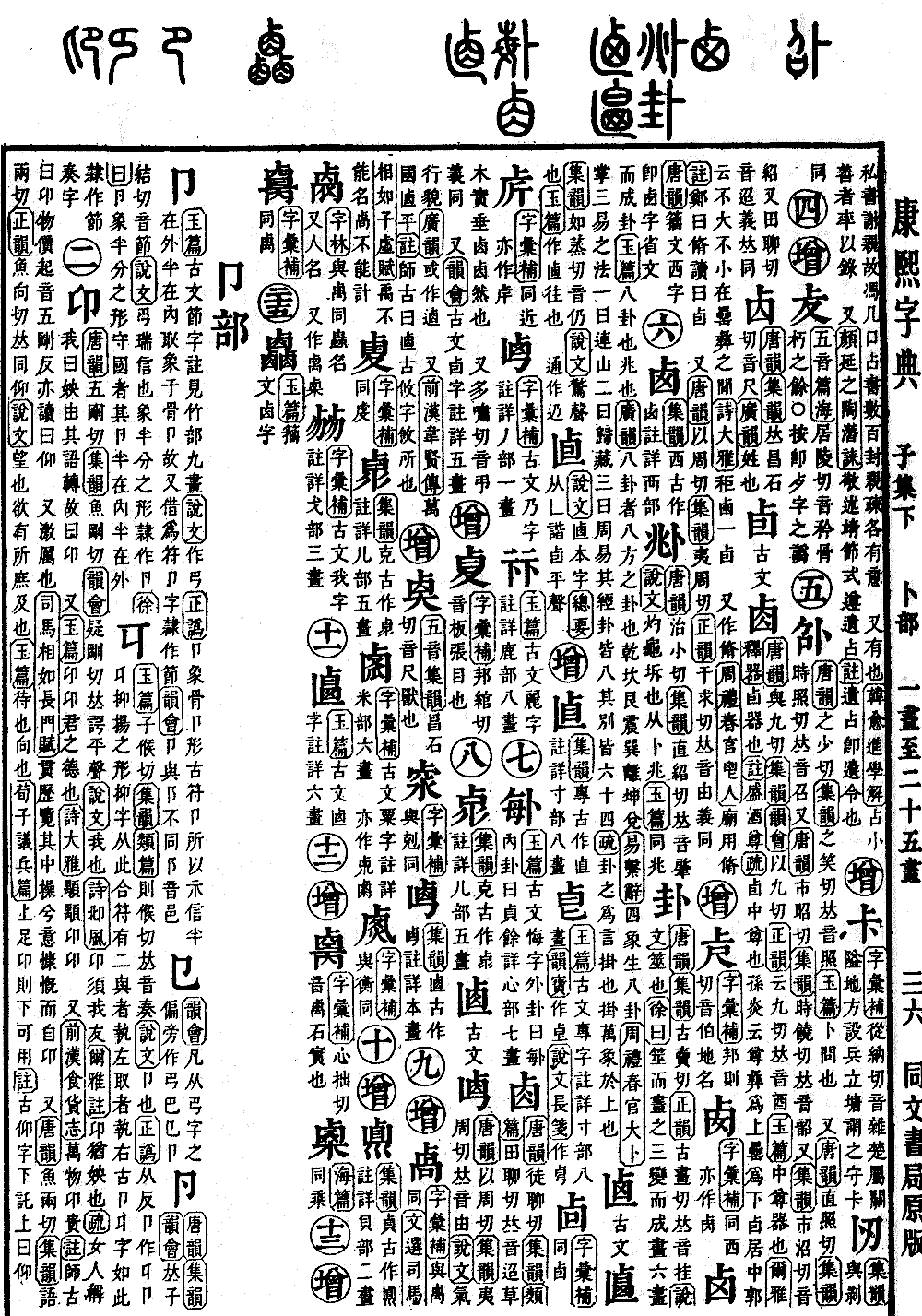
Radical: Kneeling Seal (jié)
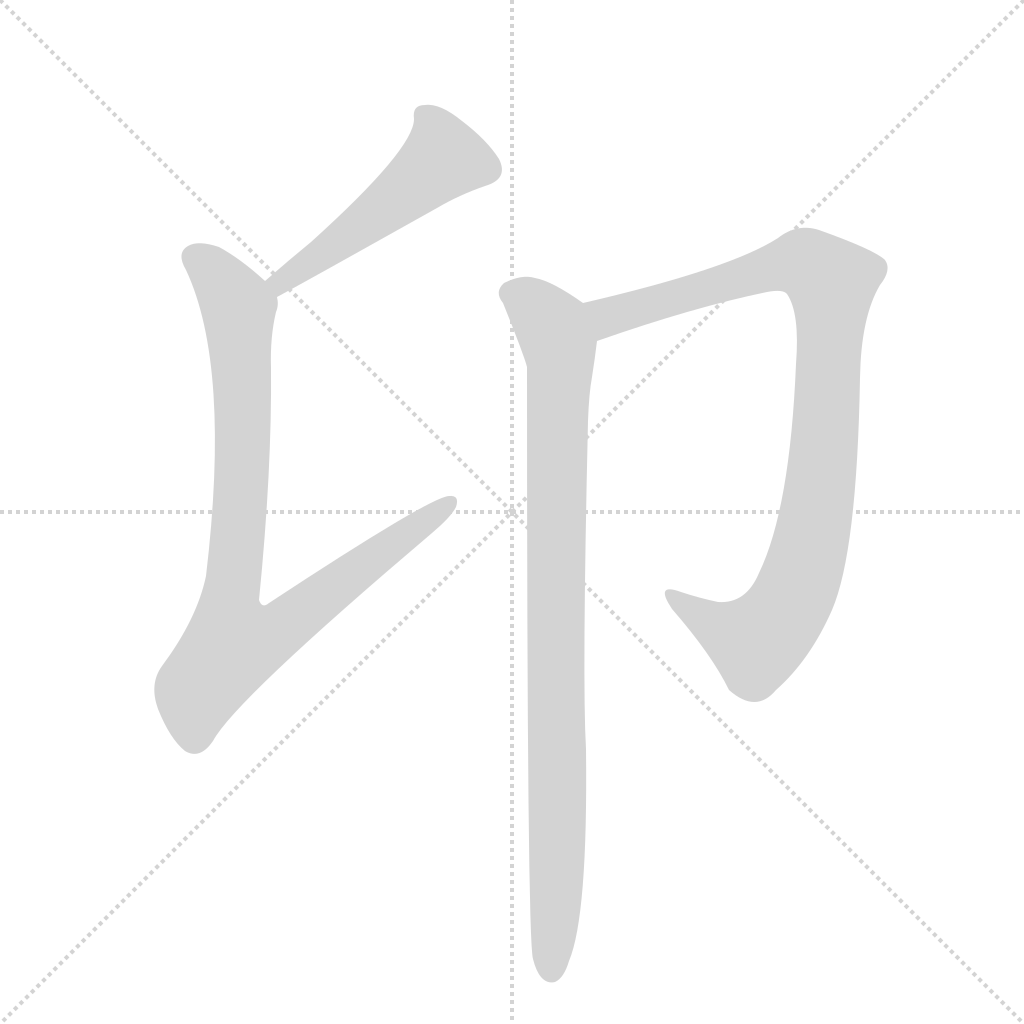
Character: 卬
Kangxi strokes: 4
Page: 158, Entry 49
According to Tang Rhymes (wǔ gāng qiē), Collected Rhymes (yú gāng qiē), and Rhyme Compendium (yí gāng qiē), it is pronounced with the level tone of è. Explaining Script and Analyzing Characters (Shuowen Jiezi) explains it as 'I' or 'me'. In the Odes of Bei from the Book of Odes (Shijing), it states: "I await my friends." The Commentary on Erya (Erya Zhu) says: "卬 is like 姎." The Sub-commentary explains: "When women refer to themselves as 'I' or 'me', it is 姎, and due to phonetic shift, it became 卬."
Also, the Jade Chapters (Yupian) records: When doubled as 卬卬, it refers to the virtuous conduct of a sovereign. In the Major Odes of Daya from the Book of Odes, there is the line: "With solemn dignity, grand and imposing."
Also, the Treatise on Food and Money in the Book of Han (Qian Hanshu) records: "All things became expensive." The Commentary by Yan Shigu states: "卬 refers to rising prices." Pronounced wǔ gāng fǎn, it can also be read as yǎng. It also has the meaning of encouragement or inspiration. In Sima Xiangru's Rhyme-prose on the Long Gate (Changmen Fu), it says: "Penetrating and reviewing her inner virtues, her spirit was fervent and self-inspired."
Also, according to Tang Rhymes (yú liǎng qiē), Collected Rhymes (yǔ liǎng qiē), and Zhengyun (yú xiàng qiē), it is pronounced the same as yǎng. Explaining Script and Analyzing Characters explains it as 'to gaze' or 'to hope'. It indicates hoping to achieve a certain degree. The Jade Chapters explains it as 'to wait' or 'to face towards'. In Xunzi's On the Use of Military (Yibing Pian), it states: "If the superiors are worthy of reliance, then the subordinates can be utilized." The Commentary states: "This is the ancient form of the character yǎng. When subordinates rely on their superiors, it is called yǎng."
A character form, often considered vulgar, is a variant of 卬. An incorrectly written character form also exists.