Wei Collection, Upper Volume
Radical: Bamboo (zhú)
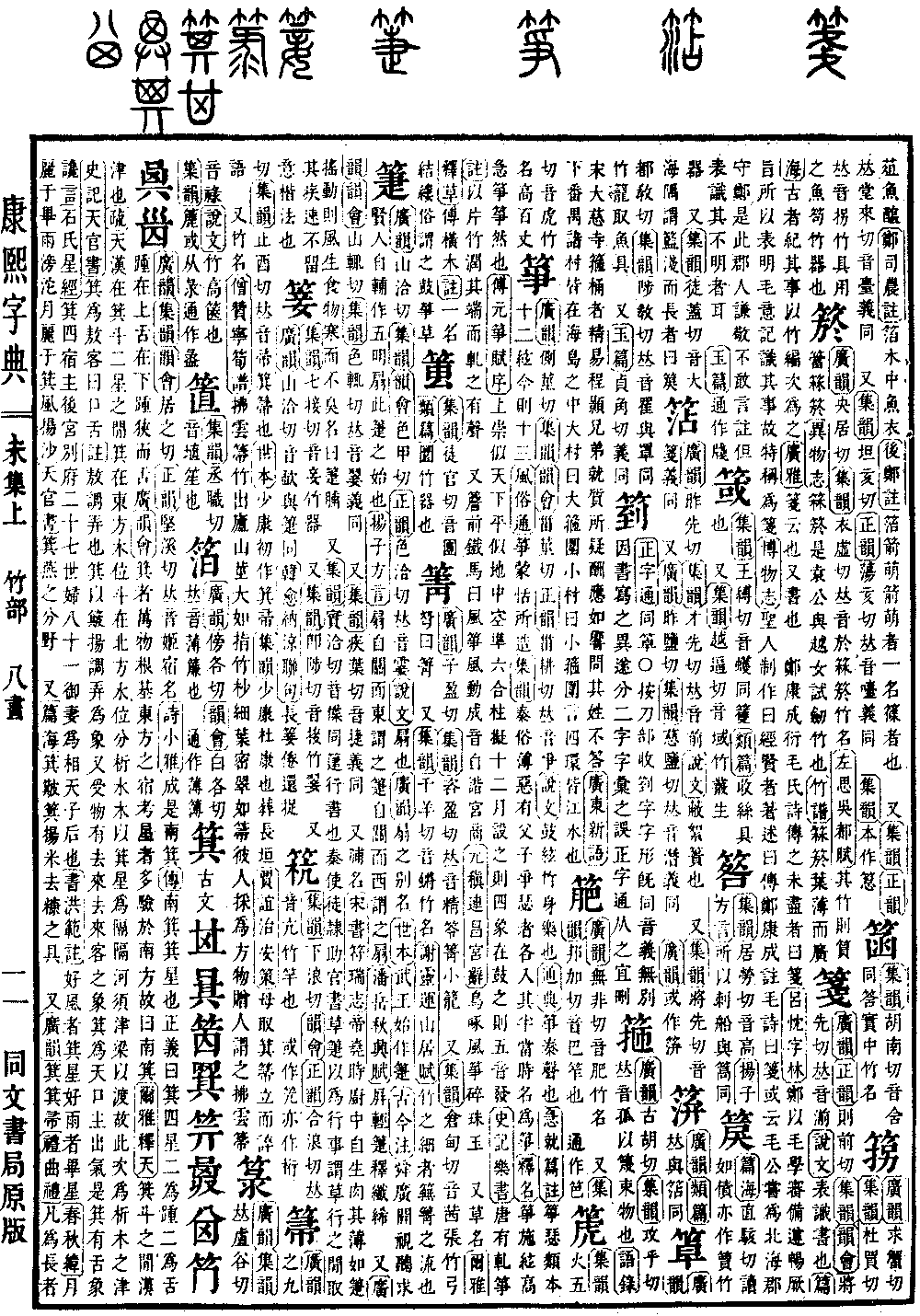
Zheng
Kangxi strokes: 14
Page 887, Entry 01
Guangyun: Pronounced zheng
Jiyun, Yunhui: Pronounced zheng
Zhengyun: Pronounced zheng
Shuowen: A type of plucked string instrument with a body made of bamboo.
Tongdian: The zheng is a musical instrument from the Qin region.
Jijiupian Zhu: The zheng belongs to the same category of instruments as the se (a large zither). It originally had twelve strings, but now it has thirteen.
Fengsutong: The zheng was created by Meng Tian.
Jiyun: The customs of the Qin region were considered shallow and base; it is said there was a father and son who fought over a single se, each taking half, which is why it was named zheng (a pun on the word for dispute).
Shiming: Zheng; the strings are mounted high and taut, producing a zheng-zheng sound when played.
Fu Xuan, Zheng Fu Xu: Its upper part is lofty like the sky, its lower part is flat like the earth, and its hollow center corresponds to the cardinal directions. The string bridges represent the twelve months; when set up, the four images of heaven and earth are fully present, and when played, the five musical notes are released together.
Records of the Grand Historian (Shiji), Treatise on Music (Yueshu): During the Tang dynasty, there was the ya-zheng (a bowed zither).
Note: Moistening the tip of a piece of bamboo and rubbing it against the strings produces the sound.
Additionally, the metal plates hung in front of eaves are called wind-zheng (kites). When the wind blows, they produce sounds that harmonize with musical scales.
Yuan Zhen, Lianchang Gong Ci: Birds peck at the wind-zheng, and the sound is as crisp as breaking jade.
There is also a type of grass.
Erya, Explanation of Plants (Shicao): Fu is a horizontal wooden bar.
Note: Also known as jie-lü, commonly called gu-zheng grass.