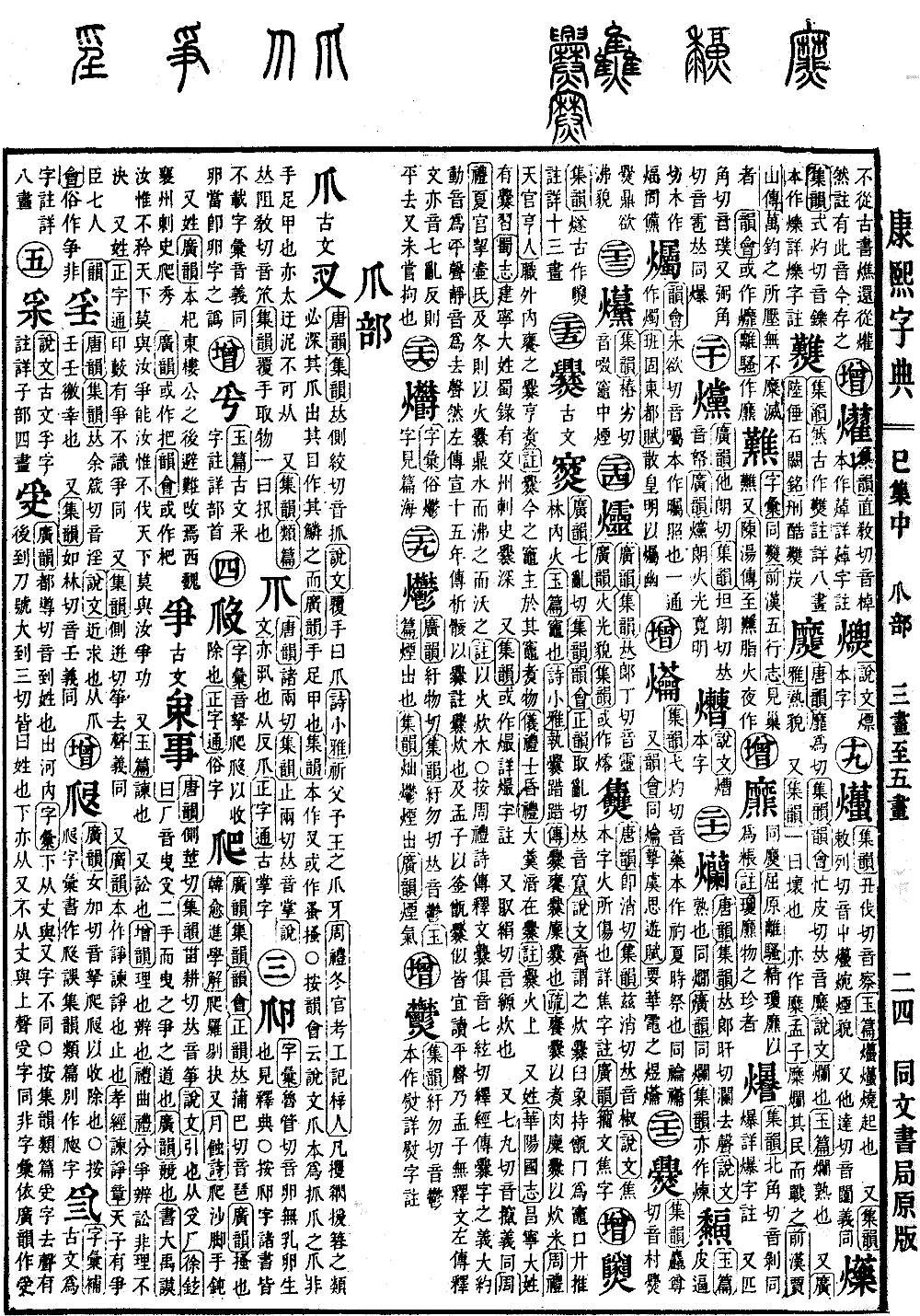
Si Collection, Middle Volume
Radical: Claw (zhǎo)
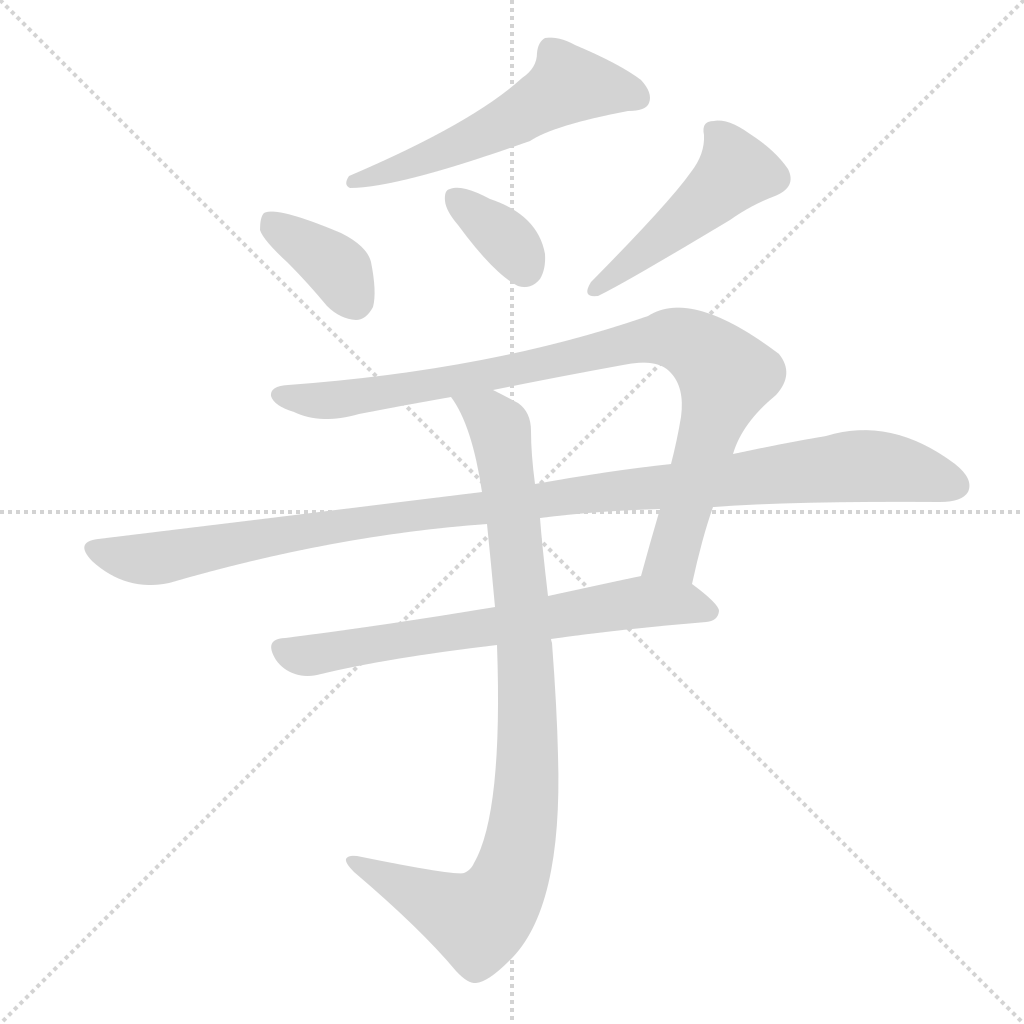
Character: Zheng
Kangxi strokes: 8
Page 688, Entry 33
Ancient form. Pronounced zheng. As stated in the Tang Rhyme (Tangyun), the pronunciation is zheng. As stated in the Collected Rhymes (Jiyun), the pronunciation is zheng. According to the Explaining Graphs and Analyzing Characters (Shuowen), it means to pull. Formed from the radical. Xu Xuan says the sound is ye. Two hands pulling it represents the principle of struggle. As stated in the Broad Rhyme (Guangyun), it means to compete. As stated in the Book of Documents (Shujing), specifically in the Counsels of the Great Yu (Da Yu Mo), it says: If you do not boast, none in the world will compete with you for ability. If you do not brag, none in the world will compete with you for merit.
Also, as stated in the Jade Chapters (Yupian), it means to remonstrate. It also means to litigate. As stated in the Expanded Rhymes (Zengyun), it means to reason or argue. As stated in the Book of Rites (Liji), specifically in the Summary of the Rules of Propriety (Quli), it says: Regarding disputes, arguments, and litigation, they cannot be settled without propriety.
Also a surname. According to the Correct Meaning Penetration (Zhengzitong), there is a seal mark with the character Zheng, which is an unidentified variant.
Also, as stated in the Collected Rhymes (Jiyun), pronounced zheng (falling tone). The meaning is the same.
Also, as stated in the Broad Rhyme (Guangyun), the original form is zheng, meaning to remonstrate or to restrain. As stated in the Classic of Filial Piety (Xiaojing), in the chapter on Remonstrance, it says: The Son of Heaven has seven ministers who remonstrate. According to the Rhyme Compendium (Yunhui), the common form zheng is incorrect.
Textual research: In the Book of Rites (Liji), Summary of the Rules of Propriety (Quli), the original text contains the word for propriety, not reason. The text has been corrected accordingly.