Wu Collection, Lower Volume
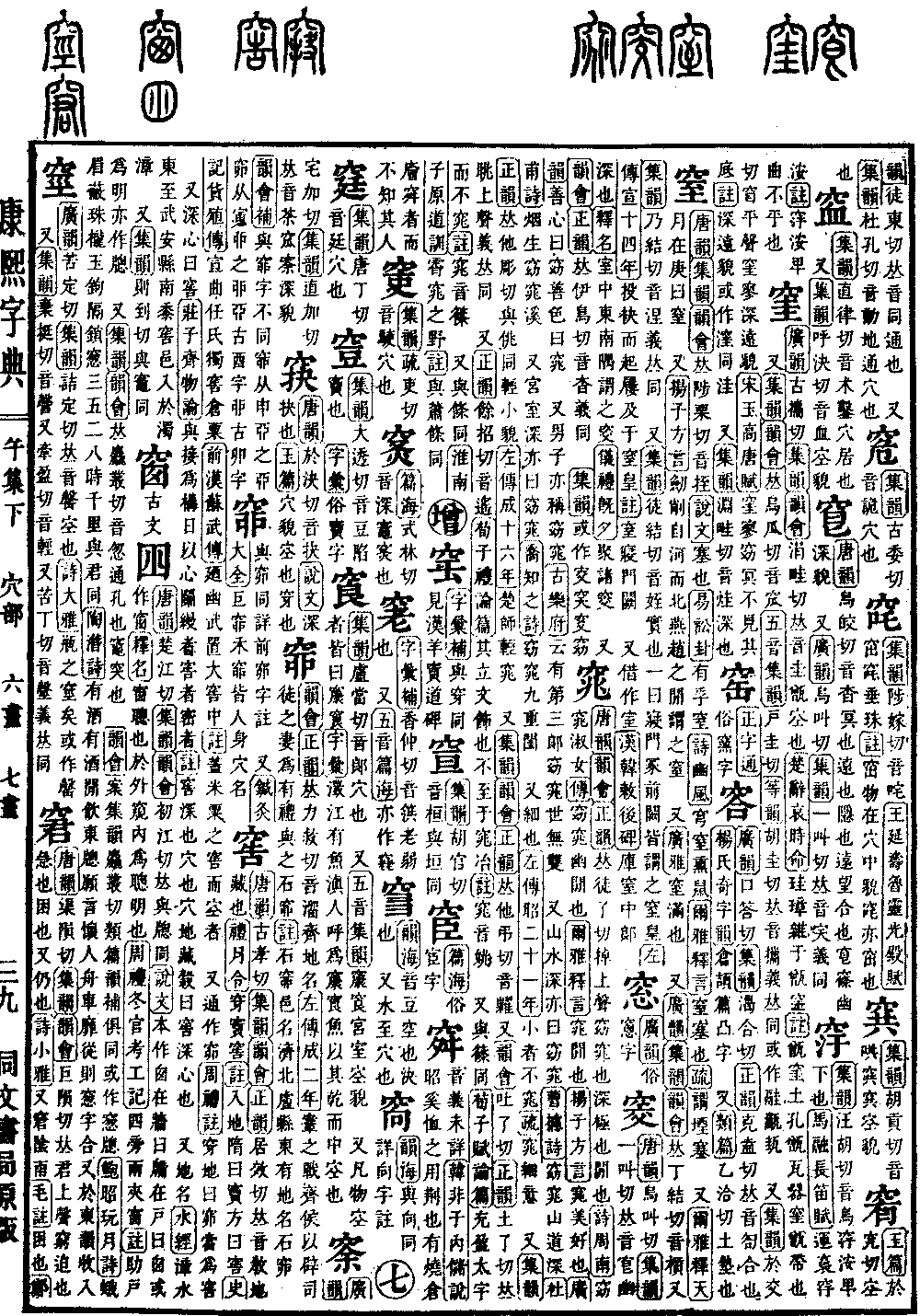
Radical: Cave (xué)
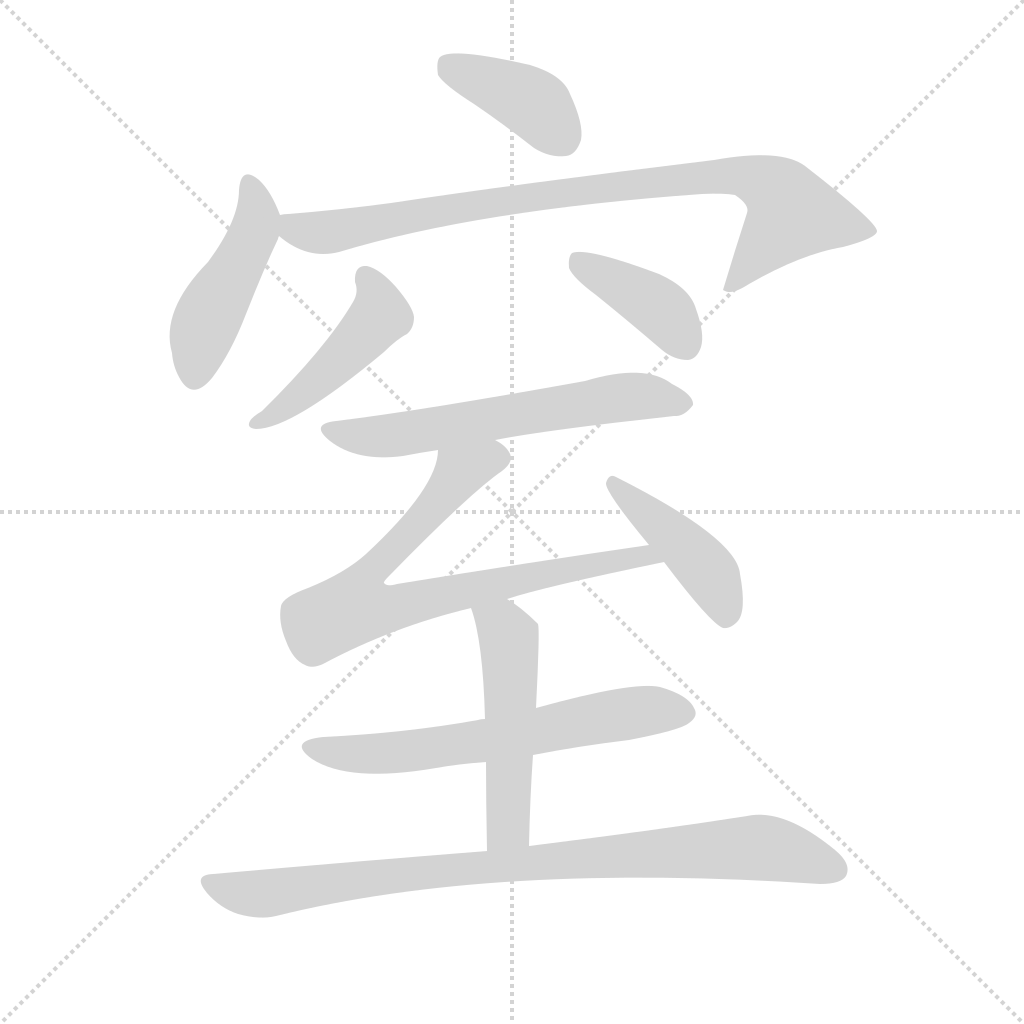
窒
Kangxi brush strokes: 11
Page 865, Entry 11
Tang Rhymes (Tangyun), Collected Rhymes (Jiyun), Dictionary of Rhymes (Yunhui): Pronounced zhi (falling tone).
Shuowen Jiezi: To block.
Book of Changes (Yijing), Litigation Hexagram: To have confidence and be blocked.
Book of Odes (Shijing), Odes of Bin: Vaulted and blocked with smoke.
Erya, Explaining Words: Zhi means to block or plug up. Commentary: It refers to filling and blocking.
Erya, Explaining Heavens: When the moon is in the Geng position, it is called zhi.
Yang Xiong, Regional Dialects (Fangyan): A sword sheath; from the Yellow River northward, in the regions of Yan and Zhao, it is called zhi.
Guangya: Zhi means to be full.
Guangyun, Collected Rhymes (Jiyun), Dictionary of Rhymes (Yunhui): Pronounced zhi (entering tone).
Collected Rhymes (Jiyun): Pronounced nie (entering tone). The meaning is the same.
Collected Rhymes (Jiyun): Pronounced zhi (entering tone). To fill. Another definition is the gate of a sleeping chamber or the space before a burial mound, both called zhihuang.
Zuo Commentary (Zuo Zhuan), 14th Year of Duke Xuan: He threw off his sleeves and rose, his sandals reached the zhihuang. Commentary: Zhihuang refers to the gate of a sleeping chamber.
Also used as a loan character for room.
Han Dynasty, Epitaph of Han Chi: Inner officer of the treasury and zhi.
Textual Research:
In the Zuo Commentary, 14th Year of Duke Xuan, the entry says: He threw off his sleeves and rose, his sandals reached the zhihuang. The commentary says: Zhi refers to the gate of a sleeping chamber. We have carefully added the character huang after zhi according to the original commentary.