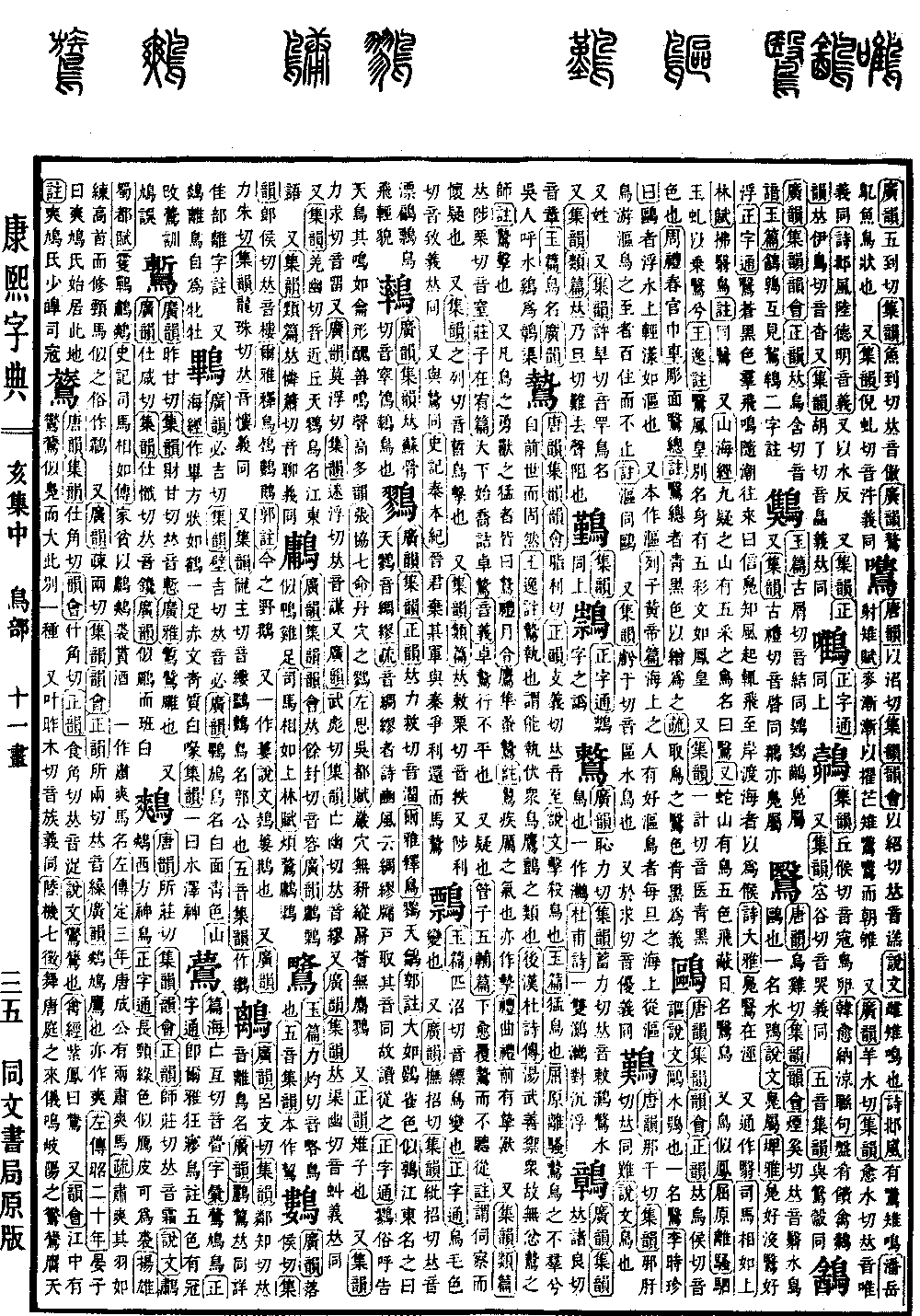
Hai Collection, Lower Volume
Radical: Bird (niǎo)
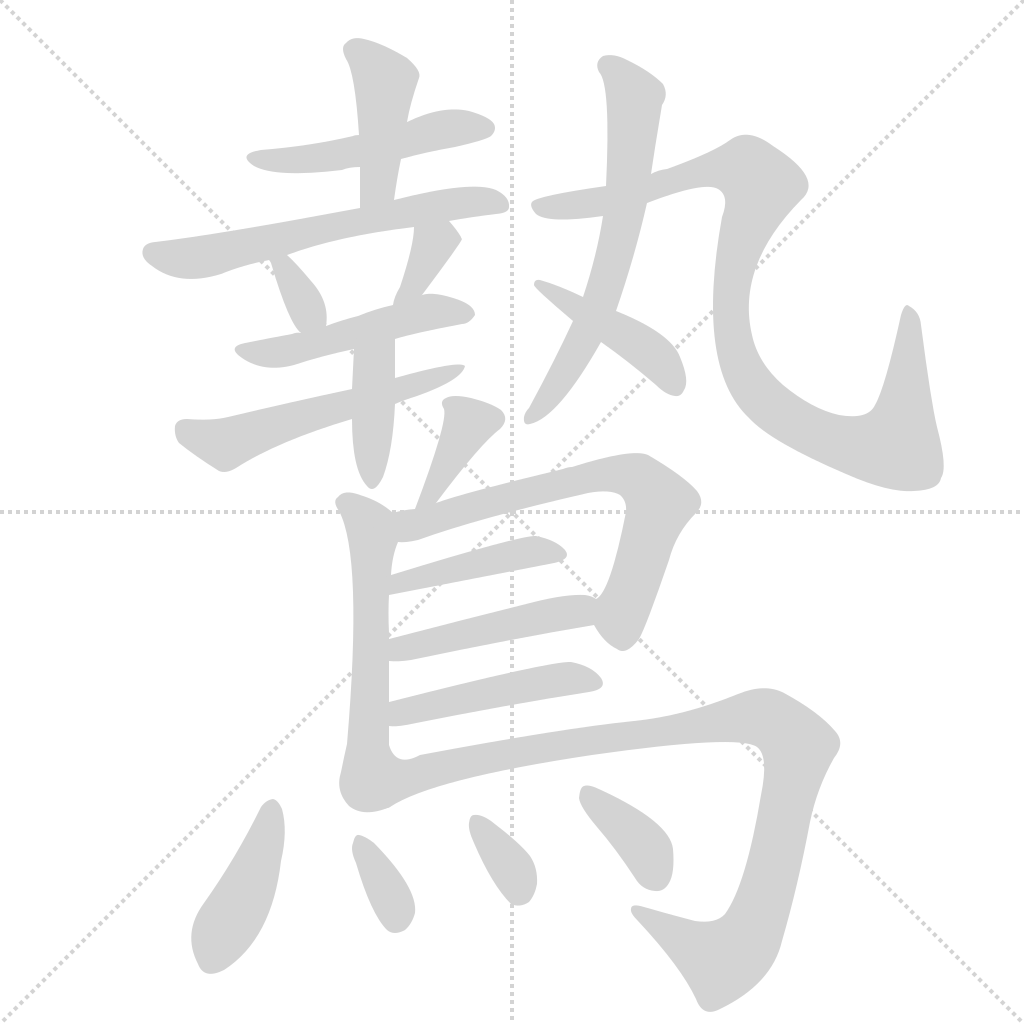
Character: Zhi
Kangxi strokes: 22
Page 1499, Entry 13
Pronounced zhi (falling tone).
Shuowen Jiezi (Dictionary of Explaining Characters and Analyzing Compounds): A bird that strikes and kills.
Yupian (Jade Chapters): A fierce bird.
Qu Yuan, Li Sao (Encountering Sorrow): The fierce bird does not flock, it has been so since ancient times.
Wang Yi commentary: Zhi means to seize. It refers to birds that can seize and subdue other birds, such as hawks or sparrowhawks.
Book of the Later Han (Hou Hanshu), Biography of Du Shi: Tang and Wu were skilled at leading the masses, therefore they did not have cruel or fierce armies.
Commentary: Zhi means to strike. Also, any bird that is brave or any beast that is fierce is called zhi.
Book of Rites (Liji), Monthly Ordinances: The hawk and falcon strike early.
Commentary: Zhi refers to a swift and harsh energy.
Also written in a variant form (zhi).
Book of Rites (Liji), Summary of the Rules of Propriety: In front, there are beasts of prey.
Also means to butt or resist. Zhuangzi, chapter Horse Hooves: Horses know how to arch their necks and endure the yoke, struggling and resisting. Li Yi commentary: Zhi means to resist.
Also, as per Jiyun (Rhymes of the Collections) and Leipian (Classified Chapters), pronounced zhi (entering tone).
Zhuangzi, chapter Embracing and Letting Be: The world began to be distorted, contentious, and fierce.
Commentary: Zhuozhi refers to conduct that is not level or upright.
Also means suspicious. Guanzi, chapter Five Auxiliaries: The subordinates become increasingly deceitful, suspicious, and disobedient.
Commentary: This refers to watching stealthily and harboring suspicions.
Also, as per Jiyun (Rhymes of the Collections), pronounced zhe. To strike as a bird does.
Also, as per Jiyun (Rhymes of the Collections) and Leipian (Classified Chapters), pronounced chi.
Also, pronounced zhi (falling tone). The meaning is the same.
Textual Research: Also equivalent to ao (proud/unruly). Records of the Grand Historian (Shiji), Annals of Qin: The ruler of Jin abandoned his army and contended with Qin for profit, and upon returning, his horses stumbled. Note: The Records of the Grand Historian does not use the character zhi here. Now, following the previously mentioned citation from the Book of Rites, Summary of the Rules of Propriety regarding beasts of prey, we have added the definition of to butt or resist. Zhuangzi, chapter Horse Hooves: Horses know how to arch their necks and endure the yoke, struggling and resisting. Li Yi commentary: Zhi means to resist.