Wei Collection, Lower Volume
Radical: Meat (ròu)
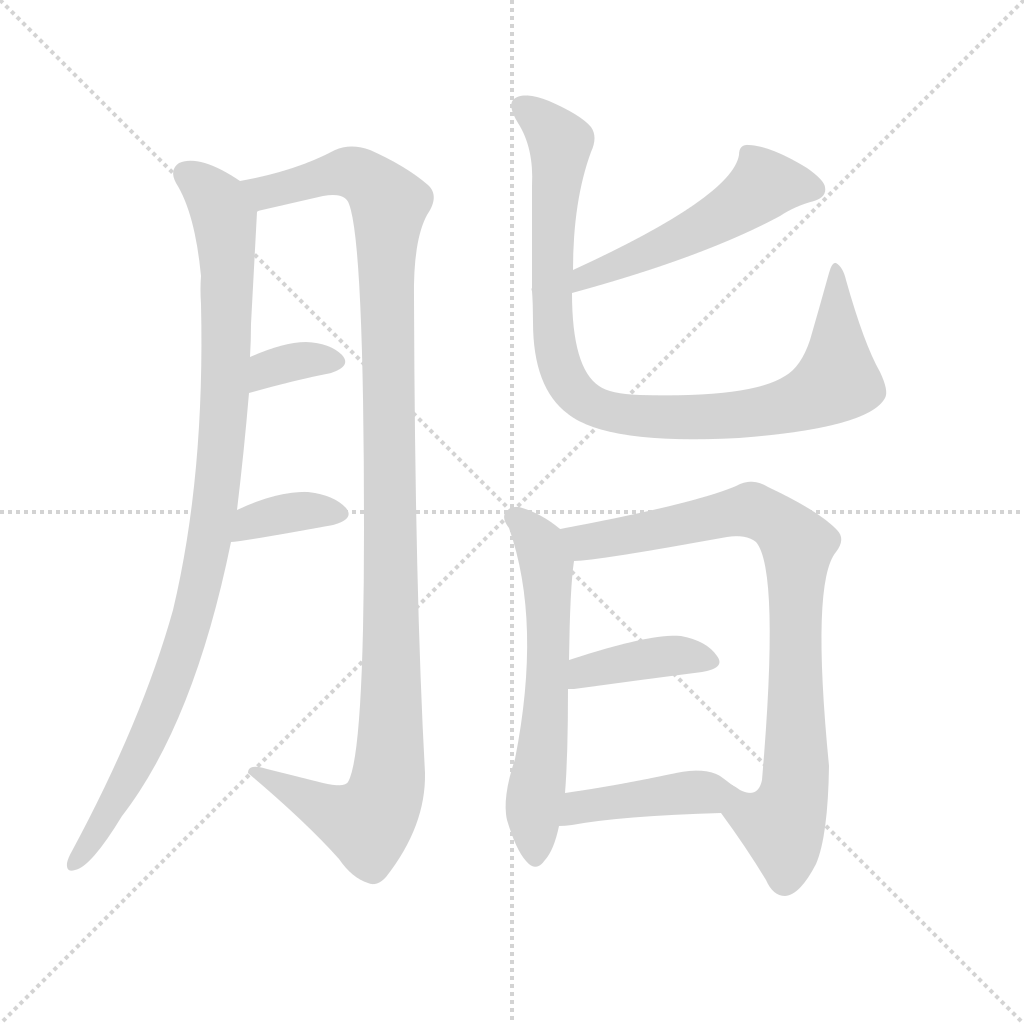
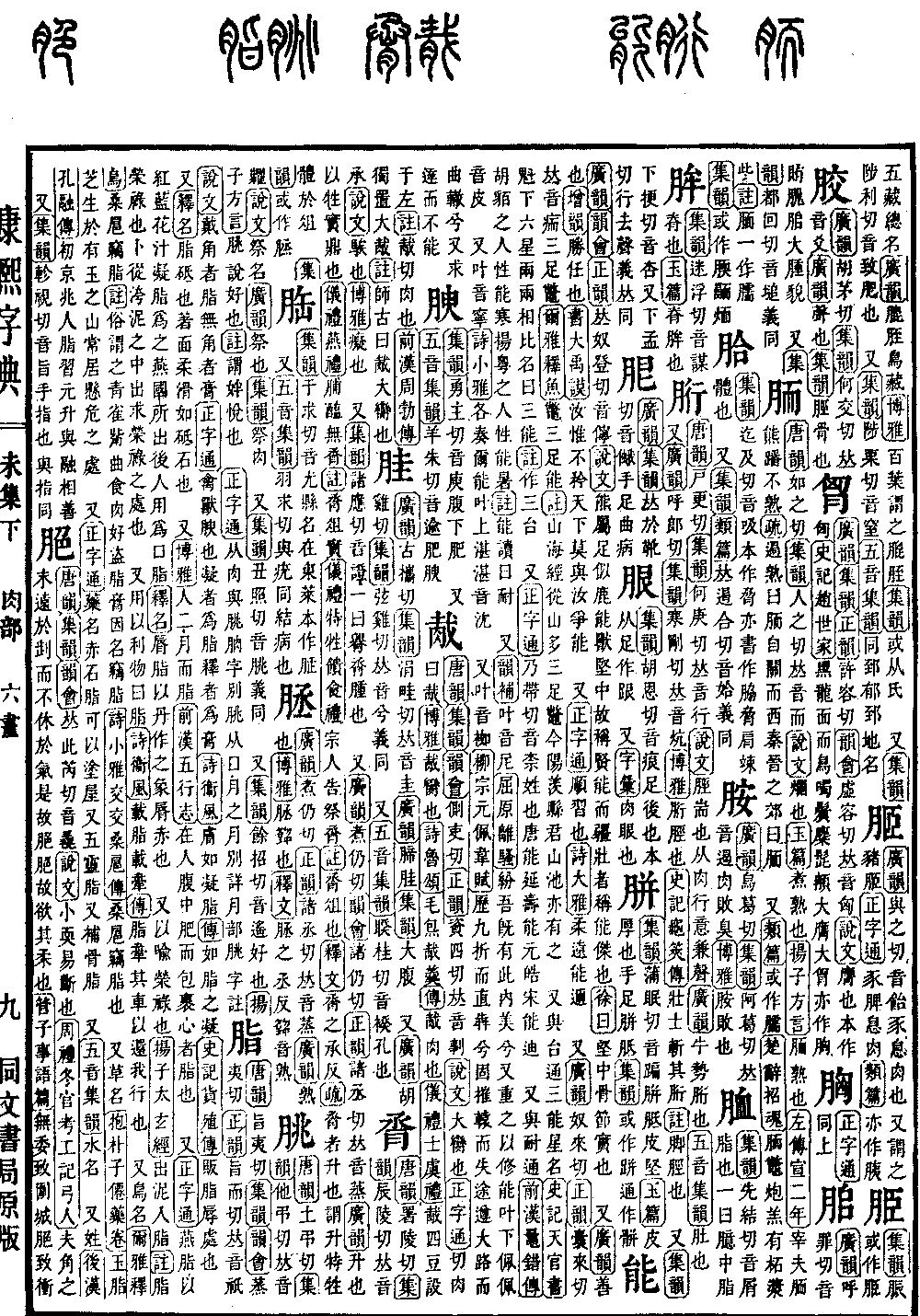
脂
Kangxi Strokes: 12
Page 981, Entry 24
Pronounced zhi.
According to the Explanation of Characters (Shuowen), that which has horns is called fat, that without horns is called grease.
According to the Comprehensive Dictionary of Correct Characters (Zhengzitong), it is the fat of birds and beasts. That which coagulates is called fat, that which is fluid is called grease.
In the Book of Odes (Shijing), in the Odes of Wei, it is written: Skin like coagulated fat. The commentary states: Like fat that has set.
In the Records of the Grand Historian (Shiji), in the Biographies of Money-makers (Huozhuan), it mentions trading in fat as a degrading profession.
Also, according to the Explanation of Names (Shiming), fat is like a whetstone, making the face smooth and slippery like a whetstone.
Also, according to the Guangya, humans develop fat in the second month.
In the History of the Former Han (Qianhan), in the Treatise on the Five Elements, it states that in the human abdomen, that which is fat and wraps around the heart is called fat.
Also, according to the Comprehensive Dictionary of Correct Characters (Zhengzitong), rouge is made from the juice of safflower and coagulated fat, originating in the State of Yan. Later generations used it as lip balm.
According to the Explanation of Names (Shiming), lip balm is made with cinnabar to resemble the redness of lips. It is also used metaphorically for glory and salary.
In the Great Mystery (Taixuan) by Yangzi, it says: Exiting the mud and entering the fat. The commentary states: Fat represents glory and salary; it means divining that one exits the filth of the mud to seek a position of glory and salary.
Also, using it to grease objects is called fat. In the Book of Odes (Shijing), in the Odes of Wei: Greasing the lynchpin. The commentary states: Greasing the lynchpin of the carriage to facilitate our journey.
Also, a type of bird. According to the Erya, in the Explanation of Birds: The sanghu is called the qiezhi. The commentary states: Popularly known as the green sparrow, it has a curved beak, eats meat, and likes to steal fat and grease, hence it is called qiezhi (stealing fat).
In the Book of Odes (Shijing), in the Lesser Odes of Jing, the commentary on the sanghu bird mentions that the sanghu is the qiezhi.
Also, a type of plant. In the Baopuzi, in the chapter on immortality medicines: Jade fat fungus grows on mountains containing jade, typically in precipitous locations.
Also, according to the Comprehensive Dictionary of Correct Characters (Zhengzitong), a name for a medicine. Red kaolin can be used to coat houses.
Also, wulingzhi (a medicinal ingredient derived from flying squirrel feces).
Also, buguzhi (a medicinal ingredient).
Also, according to the Wuyin Jiyun, a name of a river.
Also, a surname. In the History of the Later Han (Houhanshu), in the Biography of Kong Rong: Initially, the man from Jingzhao named Zhi Xi, courtesy name Yuansheng, was on good terms with Rong.
Also, according to the Jiyun, pronounced zhi. It means the fingers of the hand. It is synonymous with the character for finger.