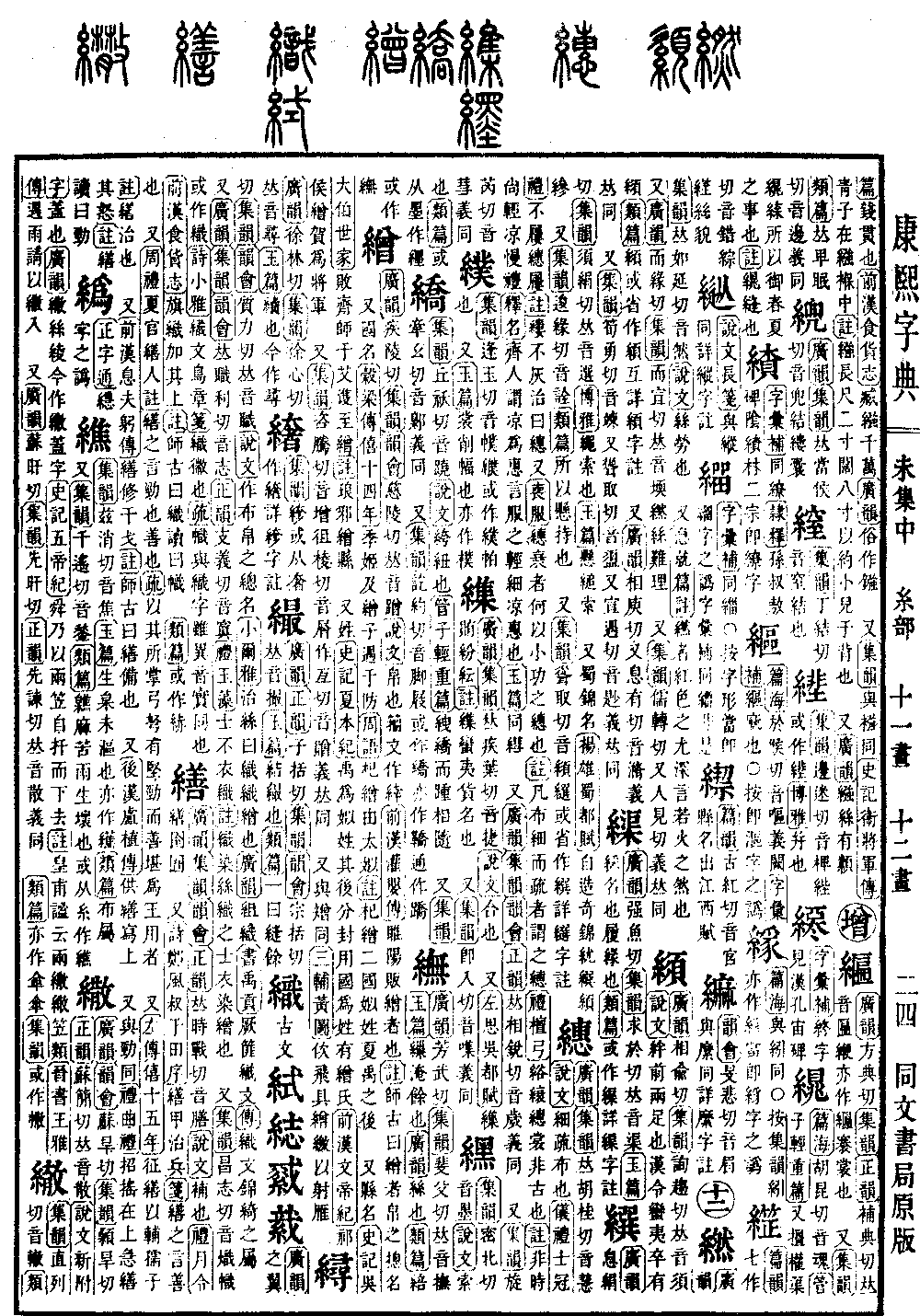
Wei Collection, Middle Volume, Radical: Silk (mì)
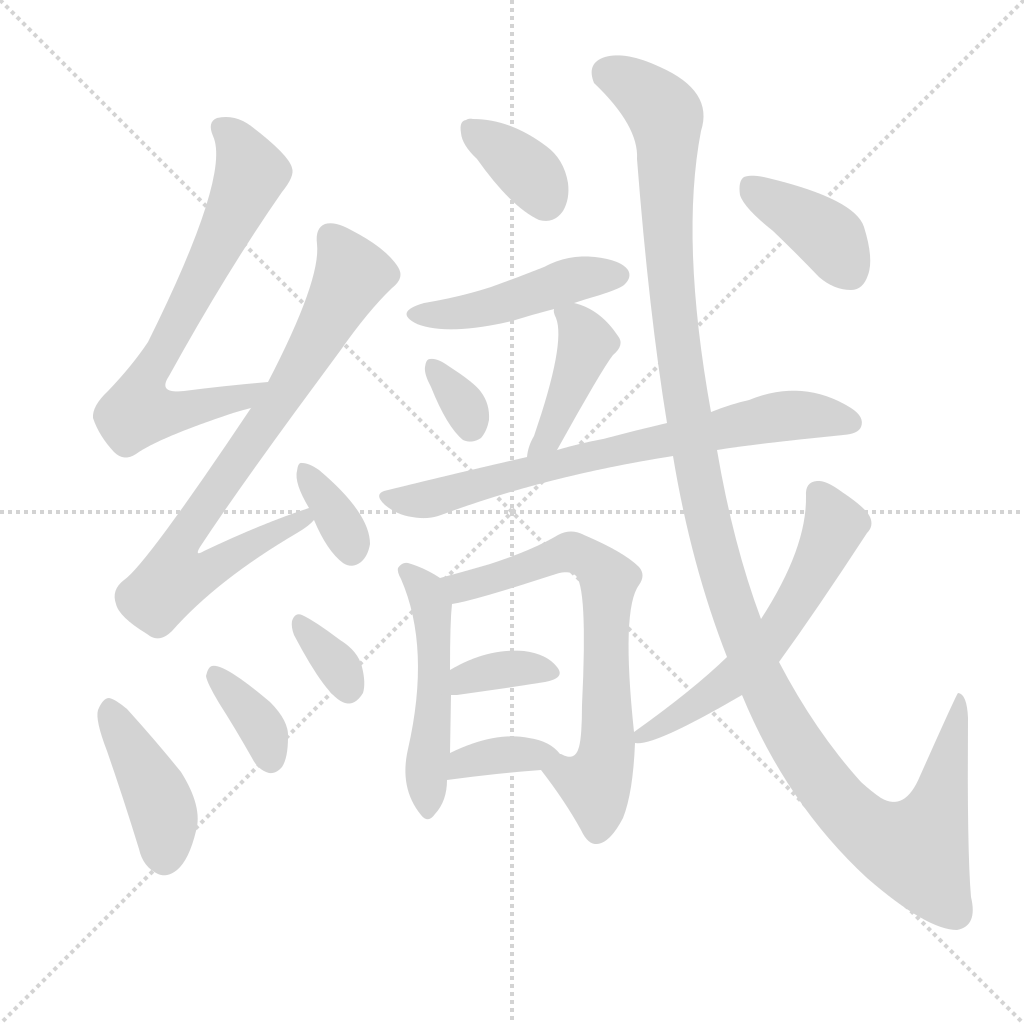
Character: 织
Kangxi Stroke Count: 18
Page: Page 938, Entry 29
Ancient text: 綕
Guangyun: Zhi Yi cut, pronounced Zhi.
Jiyun: Zhi Li cut, pronounced Zhi.
Yunhui: Zhi Li cut, pronounced Zhi.
Shuowen: A general name for woven cloth.
Xiao Erya: To process silk is called weaving. Weaving refers to woven silk.
Guangyun: To organize.
Book of Documents (Shu), Tribute of Yu: Its baskets have woven patterns.
Commentary: Woven patterns refer to brocade and embroidered silk.
Also:
Guangyun: Zhi Li cut, pronounced Zhi.
Jiyun: Zhi Li cut, pronounced Zhi.
Yunhui: Zhi Li cut, pronounced Zhi.
Zhengyun: Zhi Yi cut, pronounced Zhi.
Book of Rites (Li), Jade Robes: Scholars do not wear woven cloth.
Note: Woven cloth refers to dyed silk that is woven; scholars wear dyed woven silk.
Also:
Jiyun: Chang Zhi cut, pronounced Chi.
Zhi is also written as 织.
Book of Odes (Shi), Minor Odes, Xiao Ya: The woven patterns of the bird's plumage.
Annotation: Weaving refers to patterns.
Commentary: The characters Zhi and Zhi are different, but their pronunciation is the same.
Former Han Dynasty (Qian Han), Treatise on Food and Money: Banners have woven patterns added on top.
Note: Guoshi Shigu says: Zhi should be read as Zhi.
Leipian: Also written as .