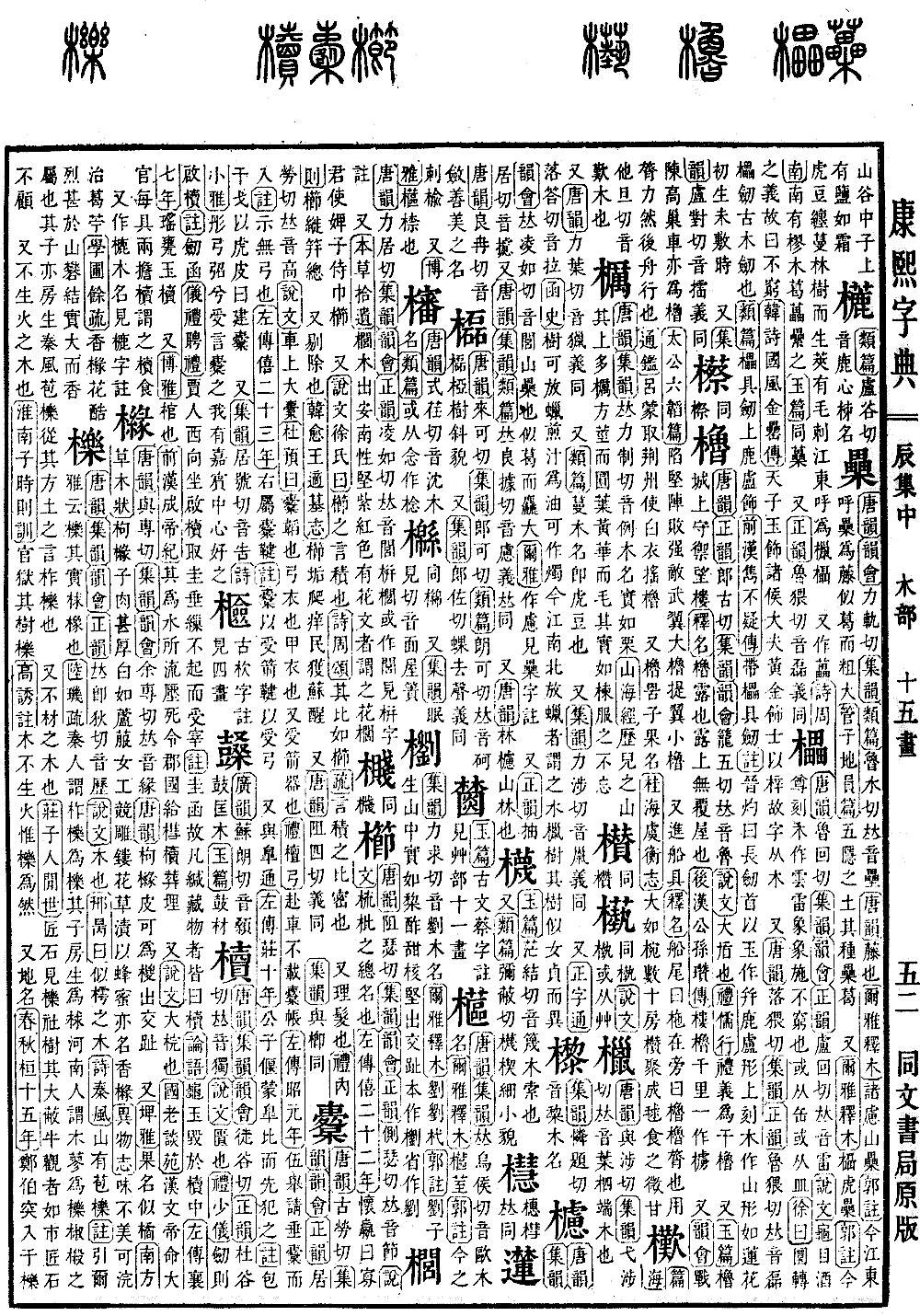
Chen Collection, Middle Volume
Radical: Tree (mù)
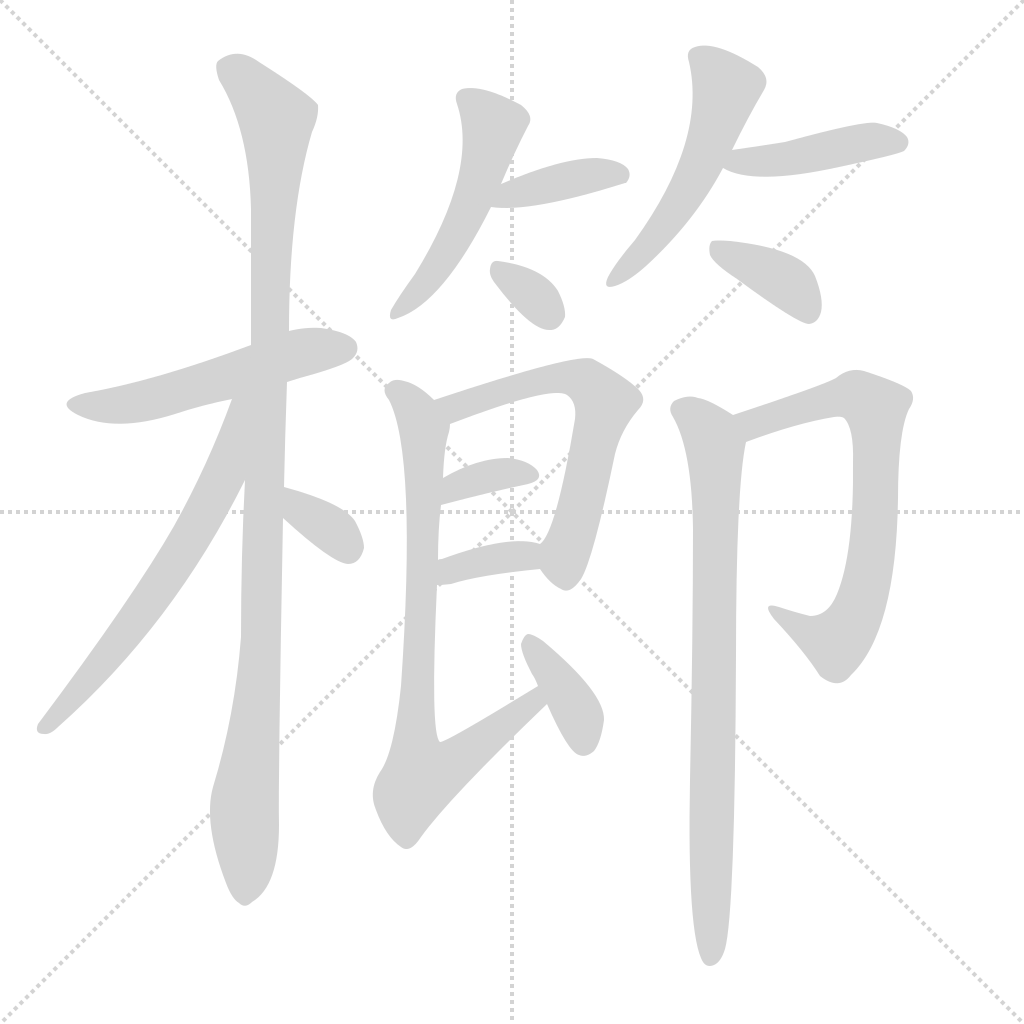
櫛
Kangxi Strokes: 19
Page 560, Entry 24
Tang Rhyme (Tangyun): Pronounced jie. Collected Rhymes (Jiyun), Rhyme Compendium (Yunhui), and Correct Rhymes (Zhengyun): Pronounced jie.
Shuowen Jiezi: A general term for combs and fine-toothed combs.
Zuo Tradition (Zuozhuan), 22nd year of Duke Xi: Huai Ying said, "Our ruler has sent me to attend to you, to hold your hand towel and comb."
Also, according to the Shuowen Jiezi System Commentary (Xichuan): The meaning of comb is to accumulate.
Classic of Poetry (Shijing), Zhou Hymns: Arranged as neatly as the teeth of a comb. The Commentary says: This refers to being accumulated closely and neatly.
Also refers to combing the hair. Book of Rites (Liji), Inner Chapters: Use a comb to groom the hair, use silk fabric to bind the hair, insert a hairpin, and tie a hair ribbon.
Also refers to weeding out or removing. Han Yu, Epitaph for Wang Shi: To remove filth and scratch where it itches, allowing the common people to recover.
Also, Tang Rhyme (Tangyun): Pronounced si. The meaning is the same. Collected Rhymes (Jiyun): Identical to the character (ji).
Textual Research:
Zuo Tradition, 22nd year of Duke Xi: Huai Ying said, "Our ruler has sent me to attend to you, to hold your hand towel and comb." According to the original text, the word "hold" has been added after "attend to."
Shuowen Jiezi: According to the original text, "Xu Shi" has been changed to "Xichuan."