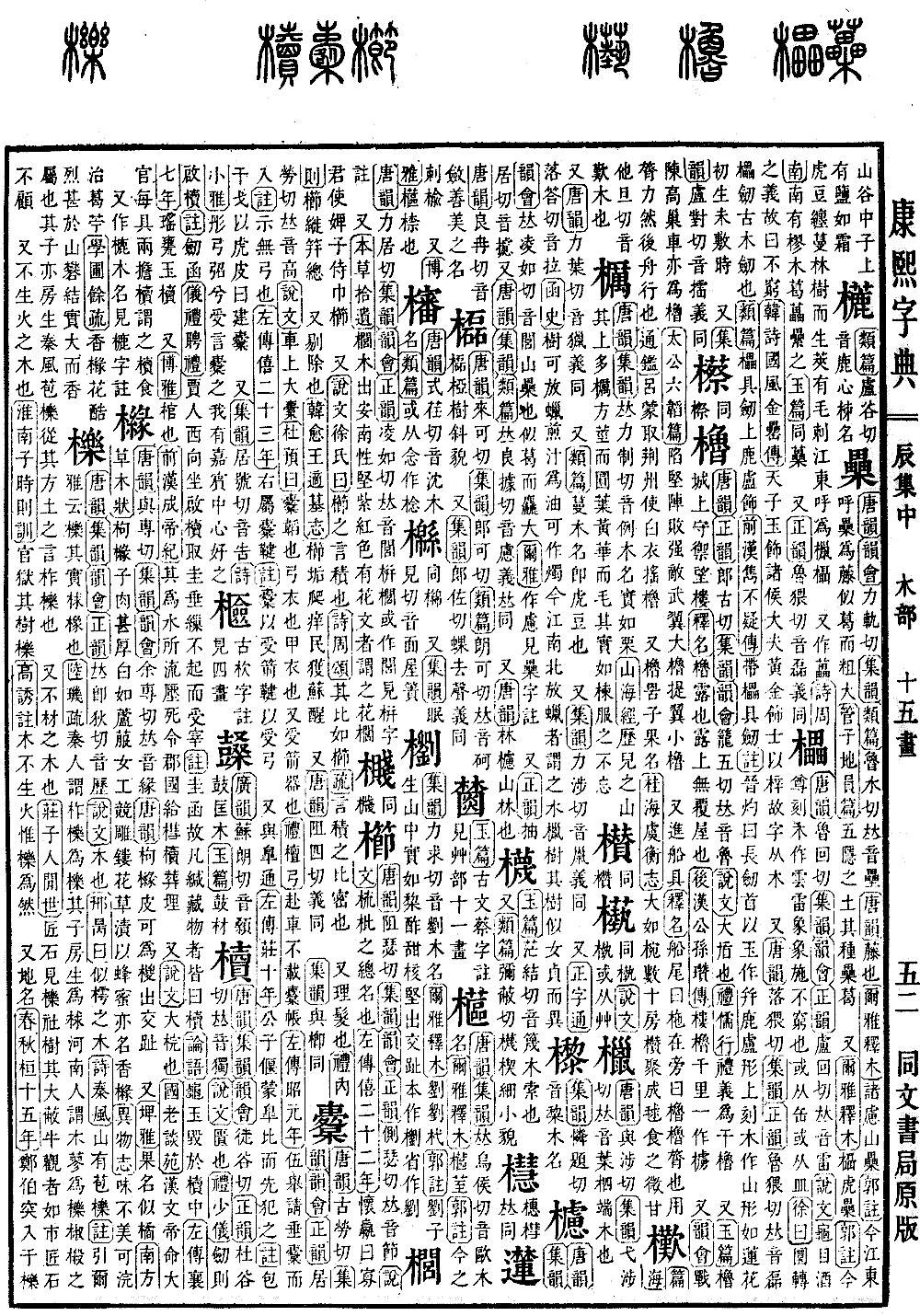
Chen Collection, Middle Volume
Radical: Tree (mù)
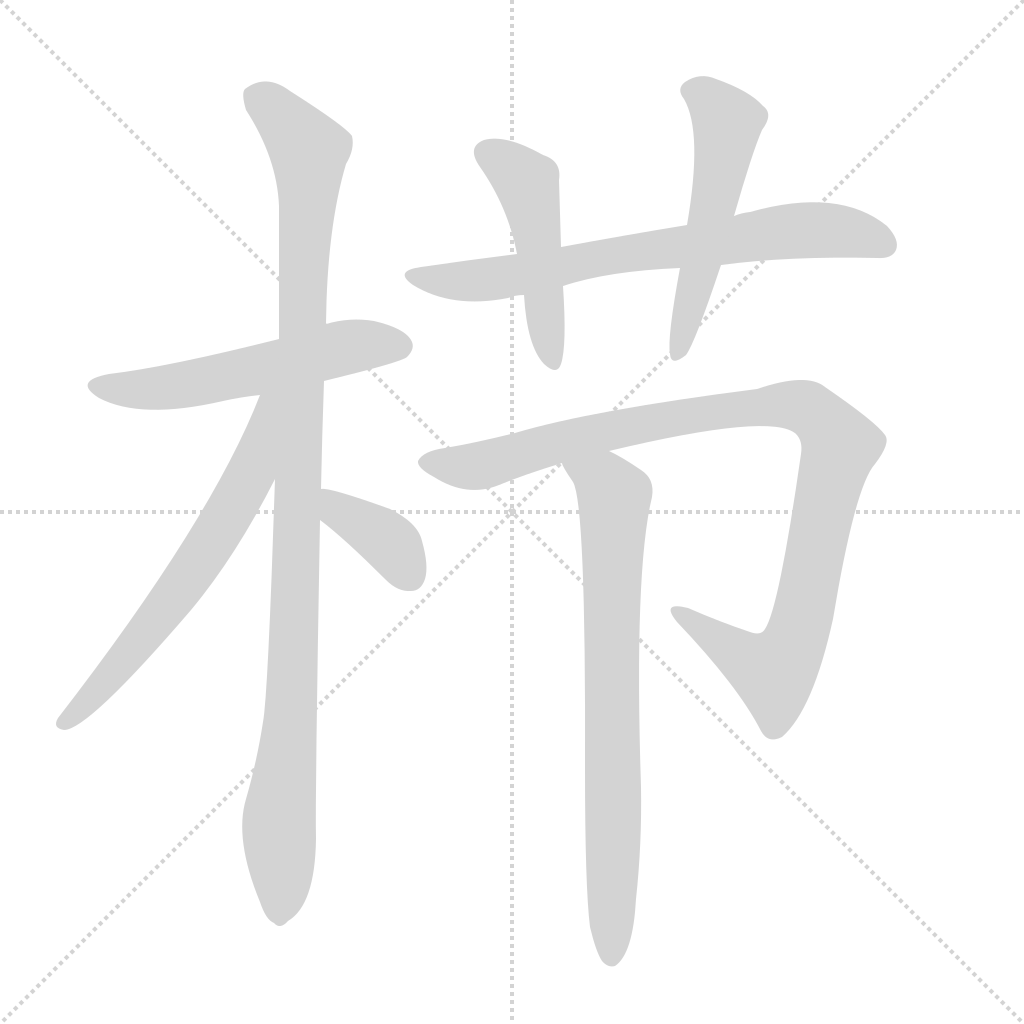
櫛
Kangxi Strokes: 19
Page 560, Entry 01
Tang Rhymes (Tangyun): Pronounced jie (entering tone). Collected Rhymes (Jiyun), Rhyme Meetings (Yunhui), Correct Rhymes (Zhengyun): Pronounced jie (entering tone).
Explanation from Analytical Dictionary of Characters (Shuowen): A general term for a comb and a fine-toothed comb.
Zuo Commentary (Zuozhuan), 22nd year of Duke Xi: Huai Ying said, My ruler has sent me to attend to you, to hold the towel and comb for you.
Also, from the Explanation from Analytical Dictionary of Characters (Shuowen) Supplementary Transmission: The meaning of this character is to accumulate.
Classic of Poetry (Shijing), Zhou Hymns (Zhou Song): Arranged as densely as the teeth of a comb. The commentary explains this as being gathered together tightly and neatly.
Also refers to combing hair. Record of Rites (Liji), Inner Rules (Neize): Comb the hair, bind the hair with a silk band, insert a hairpin, and tie on a ribbon.
Also refers to clearing away. Han Yu, Epitaph for Wang Shi: Clearing away filth and scratching where it itches, the common people were able to recover.
Also, Tang Rhymes (Tangyun): Pronounced zi (entering tone). The meaning is the same.
Collected Rhymes (Jiyun): Identical to the character (ji).
Textual Research: Zuo Commentary (Zuozhuan), 22nd year of Duke Xi, Huai Ying said, My ruler sent this humble servant to attend to the towel and comb. According to the original text, the character hold was added after the word attend. Explanation from Analytical Dictionary of Characters (Shuowen), Xu's commentary: The character for comb implies accumulation. According to the original book, this has been corrected to Supplementary Transmission.