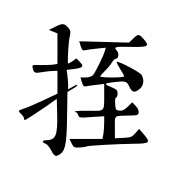
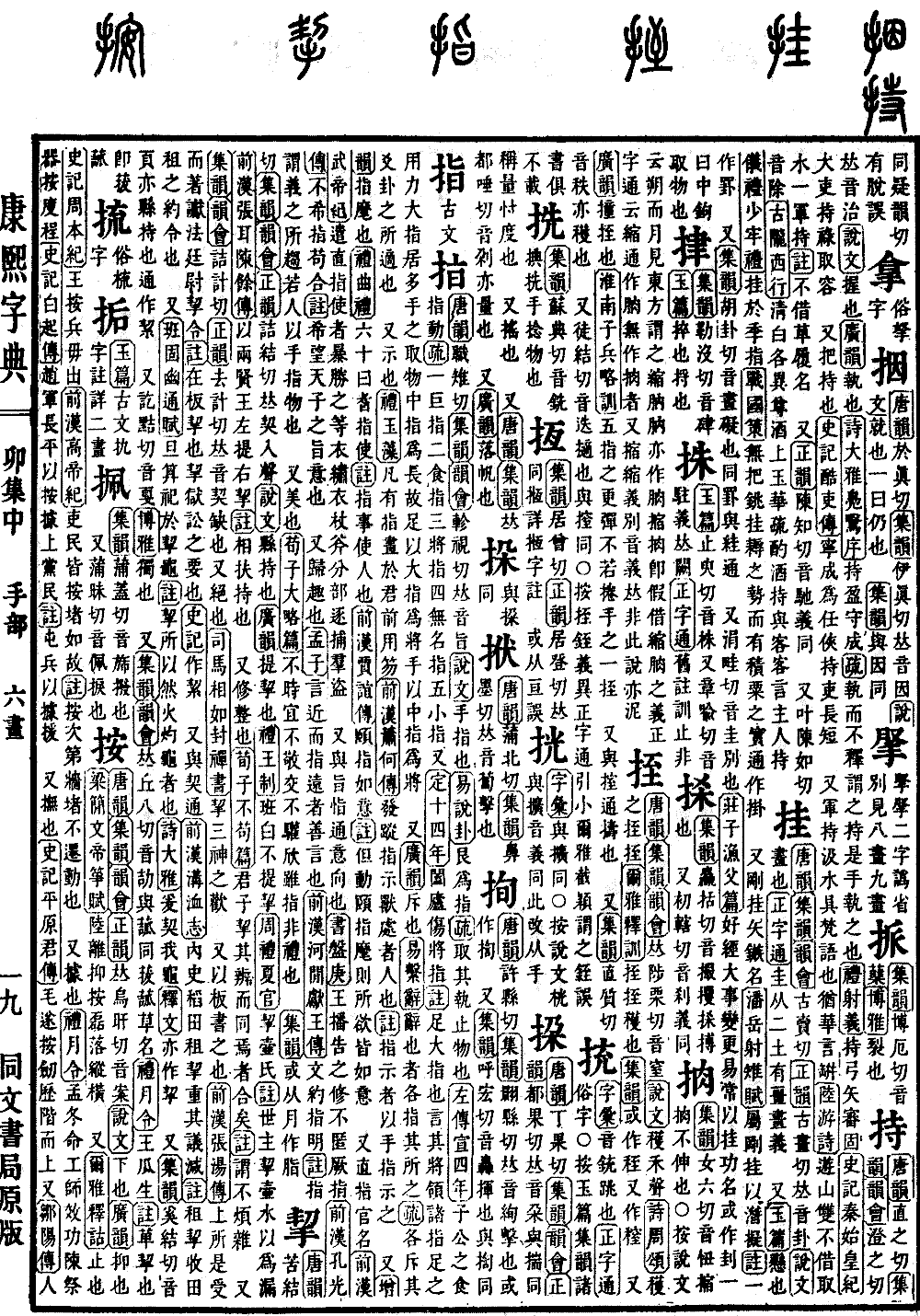
Mao Collection, Middle Volume
Radical: Hand (shǒu)
Kangxi strokes: 10
Page 429, Entry 11
Tang Rhyme (Tangyun), Collection Rhymes (Jiyun), and Rhyme Collection (Yunhui) define the pronunciation as zhi (entering tone).
According to the Explaining Graphs and Analyzing Characters (Shuowen), it represents the sound of reaping grain.
Book of Odes (Shijing), Zhou Hymns: The sound produced when harvesting crops is zhi-zhi.
Approaching Elegance (Erya), Explanations of Teachings: Zhi-zhi means to harvest.
Collection Rhymes (Jiyun): Sometimes written in a variant form (zhi). Also written in a variant form (zhi).
Broad Rhymes (Guangyun): Means to strike or collide.
Master of Huainan (Huainanzi), Military Strategy Teachings: Five fingers striking in turn is not as effective as a single blow with a clenched fist.
Also interchangeable with a variant form (zhi). Means to pound or strike.
Collection Rhymes (Jiyun): Pronounced zhi (entering tone). Also means to harvest.
Pronounced die (entering tone). Means to throw. Interchangeable with a variant form (die).
Note: The characters zhi and zhi have different meanings. The Correct Meaning Thoroughfare (Zhengzitong) cites the Lesser Approaching Elegance (Xiao Erya) stating that cutting off the heads of grain ears is called zhi; this is incorrect.