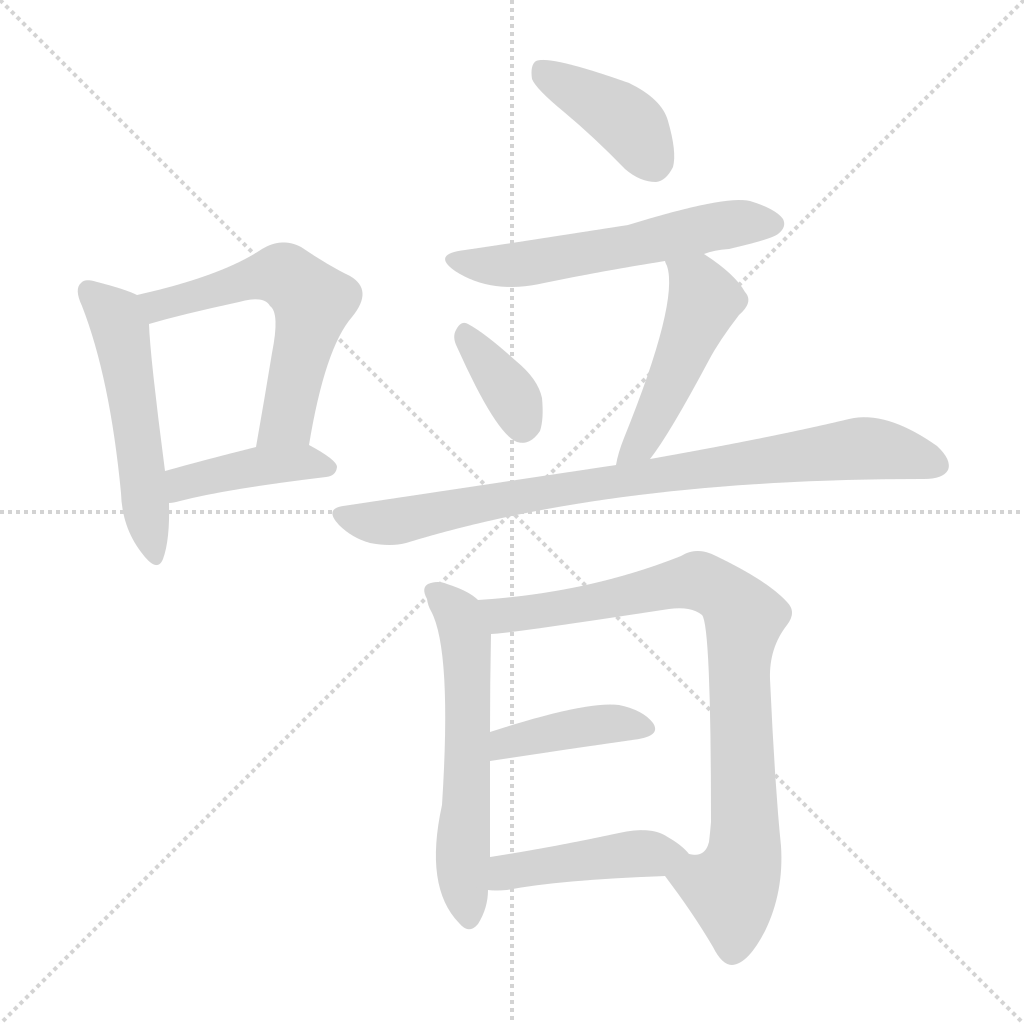
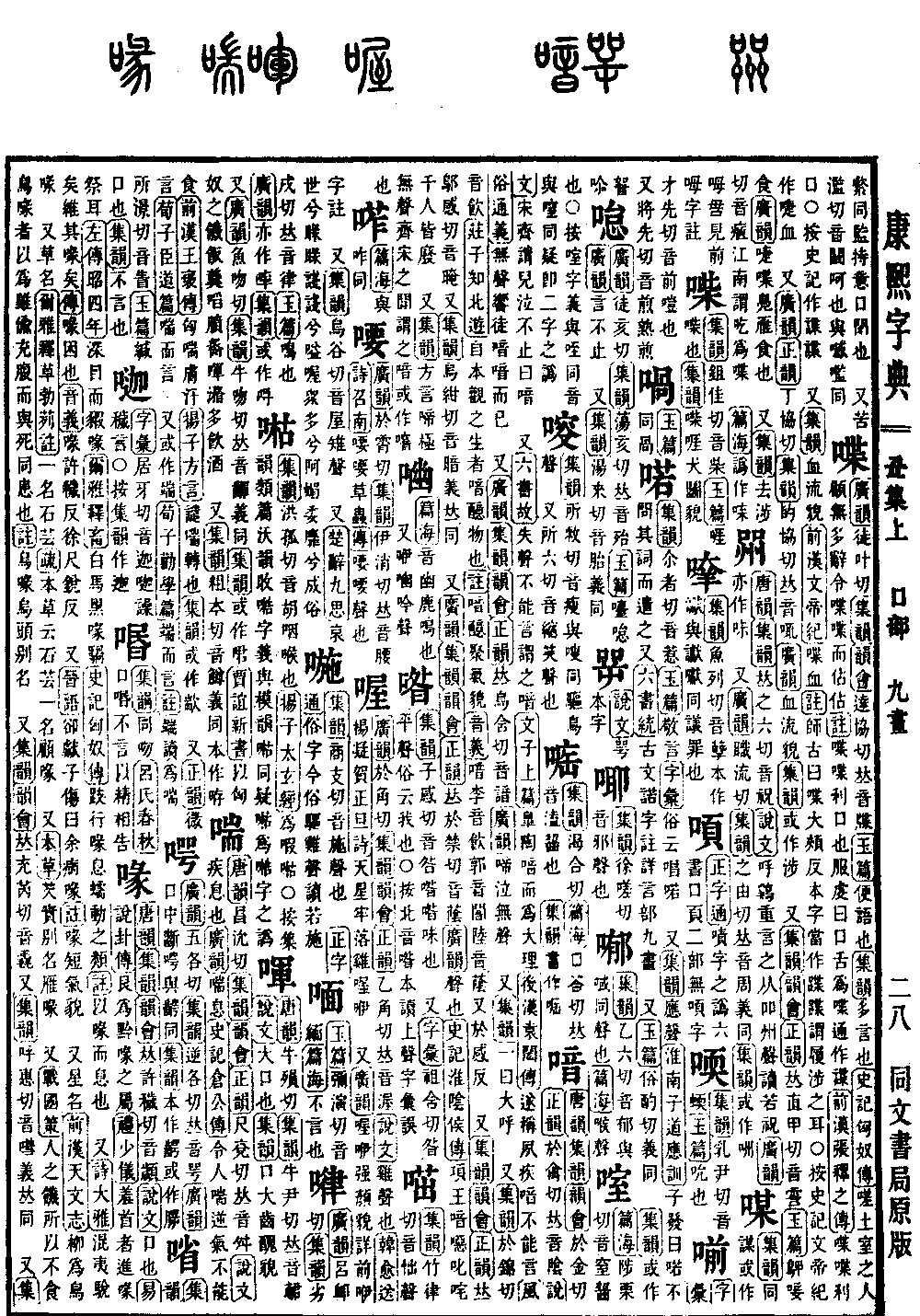
Chou Collection, Upper Volume
Radical: Mouth (kǒu)
Kangxi stroke count: 12
Page 198, Entry 18
Pronounced yin.
According to the Explaining Graphs and Analyzing Characters (Shuowen), in the states of Song and Qi, when a child cries incessantly, it is called yin.
Also, according to the Six Scripts Explained (Liushugu), losing one's voice and being unable to speak is called yin.
From the Book of Master Wen (Wenzi), Upper Chapter: Gao Yao was mute, yet served as the Great Judge.
From the History of the Later Han (Hou Hanshu), Biography of Yuan Hong: He then claimed a long-standing illness and was mute, unable to speak.
From the Comprehensive Meaning of Customs (Fengsu Tongyi): With no sound or resonance, merely silent.
Also pronounced an.
According to the Broad Rhymes (Guangyun), it refers to weeping without sound.
Also, according to the Collected Rhymes (Jiyun), it refers to a loud cry.
Also pronounced yin.
From the Zhuangzi, Knowledge Wandering North: Viewed from the source, the living are those who gather and nurture things. The commentary states: yin-yi refers to the appearance of gathering qi. The Pronunciation and Meaning (Yinyi) notes: yin is pronounced like yin, Guo pronounces it an, Li pronounces it yin, and one pronunciation is like gan.
Also pronounced an.
Also pronounced an. Meanings are the same.
Also pronounced he.
According to the Broad Rhymes (Guangyun), it is a sound.
From the Records of the Grand Historian (Shiji), Biography of the Marquis of Huaiyin: The King of Xiang let out an angry shout, and a thousand men were incapacitated.
Also, according to the Collected Rhymes (Jiyun), in regional dialects, when one weeps until the voice is lost, it is called yin in the area between Qi and Song. Sometimes written in a variant form.