Hai Collection, Lower Volume
Radical: Fish (yú)
鮨
Kangxi strokes: 17
Page 1469, Entry 17
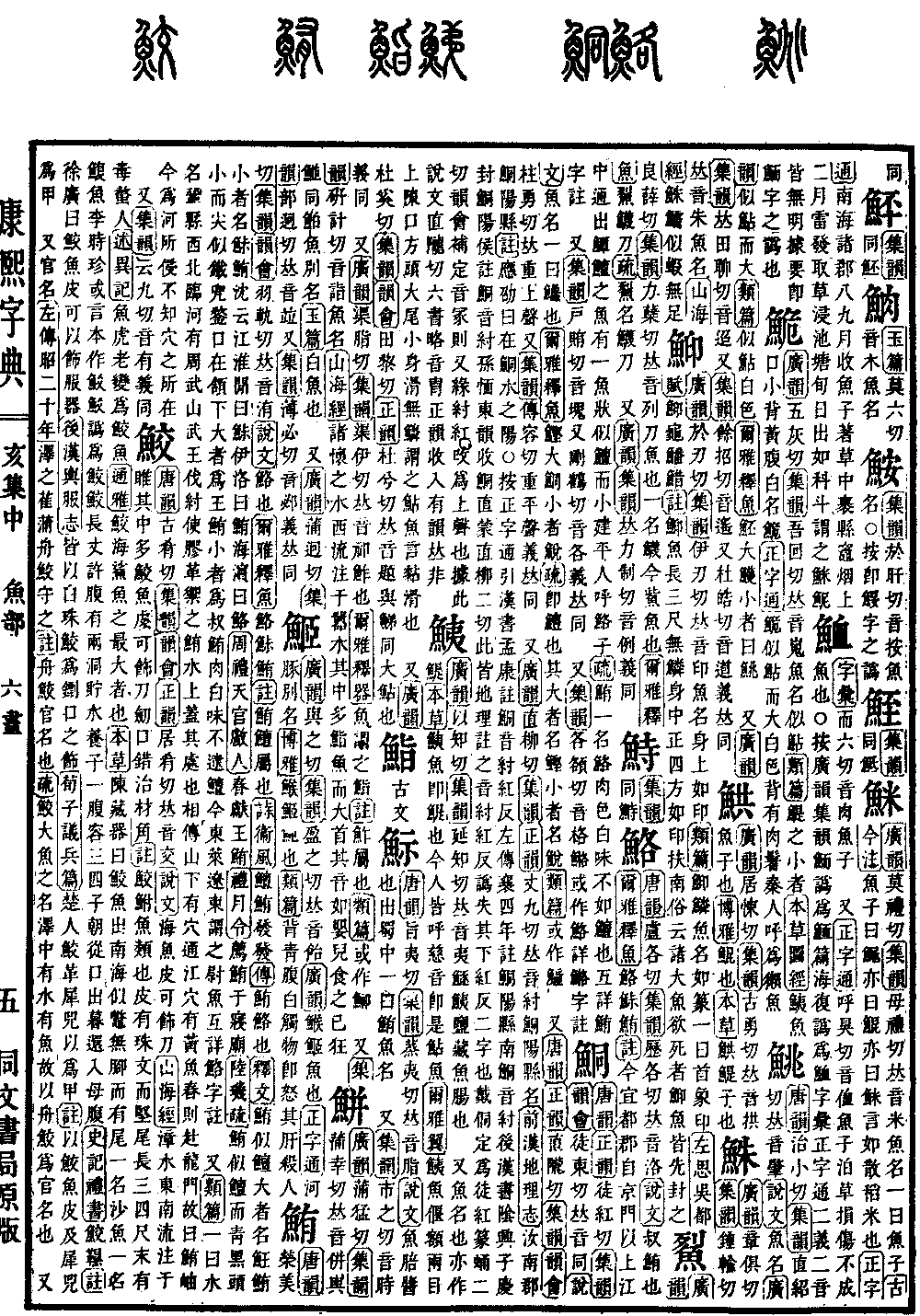
According to the Tang Rhyme (Tangyun), pronounced zhi. According to the Collected Rhymes (Jiyun), pronounced zhi, with a pronunciation identical to zhi. The Explaining Graphs and Analyzing Characters (Shuowen Jiezi) defines this as fish paste, originating from the Shu region. Another interpretation suggests it refers to the name of a tuna. Also, according to the Collected Rhymes (Jiyun), pronounced shi, with a pronunciation identical to shi. The meaning is the same. Furthermore, according to the Broad Rhymes (Guangyun), pronounced qi, and according to the Collected Rhymes (Jiyun), pronounced qi, with a pronunciation identical to qi. This refers to salted fish. The Erya: Explanations of Implements (Erya: Shiqi) records: food products made from fish are called yi. The commentary notes this belongs to the category of salted fish. The Classified Compilation (Leipian) states it is sometimes also written in a variant form (zhuan). Additionally, according to the Collected Rhymes (Jiyun), pronounced yi, with a pronunciation identical to yi. This is the name of a type of fish. The Classic of Mountains and Seas (Shanhaijing) records: The Zhuhuai River flows westward into the Xiao River, where there are many yi fish in the water; they have large heads, their cries sound like infants, and eating them can cure epilepsy.