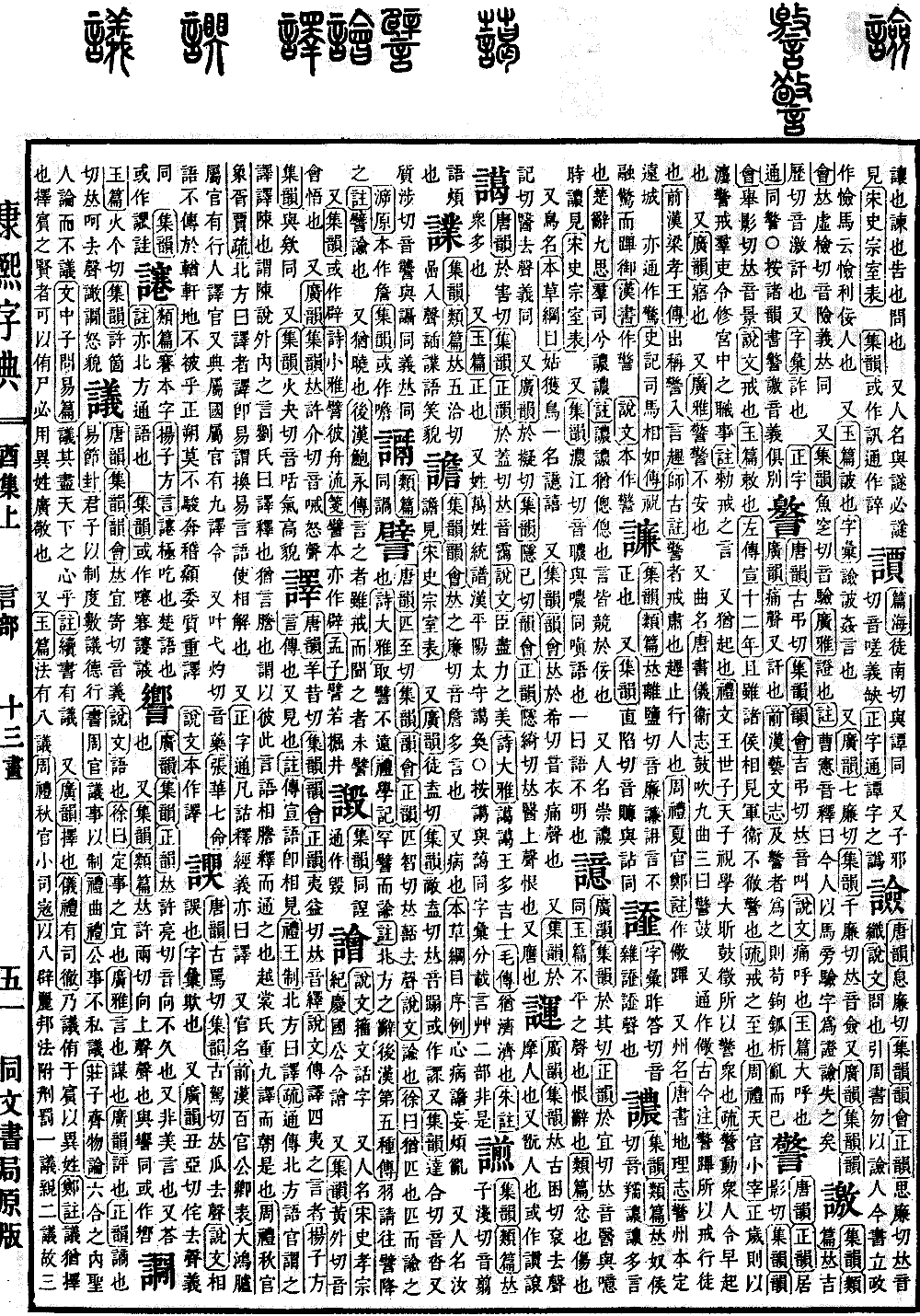
You Collection, Upper Volume
Radical: Speech (yán)
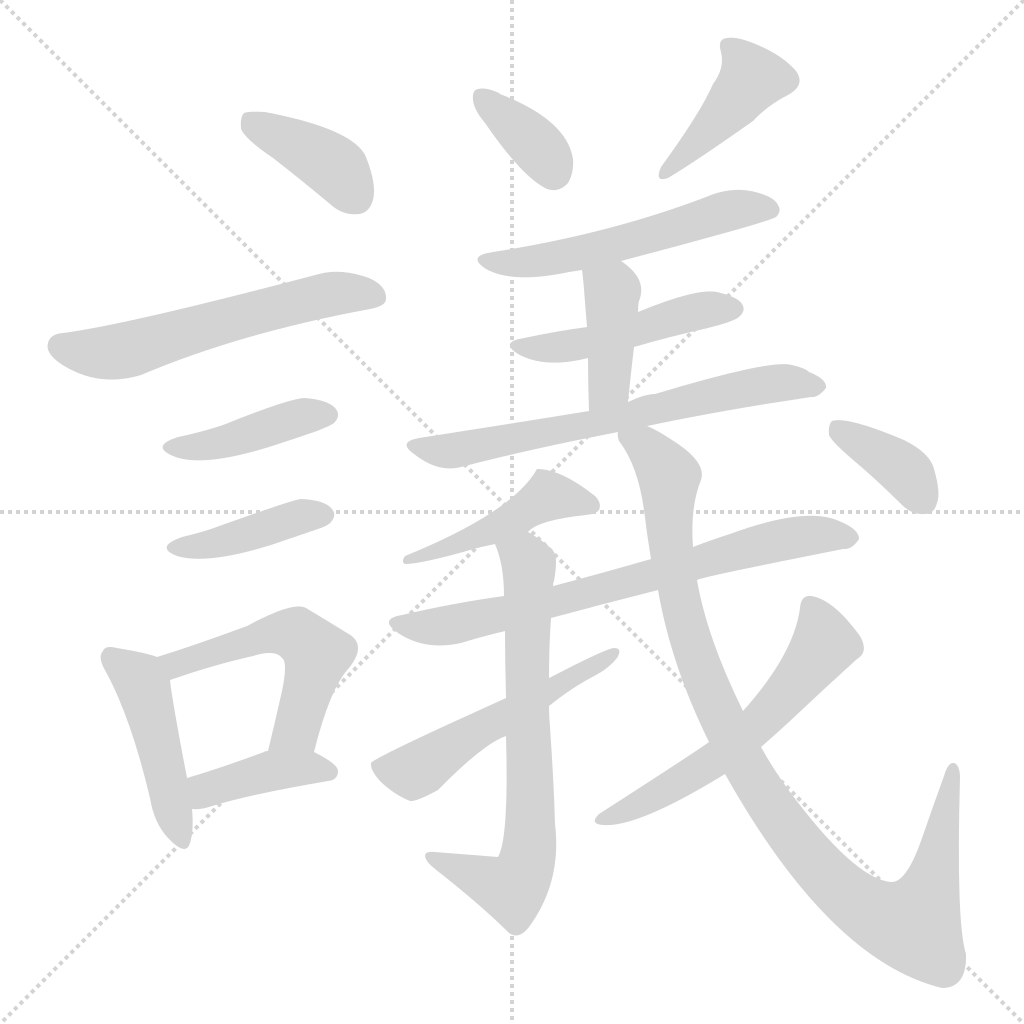
Yi
Kangxi strokes: 20
Page 1183, Entry 24
Pronounced yi (falling tone)
In the Shuo Wen Jie Zi (Explaining Graphs and Analyzing Characters), it means to speak.
Xu says: To determine what is appropriate for an affair.
In the Guang Ya (Expanded Glossaries), it means to speak or to plan.
In the Guang Yun (Broad Rhymes), it means to evaluate.
In the Zheng Yun (Correct Rhymes), it means to criticize.
I Ching (Book of Changes), Jie Hexagram: The superior man uses this to establish standards and deliberate on moral conduct.
Book of Documents (Shujing), Zhou Officials: Deliberate on affairs to establish systems.
Book of Rites (Liji), Qu Li: Public affairs should not be discussed privately.
Zhuangzi, Discussion on Making All Things Equal: Within the universe, the sage discusses without engaging in deliberation.
Wen Zhongzi, Questions on the I Ching: Deliberating on how to exhaust the mind of the world. Note: The Sequel to the Book of History contains a section on deliberations.
Also, in the Guang Yun, it means to select.
Book of Etiquette and Ceremonial (Yili), You Si Che: Then deliberate on the representative for the guest using a different surname. Zheng's note: Deliberate here means to select. Select a guest of virtue who can assist the impersonator of the deceased; one must use a different surname to broaden the expression of respect.
Also, in the Yu Pian (Jade Chapters), the law includes the Eight Deliberations. Book of Zhou (Zhouli), Autumn Officials, Lesser Minister: Apply the eight legal categories to the laws of the state to adjust punishments. First, deliberate on relatives; second, deliberate on old acquaintances; third, deliberate on the virtuous; fourth, deliberate on the capable; fifth, deliberate on the meritorious; sixth, deliberate on the noble; seventh, deliberate on the diligent; eighth, deliberate on guests.
In the Book of Tang (Tangshu), Official Posts: There are six formats for subordinates to communicate with superiors; the fourth is called a deliberation.
Cai Yong, Independent Judgments: If there are doubtful matters, the dukes and high officials hold a collective deliberation. If the secretariat has a correction or ruling and one maintains a different opinion, it is called a refuted deliberation.
Also, a title for officials. In the Book of Later Han (Houhanshu), Official Posts: Deliberation Gentleman, six hundred shi. In the Book of Tang, Official Posts: There is the Remonstrance and Deliberation Grandee. Also, there is the Deliberation Secretary.
Also, used interchangeably with the character previously noted. Refer to the note for the former character.
Also, in the Ji Yun (Collected Rhymes), pronounced yi (level tone). It means to plan or estimate.
Book of Odes (Shijing), Xiao Ya: Some go out or come in with rumors. Lu Deming adjusts the rhyme to the sound of yi.
Also, rhyming with e. In the Records of the Grand Historian (Shiji), Postface: When Duke Huan went east, the Grand Historian employed this. When he encroached upon the Zhou grain, the king's men deliberated on this. Yong rhymes with dong, and yi rhymes with he.
In the Shuo Wen Jie Zi, originally written as the current character.
Corrections:
In the I Ching, Judgment on Jie: The superior man uses this to establish standards, deliberate on moral conduct. Corrected from standard of measures to measure of standards according to the original text.