Wu Collection, Upper Volume
Radical: Jade (yù)
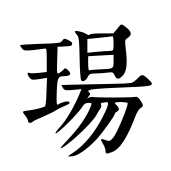
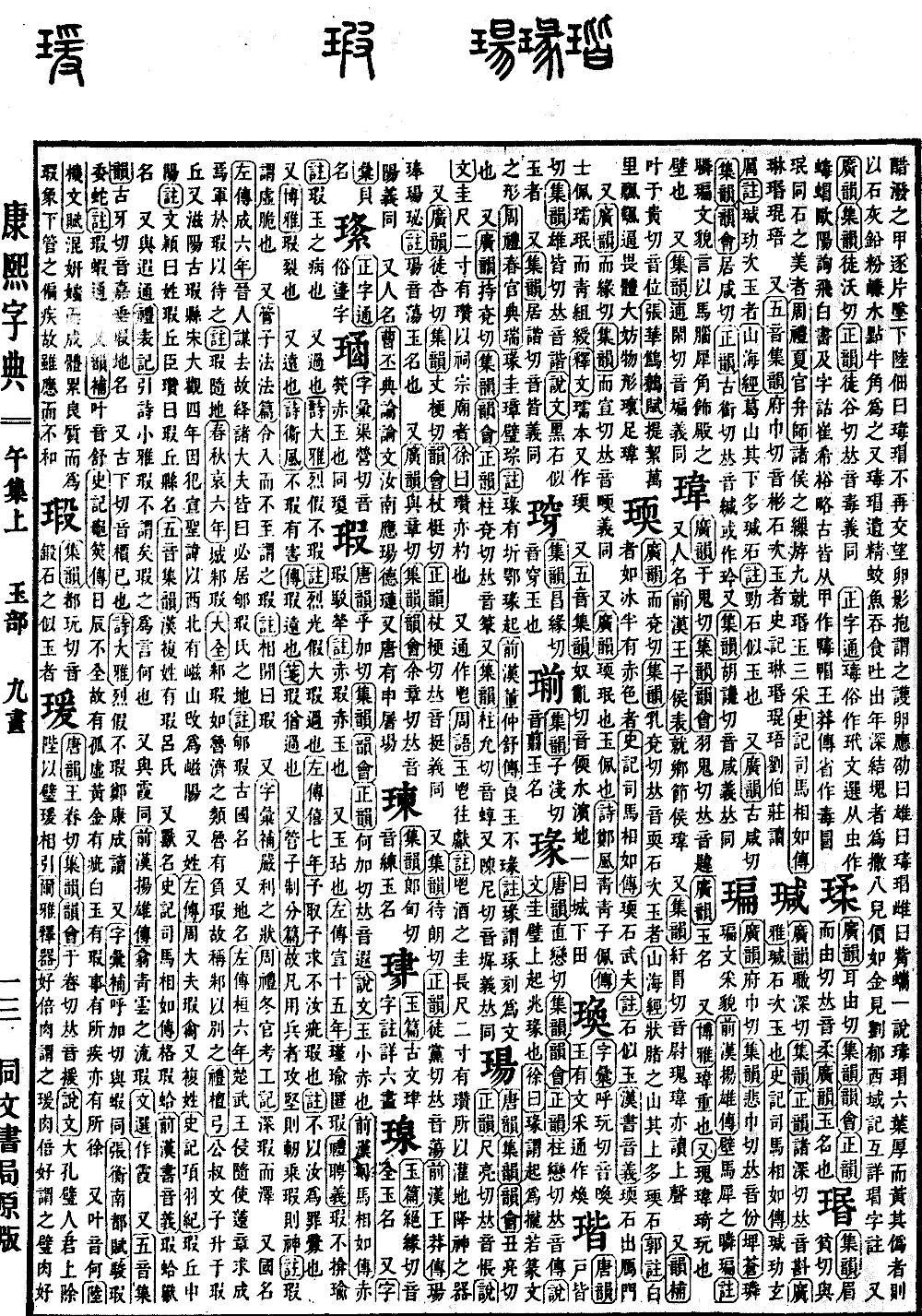
Chang
Kangxi strokes: 14
Page 737, Entry 12
Pronounced chang (falling tone).
Shuowen Jiezi (Dictionary of Explaining Characters and Analyzing Compound Characters): A jade scepter measuring one foot and two inches in length, featuring a ladle-shaped end, used in ancestral temple rituals. Xu states that the ladle part is called a zan.
Also commonly written as the variant form chang (aromatic spirit). According to the Discourses of the States (Guoyu): Offering the jade chang to present as an oblation. The commentary states: It is a jade scepter used for the aromatic spirit, one foot two inches long, equipped with a ladle, serving as an implement to pour libations on the ground to invoke the descent of spirits.
Pronounced ting (rising tone). The meaning is the same.
Pronounced dang (falling tone). According to the History of the Former Han (Qian Han Shu), Biography of Wang Mang: The scabbard decoration and the scabbard chape made of chang jade. The commentary states: Chang is pronounced dang. It is the name of a type of jade.
Pronounced yang (flat tone). The meaning is the same.
Also used in personal names. In the Discourses on Literature (Dianlun Lunwen) by Cao Pi: Ying Chang, courtesy name Delian, from Runan. Also, there was a Shen-tu Chang during the Tang dynasty.