Wu Collection, Lower Volume
Radical: Spirit (shì)
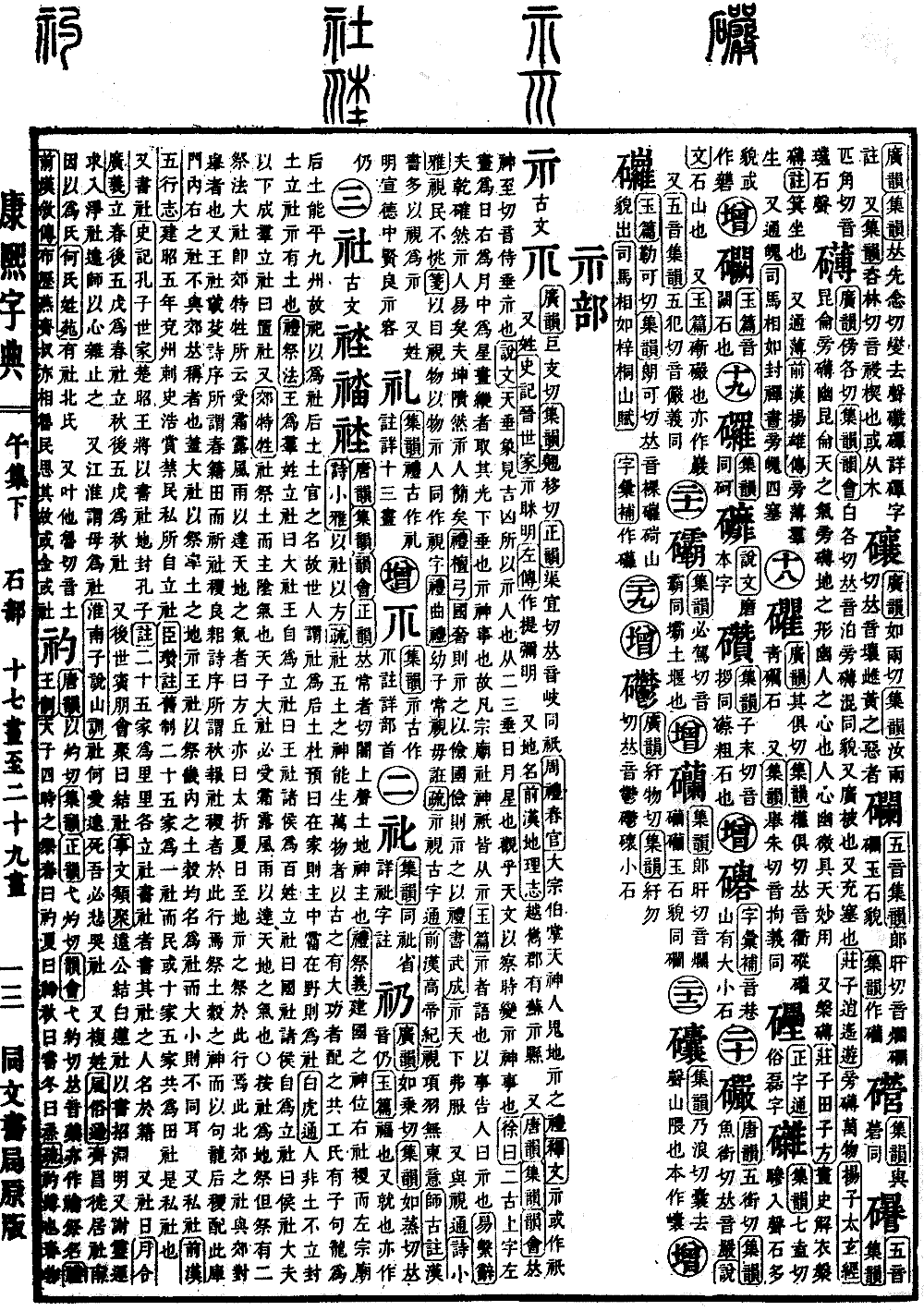
Yue; Kangxi stroke count: 8; Page 839, Entry 30
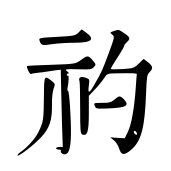
Pronounced yào. Also written in a variant form (yuò). A name for a type of sacrifice.
Book of Rites (Liji): The Son of Heaven performs sacrifices during the four seasons; spring is called yue, summer is called di, autumn is called chang, and winter is called zheng.
Commentary: Yue signifies simplicity, as the crops in spring have not yet fully matured, making the sacrificial offerings fresh but meager.
Note: Yue, di, chang, and zheng are the seasonal sacrifices common to the Xia, Shang, and Zhou dynasties. Zheng Kangcheng was overly rigid in his interpretation of the Book of Odes (Shijing) and the Rites of Zhou (Zhouli), which mention yue, ci, zheng, and chang, leading him to believe that the Book of Rites (Liji) description applied only to the Xia and Shang dynasties, and that during the Zhou dynasty, the spring sacrifice was called ci and the summer sacrifice was called yue. He failed to realize that the poem Tianbao was composed during the reign of King Wu of Zhou and that yue, ci, zheng, and chang were actually the sacrificial rites of feudal lords. King Wu only received the mandate of heaven late in his life, and the systems of ritual and music were not yet perfected. Thus, they initially practiced the spring yue, summer di, autumn chang, and winter zheng sacrifices before they had the chance to posthumously honor former kings and perform sacrifices with the rites of a Son of Heaven. It was only when the Duke of Zhou assisted King Cheng that the system was finalized. One need not cling to the record in the Book of Odes (Shijing) to doubt the account in the Book of Rites (Liji). As for the records in the Rites of Zhou (Zhouli), most scholars throughout history have considered them to be texts that the Duke of Zhou had not yet finalized, so one should be even less rigid regarding them. For further detailed explanations, see the entry for di.
Also, according to the Collected Rhymes (Jiyun), pronounced yào. The meaning is the same.