Hai Collection, Upper Volume
Radical: Horse (mǎ)
Kangxi strokes: 23
Page 1446, Entry 05
Pronounced yi (falling tone).
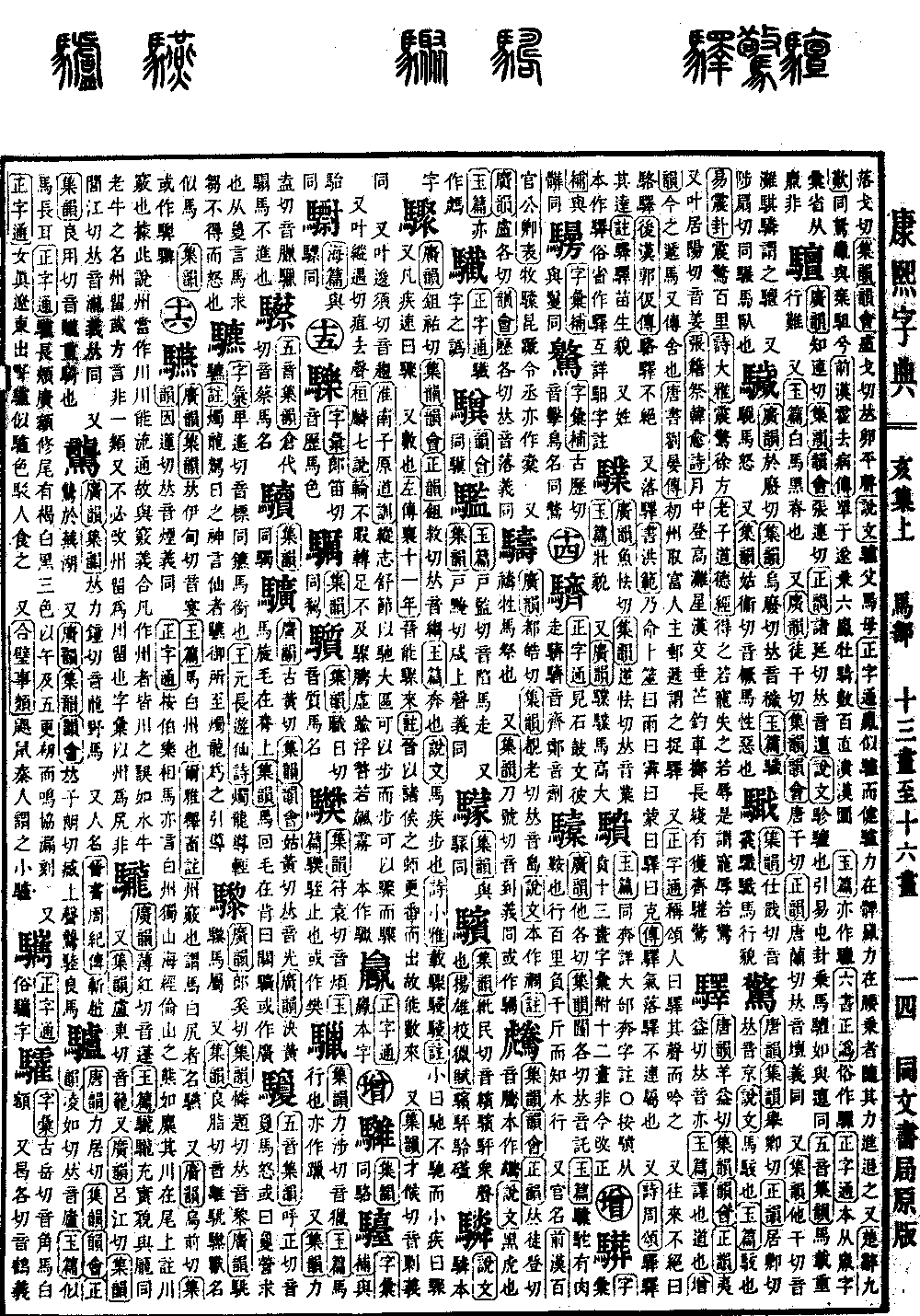
In the Jade Chapter (Yupian), it means to interpret and signifies a road. In the Expanded Rhymes (Zengyun), it refers to present-day relay horses. It also refers to a relay station. In the History of Tang (Tangshu), Biography of Liu Yan, it states: Initially, prefectures selected wealthy individuals to manage postal relay services, which was called seizing the relay.
Additionally, in the Zhengzitong, praising someone by intoning their name is called yi-ing their voice.
Furthermore, coming and going without interruption is called luoyi. In the Book of the Later Han (Houhanshu), Biography of Guo Ji, it states: Luoyi without interruption.
Also written as luoyi. In the Book of Documents (Shujing), Great Plan (Hongfan), it says: Then command the divination and casting of lots; call it rain, call it clearing, call it misty, call it yi, call it successful. The commentary states: Yi means the atmosphere is falling and scattered, not connected.
Also in the Book of Odes (Shijing), Odes of Zhou (Zhousong), it says: Yiyi is their reaching. The commentary notes: Yiyi describes the appearance of seedlings growing.
Also a surname. Originally written as the character with the horse radical and the character meaning to change, simplified in common usage to this character. Refer to the note under the entry for the character meaning relay horse (rì) for further details.