Shen Collection, Upper Volume
Radical: Grass (cǎo)
Kangxi stroke count: 21
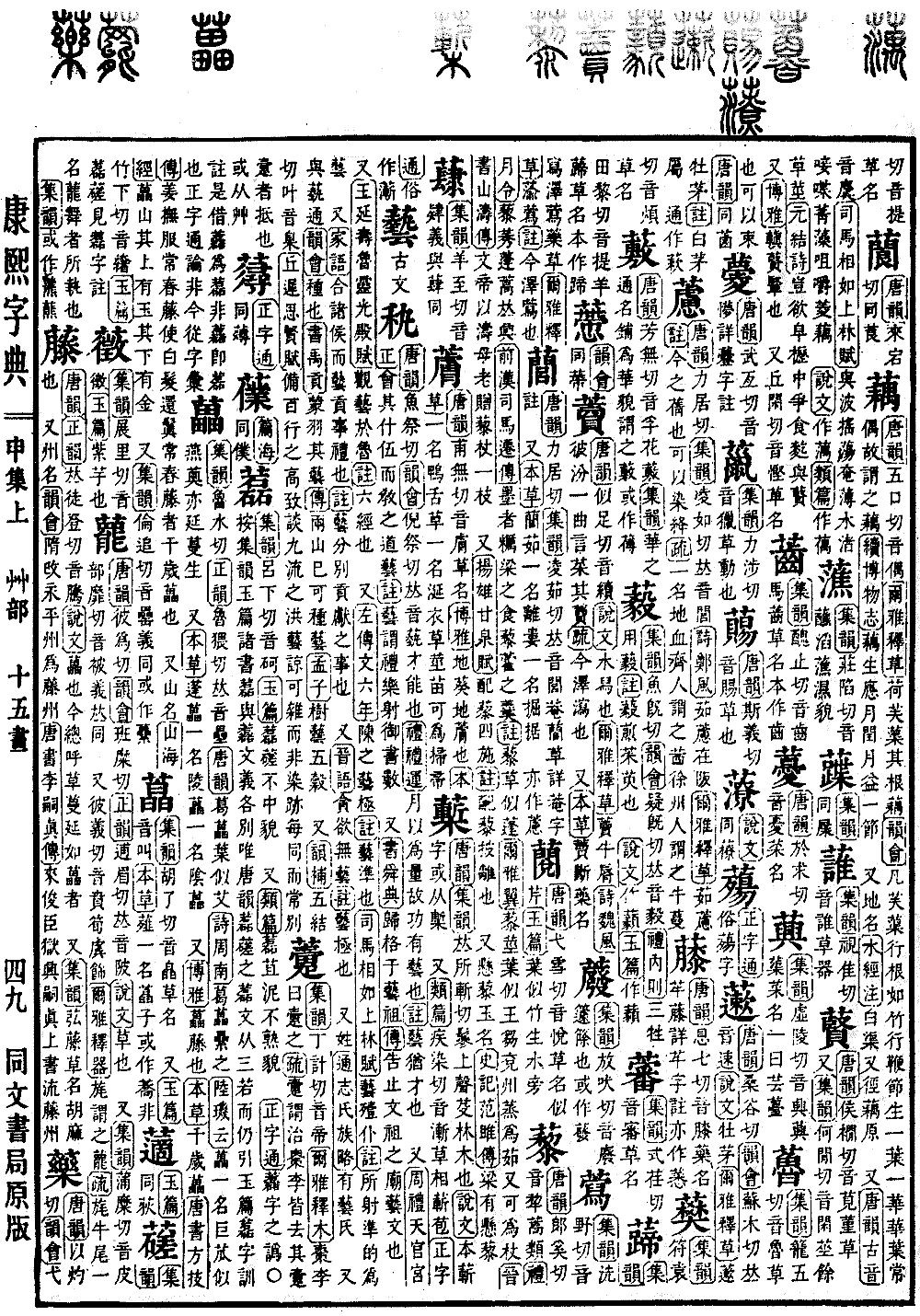
Page 1065, Entry 34
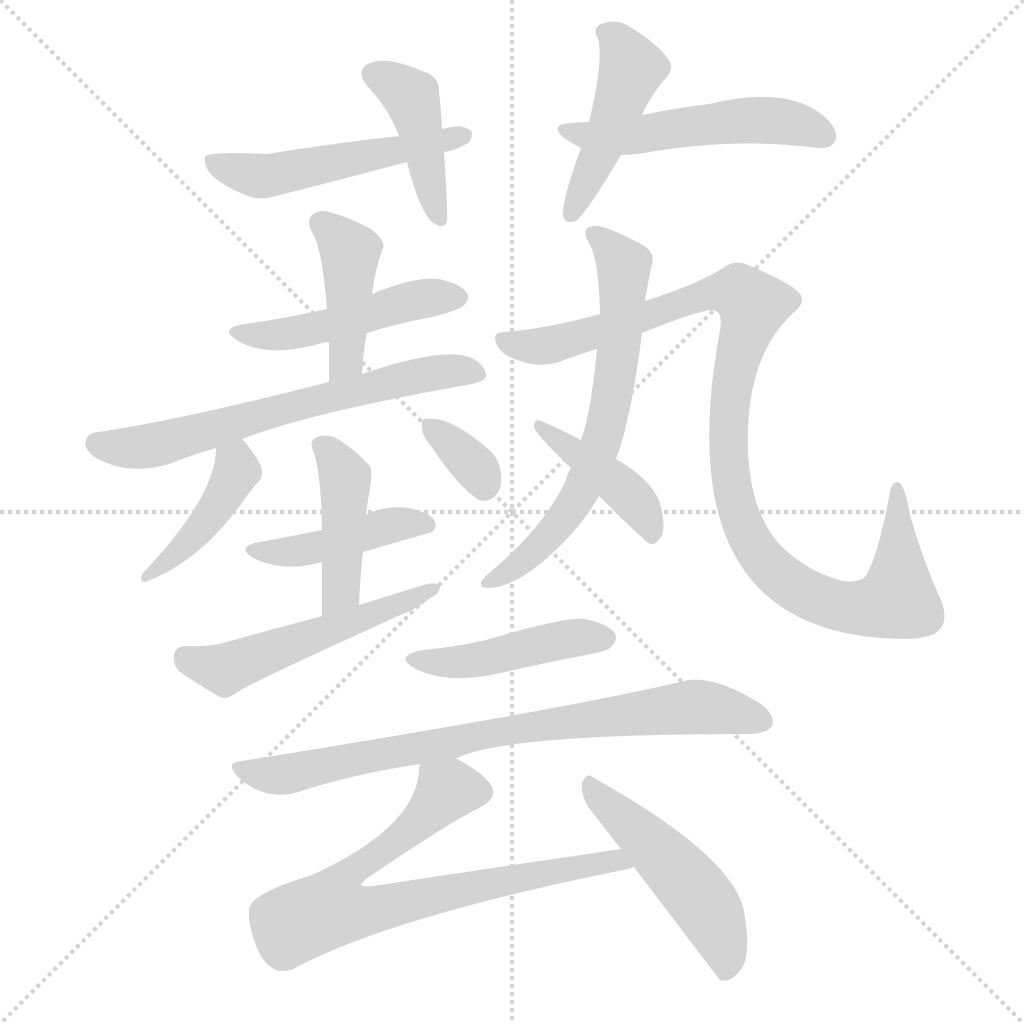
Ancient form: yi.
Pronounced yi (falling tone).
Talent or ability. Book of Rites (Liji), Rites of the Operational Cycle: The moon serves as a measure, thus there is ability in the work. Commentary: Yi means talent.
Also, Rites of Zhou (Zhouli), Offices of Heaven, Palace Administrator: Convene their groups of ten and five, and teach them the path of the arts. Commentary: Yi refers to the six arts of ritual, music, archery, charioteering, calligraphy, and mathematics.
Also, Book of Documents (Shangshu), Canon of Shun: Returned and arrived at the ancestral temple. Commentary: Reported arrival at the temple of the cultured ancestor. Yi means cultured or refined.
Also, Wang Yanshou, Rhapsody on the Lingguang Hall of Lu: Observing the arts in Lu. Commentary: Refers to the Six Classics.
Also, Zuo Tradition (Zuo Zhuan), Sixth Year of Duke Wen: Arranging the standards of the state. Commentary: Yi means a standard.
Sima Xiangru, Rhapsody on the Shanglin Park: To hit the target and kill the animal. Commentary: That which is aimed at and struck is called yi.
Also, School Sayings of Confucius (Kongzi Jiayu): Gathering the feudal lords to regulate the ritual of tribute. Commentary: Yi means to categorize the affairs of tribute.
Also, Discourses of the States (Guoyu), Jin Discourses: Covetousness and desire have no limit. Commentary: Yi means limit.
Also a surname. Records of Clans (Shizu Lue): There is the Yi clan.
Also interchangeable with yi. Rhyme Collection (Yunhui): To plant or cultivate. Book of Documents (Shangshu), Tribute of Yu: In the Meng and Yu mountains, they can be cultivated. Commentary: These two mountains can already be planted and cultivated. Mencius: Planting and cultivating the five grains.
Also, Rhyme Supplement (Yunbu): Pronounced nie. Used in the rhyme scheme for Qiu Chi, Rhapsody on Thinking of the Virtuous: Possessing the lofty attainments of the hundred practices, and discussing the vast arts of the nine schools. Truly, one can be mixed without being stained, and although the traces are often the same, they are always distinct.
Textual research: In the Book of Documents (Shangshu), Canon of Shun, the passage returned and arrived at the ancestral temple, the commentary read reported to the temple of the cultured ancestor. According to the original text, reported arrival has been corrected from reported to.