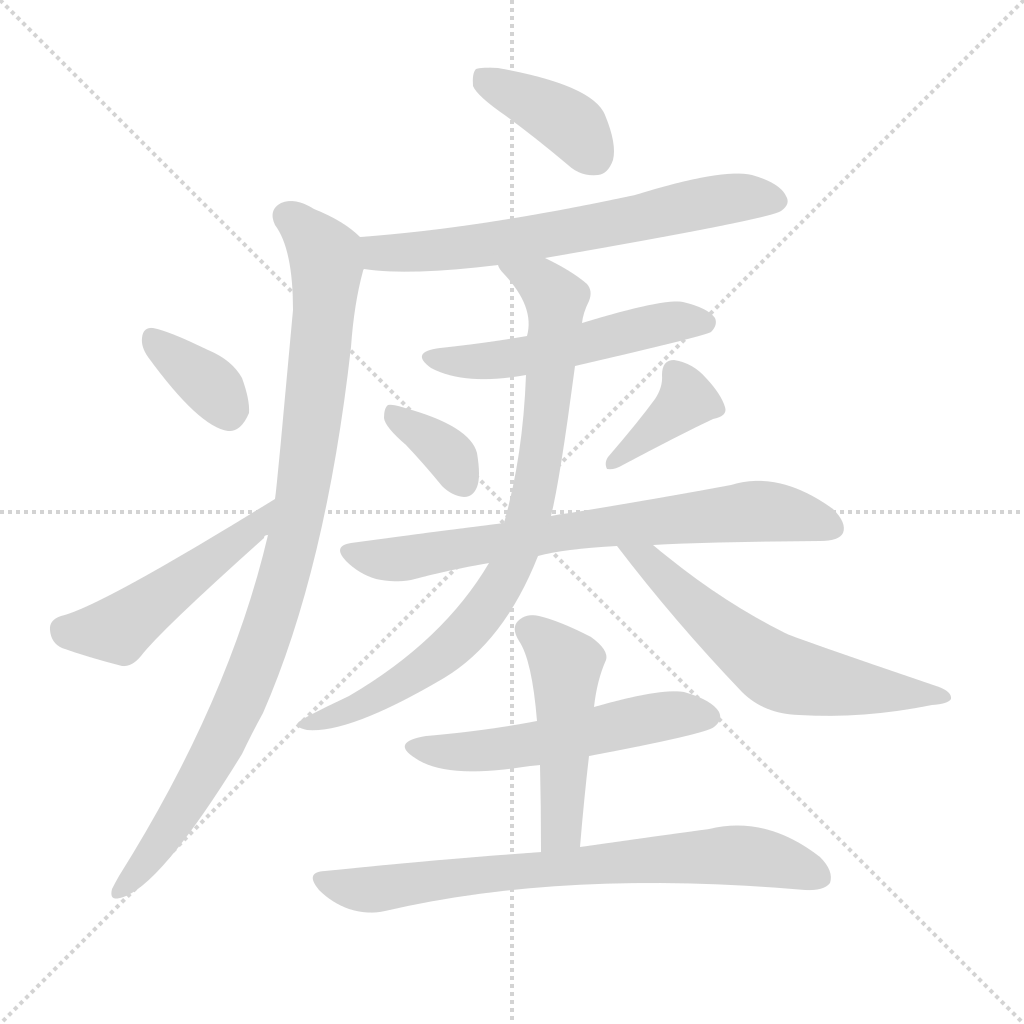
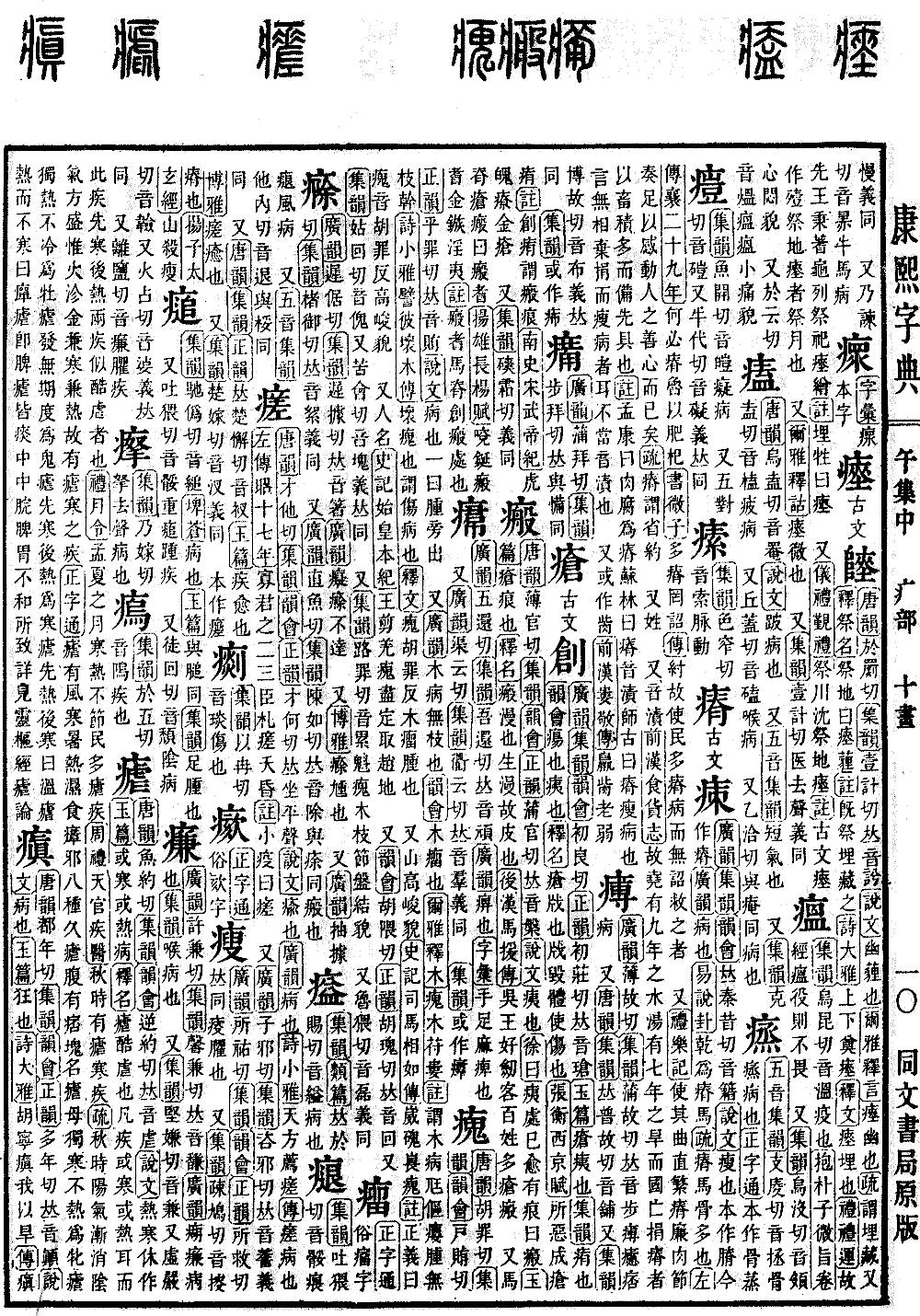
Wu Collection, Middle Volume. Radical: Sickness (nì). 15 strokes. Page 778, Entry 03. Ancient character. Pronounced yi (falling tone). According to the Shuowen Jiezi, it means to bury in darkness. According to the Erya (Er ya), "to bury" means to hide. The commentary explains this as interment. It also notes in the Glossary of Sacrificial Names that burying offerings during a sacrifice to the earth is called yimai. The commentary states that after the sacrifice, the items are buried. In the Book of Odes (Shijing), it says, "Above and below, the offerings are set out and buried." The commentary notes that to bury means to inter. In the Book of Rites (Liji), it says, "Therefore the former kings held the tortoise shells and divining stalks, and set out the sacrifices, burying the silk offerings." The commentary explains that burying a sacrificial animal is called burying. In the Book of Etiquette and Ceremonial (Yili), it says, "In sacrificing to rivers, one sinks the offerings; in sacrificing to the earth, one buries them." The commentary explains that in the ancient script, this character was written as a variant form (yì). Sacrificing to the earth by burying is a sacrifice to the moon. Also, in the Erya (Er ya), it says that to bury means to be subtle or slight. Also, according to the Jiyun, pronounced yi (falling tone), the meaning is the same.