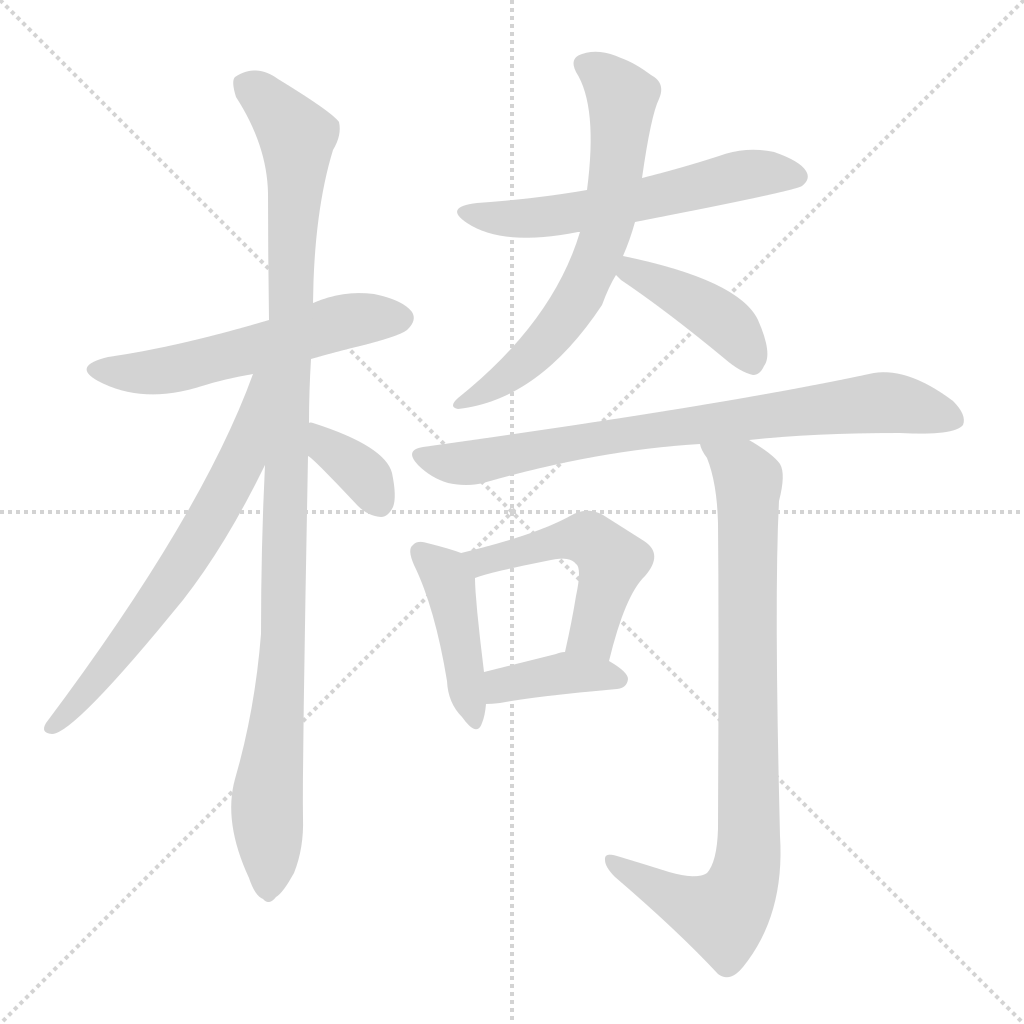
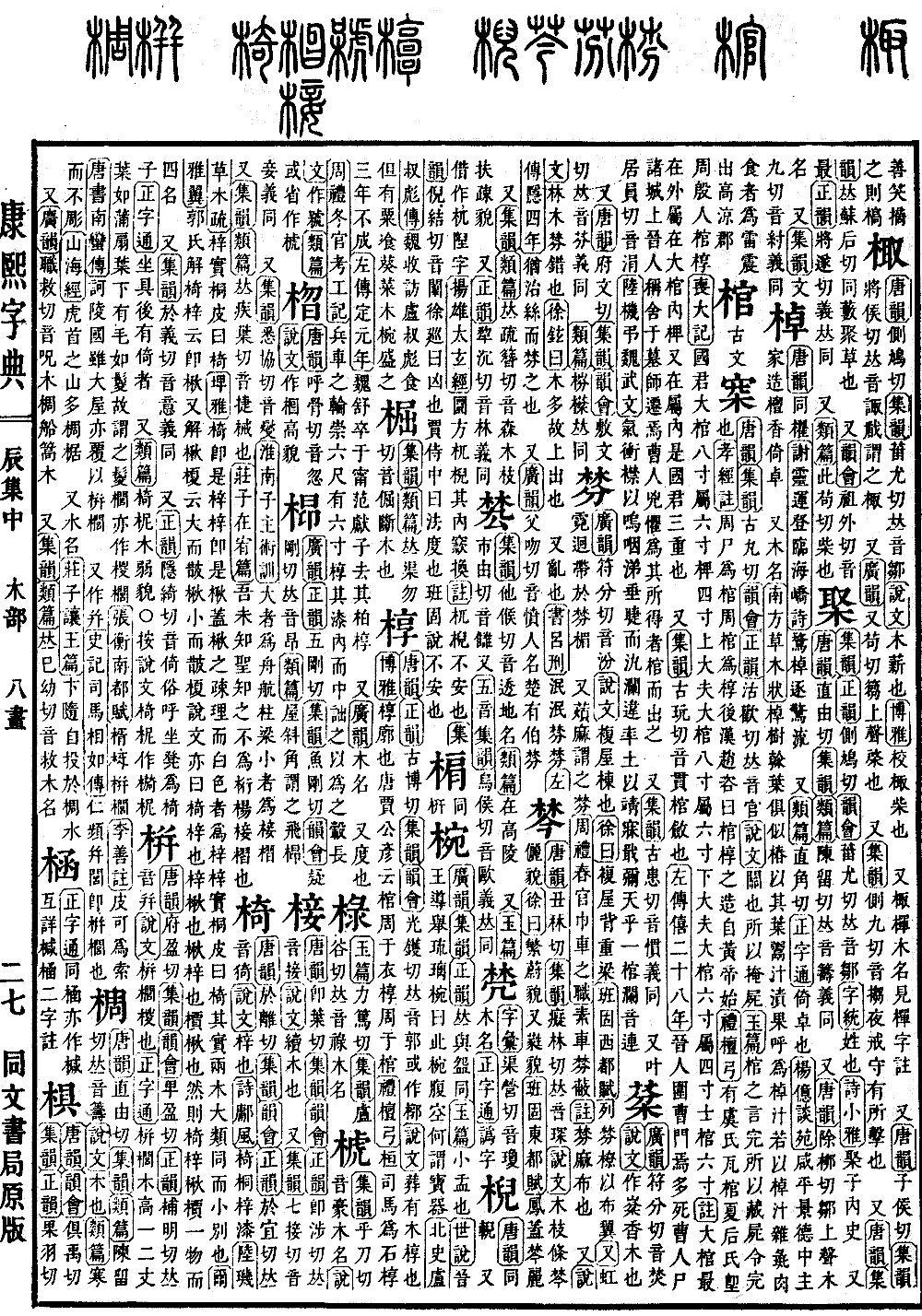
Chen Collection, Middle Volume. Radical: Tree (mù). Kangxi stroke count: 12. Page 535, Entry 21.
Pronounced yi.
Shuowen Jiezi (Explanation of Writing and Analysis of Characters) states it is the catalpa tree.
Book of Odes (Shijing), Odes of Yong: Catalpa, paulownia, and lacquer trees.
Lu Ji, Commentary on Flora and Fauna: The fruit of the catalpa and the bark of the paulownia are called yi.
Pi Ya (Amplification of the Erya): The yi is the same as the catalpa, and the catalpa is the same as the catalpa ovata (qiu). It is generally considered that the qiu which has a loose grain and is white in color is the catalpa, and that the fruit of the catalpa and the bark of the paulownia are called yi; in reality, these two trees are largely the same but have minor differences.
Erya Yi (Expanded Wings of the Erya): Guo Pu explained that the yi and the catalpa are both the qiu. He further explained that the qiu and the jia are related; the large and rough-barked is the qiu, while the small and rough-barked is the jia. The Shuowen Jiezi also states: The yi is the catalpa. The catalpa is the qiu. The qiu is the catalpa. The jia is the qiu. Therefore, yi, catalpa, qiu, and jia are four names for the same thing.
Pronounced yi. The meaning is the same.
Pronounced yi (third tone). Commonly used to refer to a sitting stool as a chair.
Zhengzitong (Comprehensive Compilation of Characters): A seat with a backrest.
Lei Pian (Categorized Compilation): Yini, describing a tree that is weak in appearance. Note: The Shuowen Jiezi writes this as ni.