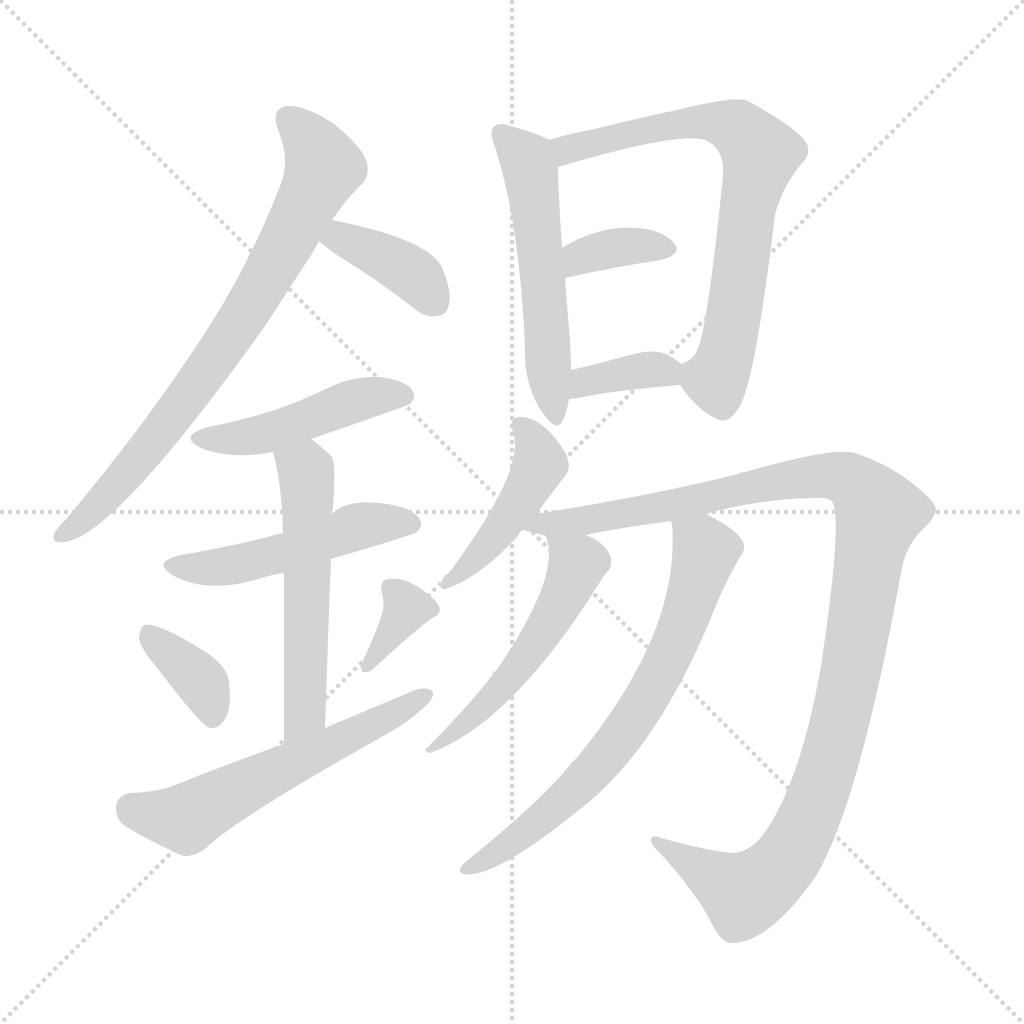
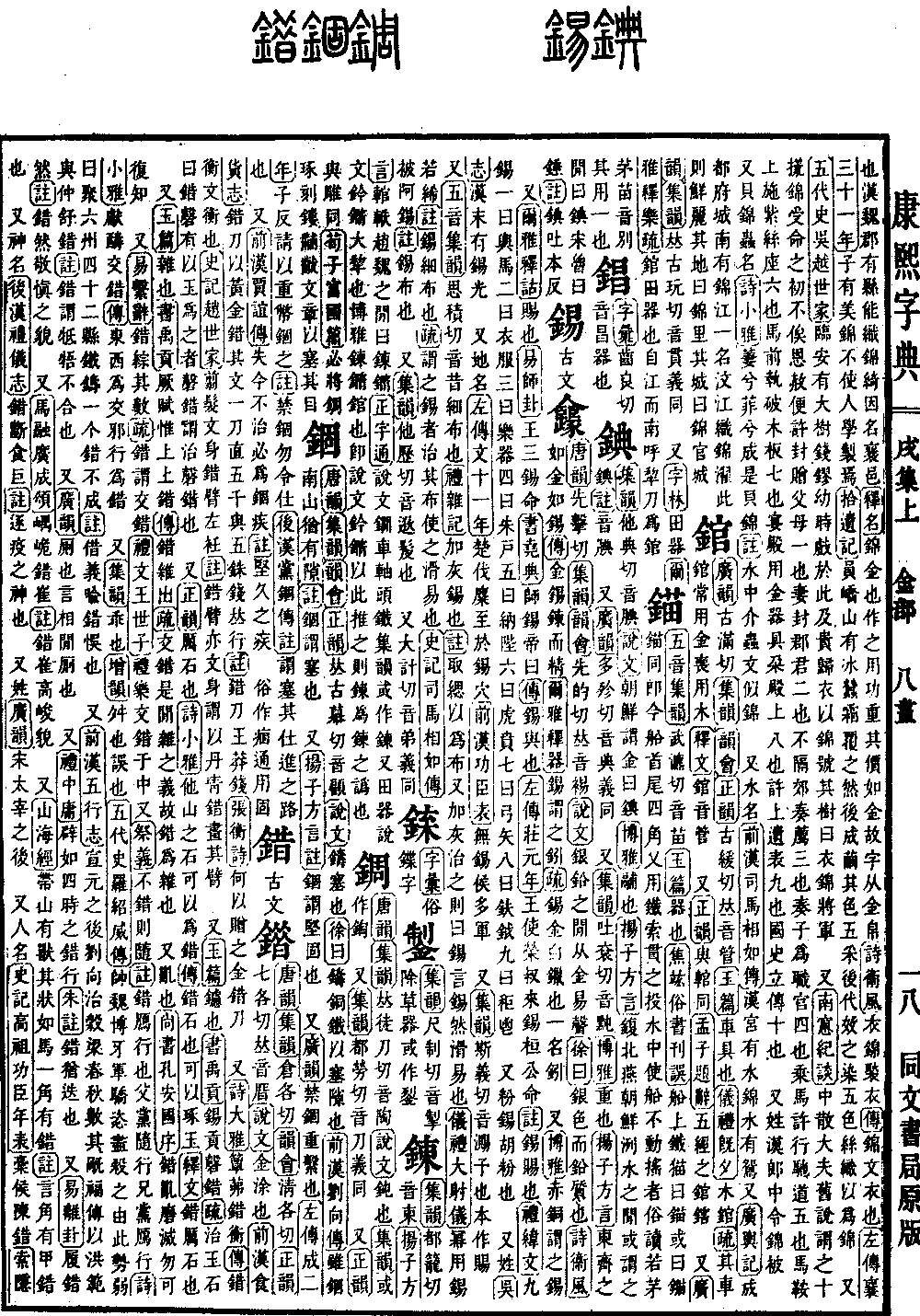
Xu Collection, Upper Volume
Radical: Metal (jīn)
Tin; Kangxi strokes: 16; Page 1312, Entry 05
Ancient character form.
Pronounced xi.
Shuowen Jiezi (Explanation of Script and Elucidation of Characters): A metal between silver and lead in quality. Formed from the metal radical, with the component meaning change providing the sound. Xu comments: The color is that of silver, but the substance is that of lead.
Book of Odes (Shijing), Weifeng: Like gold and like tin.
Commentary: Gold and tin are refined to become pure.
Erya (Approaching Elegance), Interpretation of Implements: Tin is also called yin.
Sub-commentary: Tin is a white pewter metal; another name is yin.
Guangya (Expanded Elegance): Red copper is also called tin.
Erya (Approaching Elegance), Interpretation of Words: To bestow.
Book of Changes (Yijing), Shi hexagram: The king bestowed commands three times.
Book of Documents (Shangshu), Canon of Yao: The ministers suggested to the Emperor.
Commentary: Tin means to give.
Zuo Commentary (Zuo Zhuan), First Year of Duke Zhuang: The King sent Rong Shu to bestow a mandate upon Duke Huan.
Note: Tin means to bestow.
Rites of the Zhou (Zhouli), Weiwencheng: The nine bestowals consist of: first, carriages and horses; second, clothing; third, musical instruments; fourth, vermilion doors; fifth, inner steps; sixth, guards of the palace gate; seventh, bows and arrows; eighth, axes and halberds; ninth, black millet scented wine.
Also refers to fine lead powder, also known as hu powder.
Also a surname. Records of the Three Kingdoms (Wuzhi): At the end of the Han dynasty, there was a person named Xi Guang.
Also a place name. Zuo Commentary (Zuo Zhuan), Eleventh Year of Duke Wen: Chu attacked the Jun state and reached Xixue.
History of the Former Han (Qian Hanshu), Table of Meritorious Officials: The Marquis of Wuxi, Duojun.
Pronounced zi. To give. Originally written as the character for bestow.
Pronounced xi. Fine linen cloth. Book of Rites (Liji), Miscellaneous Records: Apply ash and fine linen.
Note: Using fine linen (si) for cloth, and further treating it with ash, it is called xi, implying it is smooth and easily handled.
Book of Etiquette and Ceremonial (Yili), Great Archery Rites: The covering is made of fine linen or fine grass-cloth.
Note: Xi is fine linen cloth.
Sub-commentary: It is called xi because treating the cloth makes it smooth and easy to handle.
Records of the Grand Historian (Shiji), Biography of Sima Xiangru: Wearing refined fine cloth.
Note: Xi means cloth.
Pronounced ti. A hairpiece.
Pronounced di. Same meaning as above.
Textual Research: Zuo Commentary (Zuo Zhuan), Eleventh Year of Duke Wen: Chu attacked the Mi state, reaching Xixue. According to the original text, the character Mi should be corrected to the Jun state.