You Collection, Upper Volume
Radical: See (jiàn)
Kangxi strokes: 14
Page 1135, Entry 23
Pronounced xi.
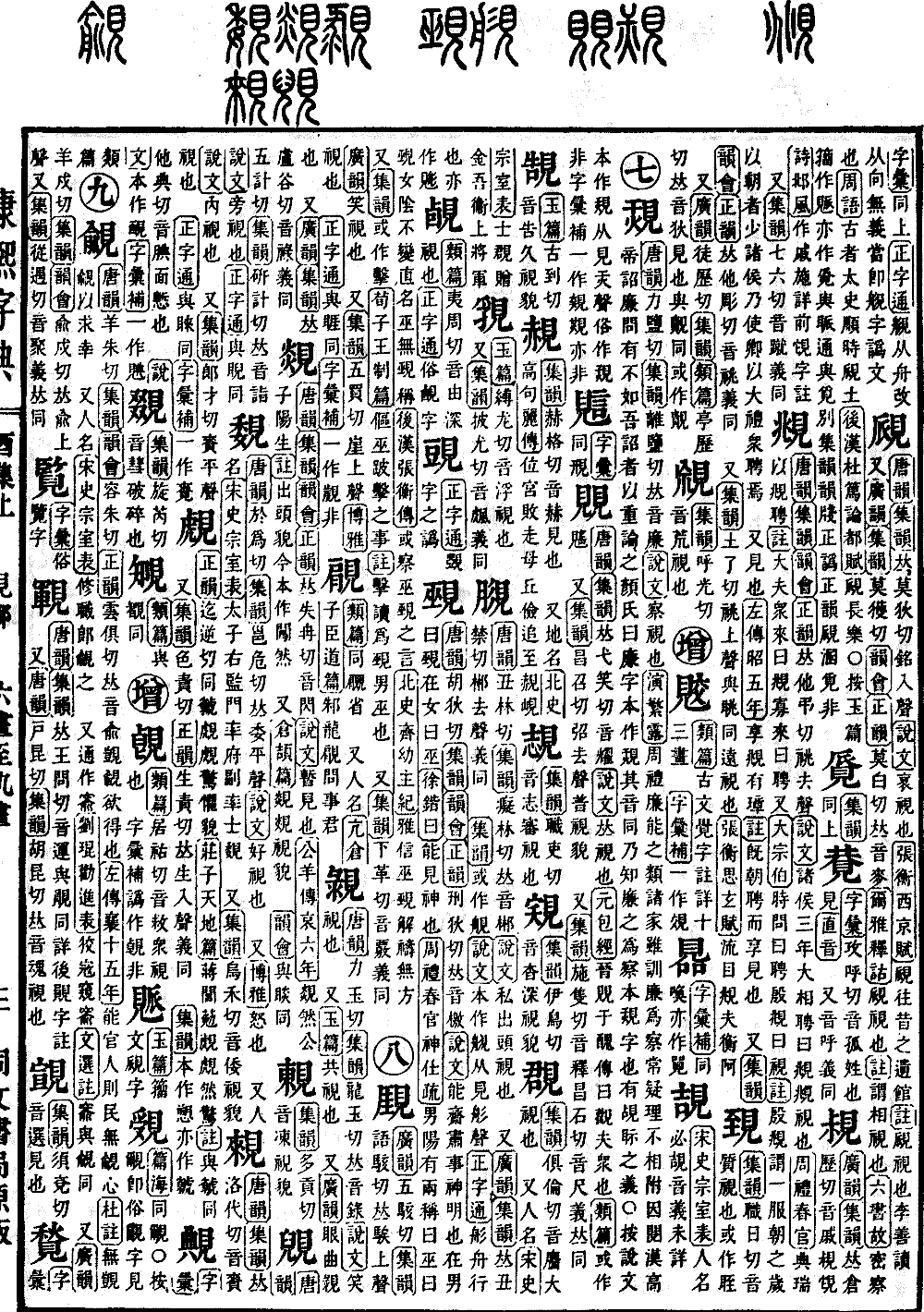
According to the Explaining Graphs and Analyzing Characters (Shuowen Jiezi), it refers to a person capable of fasting and observing reverence to serve the spirits. Males are called xi, while females are called wu. Xu Kai states that the meaning is one who can see spirits.
Rites of Zhou (Zhouli), Spring Officials, Commentary on Spirit Service: Males belonging to the yang principle have two designations, called wu and also called xi. Females belong to the yin principle and retain the same designation, referred to simply as wu, without the designation xi.
History of the Later Han (Hou Hanshu), Biography of Zhang Heng: At times, the words of shamans and male mediums were adopted.
History of Northern Dynasties (Beishi), Annals of the Ruler of Qi: They placed great faith in shamans and male mediums, and their prayers and rituals for dispelling misfortune lacked order.
Also, in the Collected Rhymes (Jiyun), it is sometimes written as the character for strike. Xunzi, Kingly Governance: Mentions such people as hunchbacked sorceresses and lame male mediums. Commentary: The character for strike is identical in pronunciation and meaning to xi. It refers to a male shaman.
Also, in the Collected Rhymes (Jiyun), it is pronounced he. The meaning is identical.