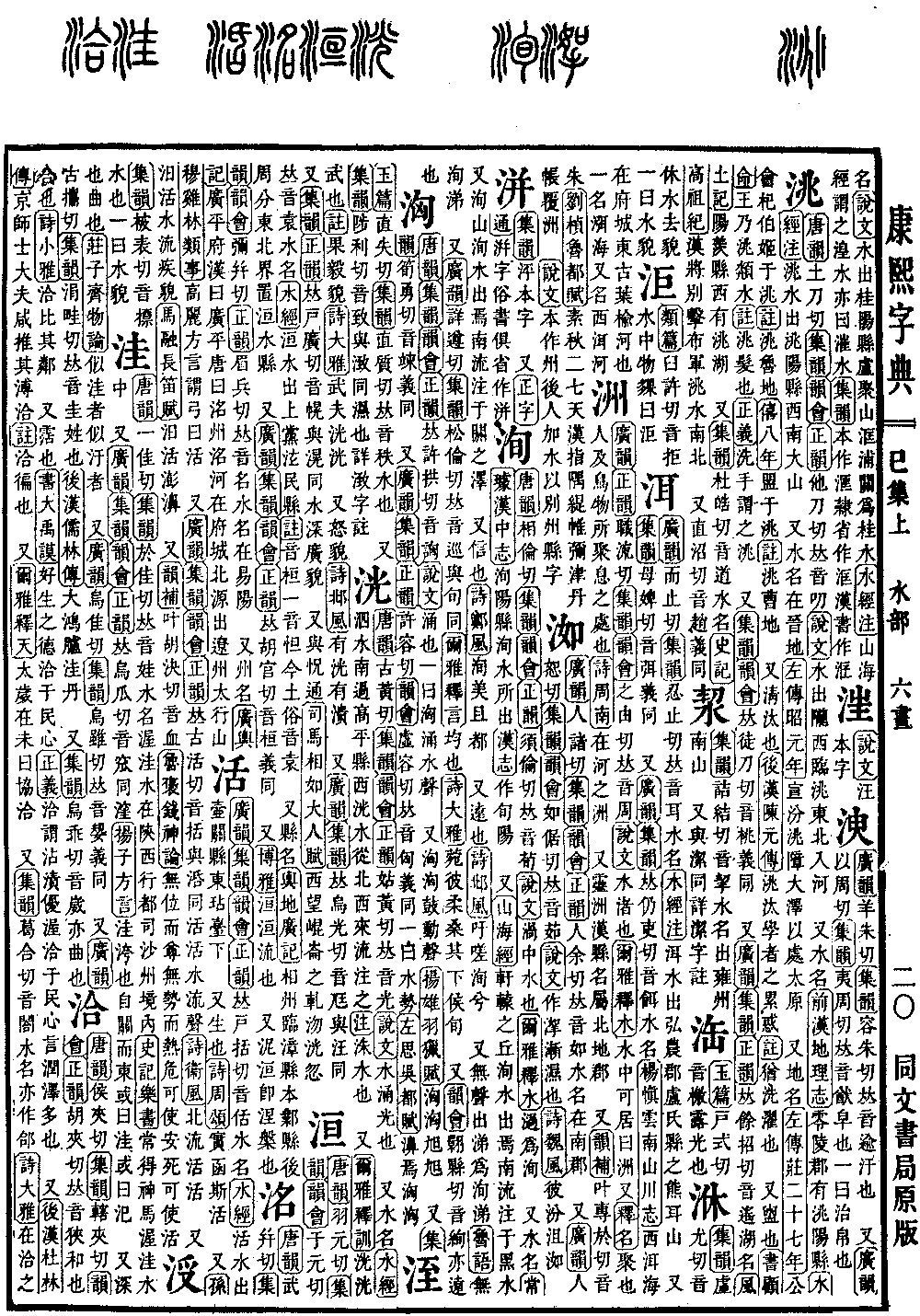
Si Collection, Upper Volume
Radical: Water (shuǐ)
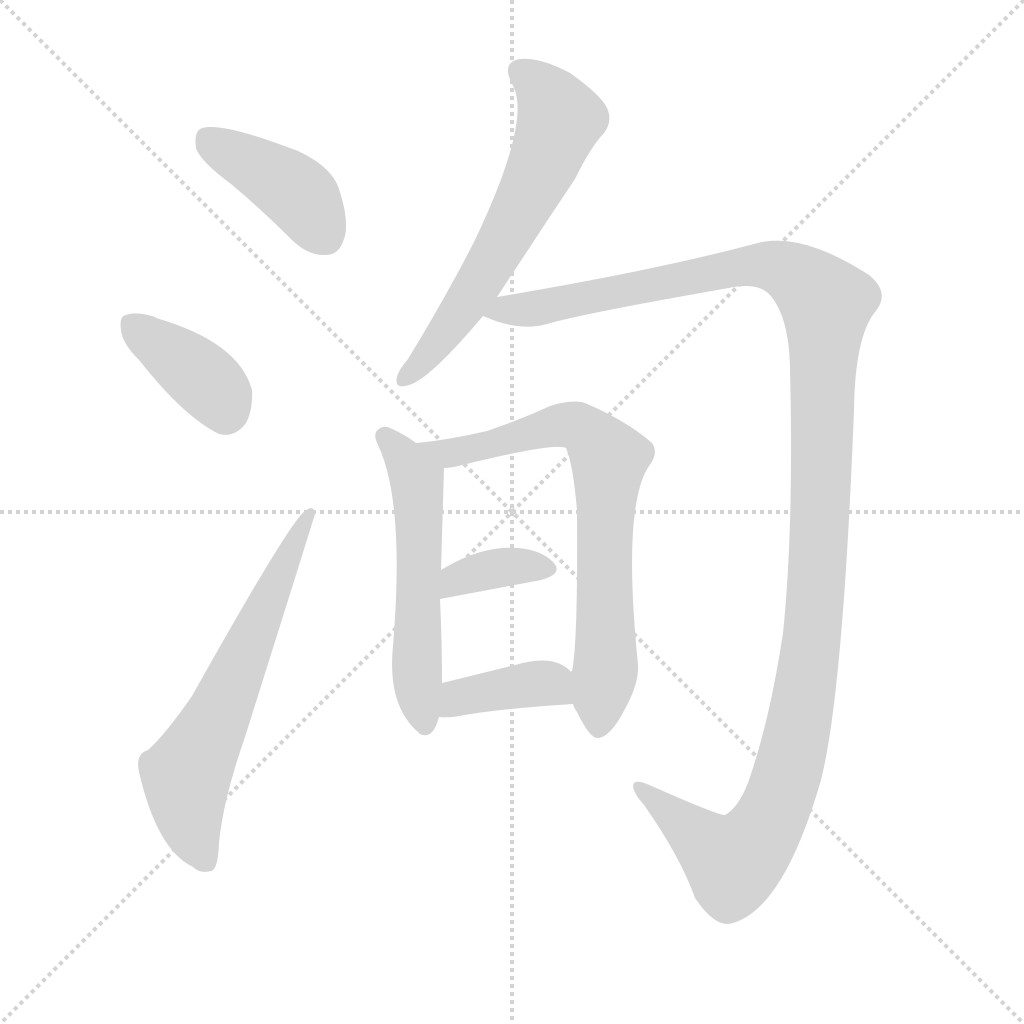
洵
Kangxi Strokes: 10
Page 622, Entry 12
Pronounced xún.
In the Shuowen Jiezi (Shuowen), it refers to water in a whirlpool.
In the Erya (Erya), it is recorded as a synonym for a specific type of water flow.
Also the name of a river. According to the Hanzhong Zhi (Hanzhong Zhi) by Chang Qu, Xunyang County is where the Xun River originates. In the Hanshu (Hanshu) geographical records, it is written as Xunyang.
In the Classic of Mountains and Seas (Shanhaijing), it is noted that the Xun River rises from Xuanyuan Hill and flows south into the Black Water. Additionally, there is Xun Mountain, from which the Xun River rises and flows south into the marsh of E.
It also means sincere or truly. In the Book of Odes (Shijing), it is used in the phrase truly beautiful and elegant.
It also means far or distant. In the Book of Odes (Shijing), it appears in the sense of a deep sigh regarding distance.
It also refers to weeping without sound, known as xun tears. In the Discourses of the States (Guoyu), it states to weep without sound.
Pronounced xún.
Written as a variant form of xún (ten-day period).
In the Erya (Erya), it is defined as equal or uniform.
In the Book of Odes (Shijing), it appears in the description of tender mulberry trees where the ground below is uniform.
Pronounced xuàn.
Also means far or distant.