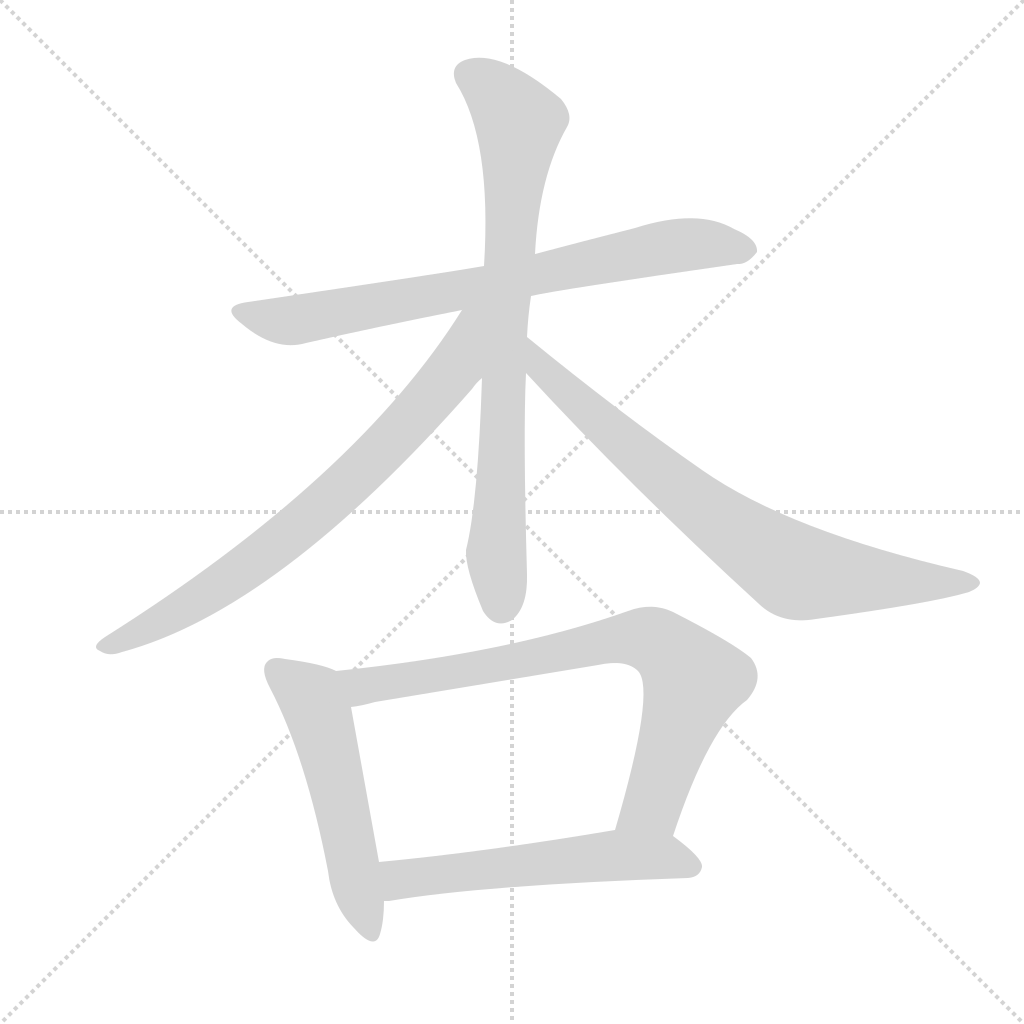
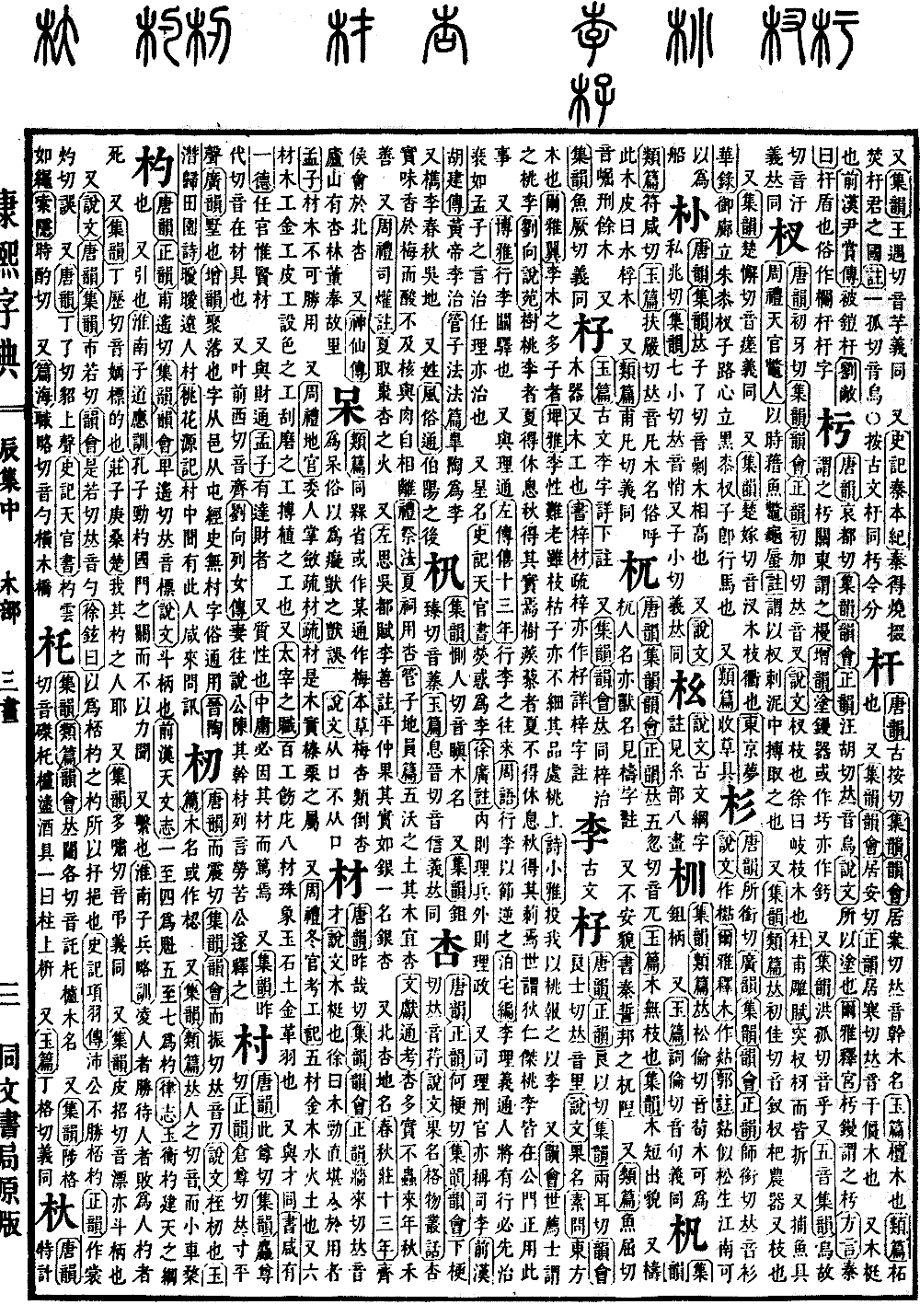
Chen Collection, Middle Volume. Radical: Tree (mù). Kangxi stroke count: 7. Page 511, Entry 14.
Pronounced xing.
Shuowen Jiezi (Explanation of Simple and Compound Characters): Name of a fruit.
Gewu Conghua (Collected Talks on the Investigation of Things): The fruit of the apricot tree is more fragrant than the plum, though less tart. The pit separates naturally from the flesh.
Lu Chen, Sacrifice Statutes (Jifa): Used for summer sacrifices.
Guanzi (Master Guan), Chapter on Earth Resources (Diyuan Pian): Fertile land is suitable for cultivating apricot trees.
Wenxian Tongkao (Comprehensive Examination of Literature): The apricot tree produces abundant fruit and is resistant to pests, which indicates a good autumn harvest for the following year.
Also, Zhou Rites (Zhouli), Commentary on the Master of Fire (Siguanzhu): In summer, fire is taken from jujube and apricot wood.
Also, Zuo Si, Rhapsody on the Capital of Wu (Wudu Fu), Commentary by Li Shan: The fruit known as Pingzhong resembles silver. It is also called ginkgo.
Also, Beixing, a place name. Spring and Autumn Annals (Chunqiu), 13th Year of Duke Zhuang: The Marquis of Qi held a covenant at Beixing.
Also, Biographies of Immortals (Shenxian Zhuan): There is an apricot grove on Mount Lu, the home of Dong Feng.
Critical Note: Regarding the Sacrifice Statutes (Jifa) citation. Upon investigation, the Record of Rites (Liji) does not contain this passage. The Taiping Imperial Reader (Taiping Yulan) quotes Lu Chen's Sacrifice Statutes (Jifa) regarding the use of apricots for summer sacrifices. The text has been corrected from Record of Rites to Lu Chen, and the character for temple has been corrected to the character for sacrifice.