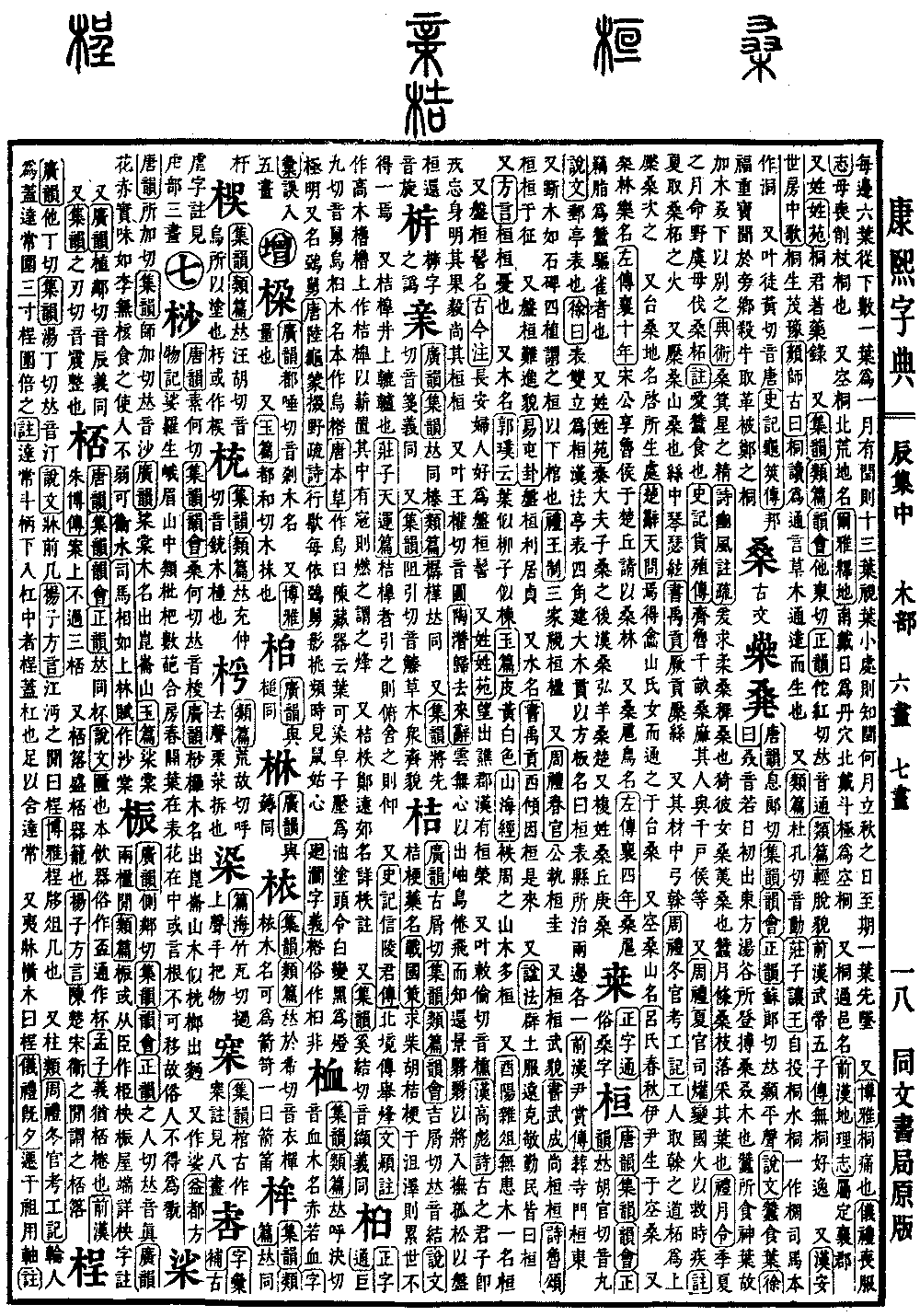
Chen Collection, Middle Volume
Radical: Tree (mù)
Ting, Kangxi stroke count: 11
Page 526, Entry 26
Pronounced ting.
In the Etymological Dictionary (Shuowen), it is defined as a small table placed in front of a bed.
In the Regional Expressions of Yangzi (Fangyan), it is noted that in the regions between the Yangtze and Mian rivers, it is called ting.
In the Extensive Refinements (Boya), it is noted that a ting is a meat-serving stand or small table. It also refers to a type of pillar.
In the Rites of Zhou (Zhouli), section Winter Officials, Artisans' Record (Kaogongji), it states: When wheelwrights make a canopy, the reach of the standard measures three inches in circumference, and the ting measures double that. The commentary explains: The reach of the standard refers to the part of the shaft handle that enters the crossbar. The ting is the canopy's crossbar, sufficiently sized to contain the standard's reach.
Also, the horizontal wood of a barbarian bed is called a ting.
In the Book of Etiquette and Ceremonial (Yili), section On the Evening After the Death (Jixi), it mentions: When moving to the ancestral temple, use a roller. The commentary explains: The roller is a carriage axle. The carriage frame is shaped like a long bed, and by passing through the front and rear ting, the axle is secured.
Also, pronounced ting, referring to a mortar stand.
Pronounced ying. Identical to the character for a pillar or column (ying).
Pronounced jing. A small table placed in front of a bed.