Yin Collection, Upper Volume
Radical: Corpse (shī)
Kangxi Strokes: 10
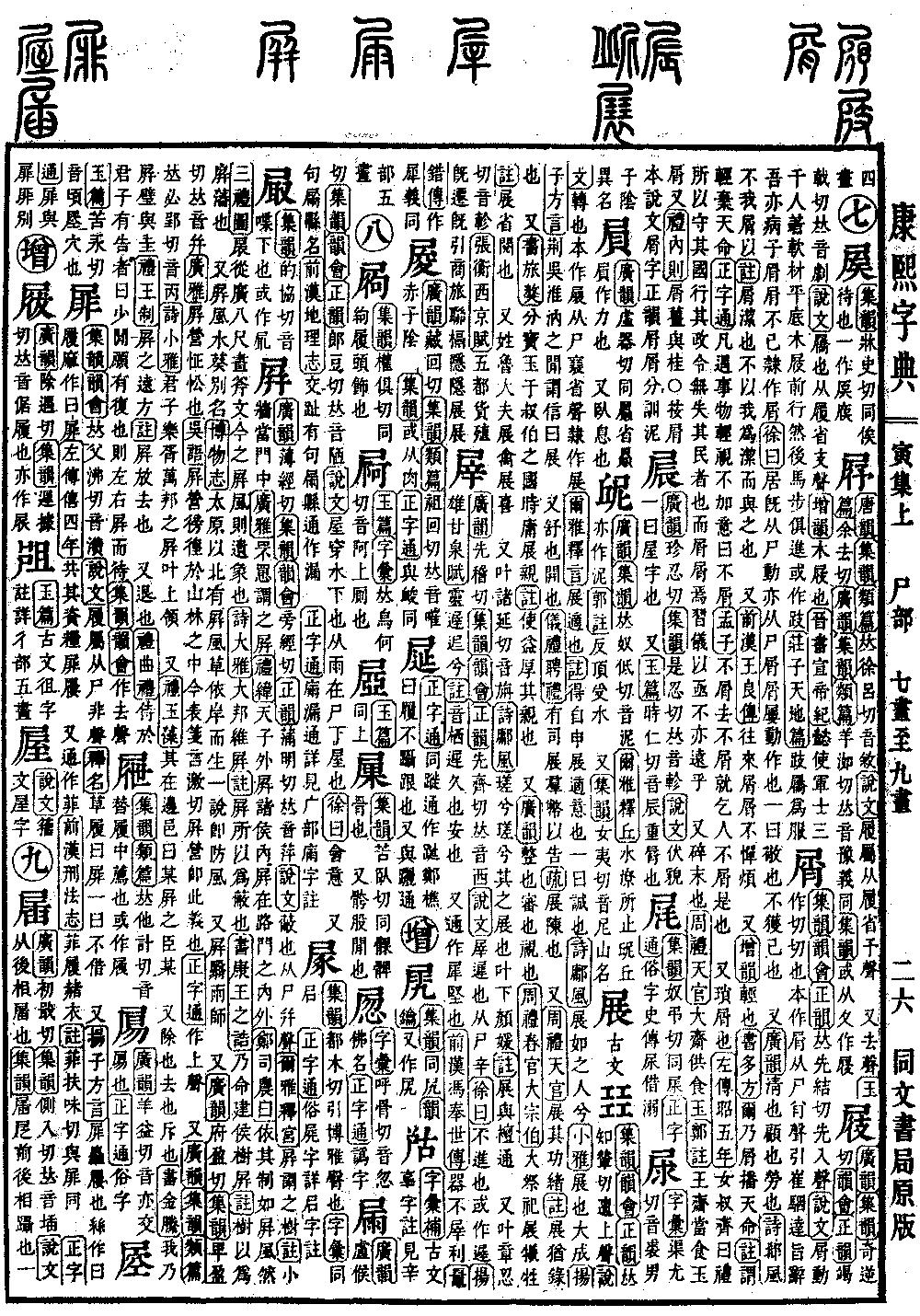
Page 302, Entry 04
Collected Rhymes (Jiyun), Rhyme Meetings (Yunhui), and Orthodox Rhymes (Zhengyun) all provide the pronunciation xie (entering tone).
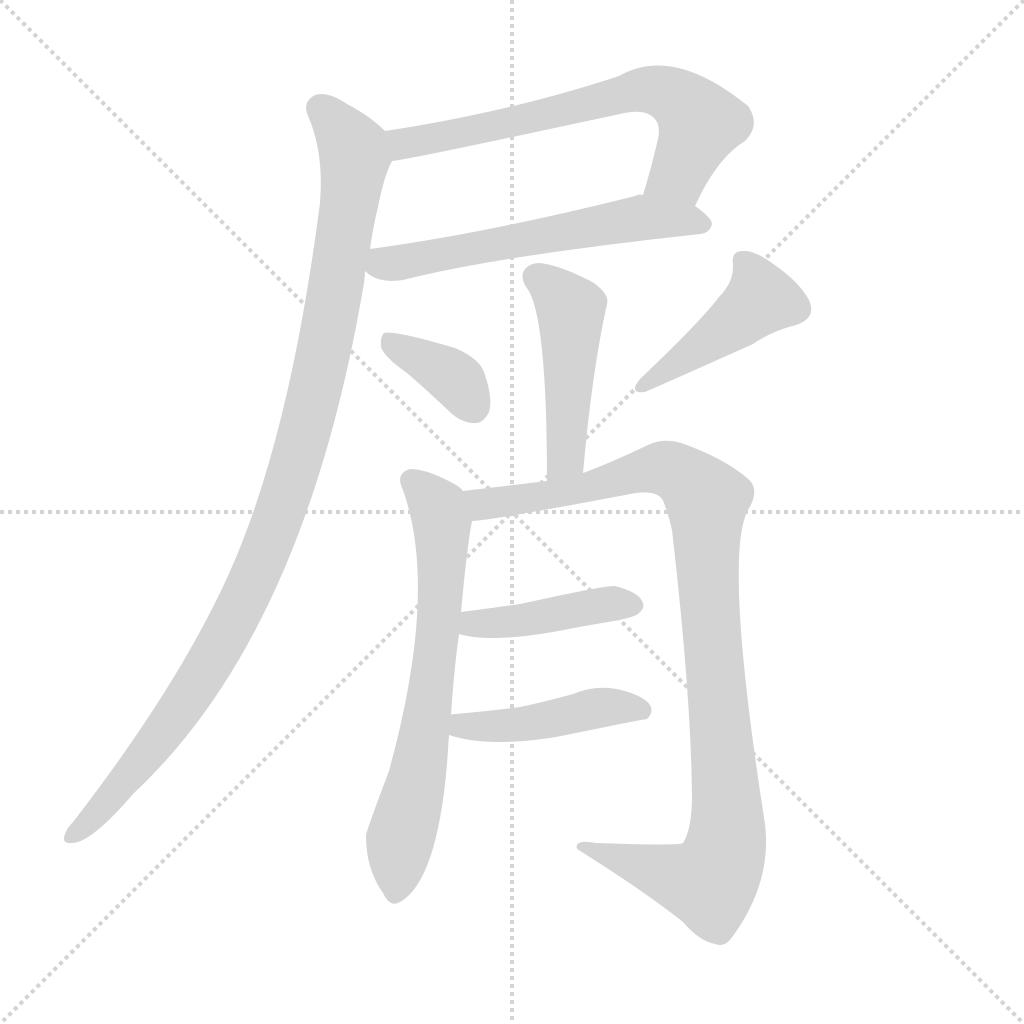
Explaining Characters (Shuowen) states that xie means movements that are intense and urgent. The original form was written with the corpse radical and a phonetic component. It cites the Accomplished Intent (Dazhi) by Cui Yin, saying, I am also troubled by you, without ceasing. The clerical script is written as xie. Xu states that since the character for reside (ju) follows the corpse radical, the character for movement (dong) also follows it. Xie-xie refers to repeated movements. One definition is respect, or doing something because one has no other choice.
Broad Rhymes (Guangyun) states it means pure, to care for, or to toil.
Book of Odes (Shijing), Odes of Bei (Beifeng): He does not consider me clean (or worthy). Commentary states: Xie means clean. He does not consider me clean, and thus does not associate with me.
History of the Former Han (Qianhan), Biography of Wang Liang: Coming and going constantly without fearing the trouble.
Additional Rhymes (Zengyun) states it means light or slight.
Book of Documents (Shujing), Numerous Regions (Duofang): You lightly cast aside the mandate of Heaven. Commentary states: This means to lightly abandon the mandate of Heaven.
Orthodox Character Guide (Zhengzitong): When one treats objects or matters with indifference and does not pay attention, it is called not xie. Book of Mencius (Mengzi): Not deigning to leave, not deigning to approach, not deigning to accept from a beggar; these are examples.
It also means trivial or petty. Zuo Commentary (Zuozhuan), fifth year of Duke Zhao: Nushu Qi said: Ritual is the means by which one guards the state, conducts its government, and does not lose its people. Yet to be meticulously occupied with ritual ceremonies so urgently, is that not far removed from the essence?
It also means fine powder or fragments. Rites of Zhou (Zhouli), Offices of Heaven: The King’s fast provides jade for consumption. Zheng’s commentary states: The King’s fast requires the consumption of jade powder.
Book of Rites (Liji), Inner Rules (Neize): Shredded cinnamon and ginger.
Regarding the original text of Explaining Characters (Shuowen) for the character xie, and the separate definitions in Orthodox Rhymes (Zhengyun), these are considered pedantic.
Textual Corrections:
Rites of Zhou (Zhouli), Offices of Heaven: Great fast provides for eating jade. Zheng’s commentary: The King’s fast should consume jade powder. According to the original text, Great has been corrected to King. Both instances of the character fast have been corrected to the specific fasting term. Provides has been corrected to share. Book of Rites (Liji), Inner Rules (Neize): Shredded ginger and cinnamon. According to the original text, this has been corrected to Shredded cinnamon and ginger. Explaining Characters (Shuowen) entry for the character xie.