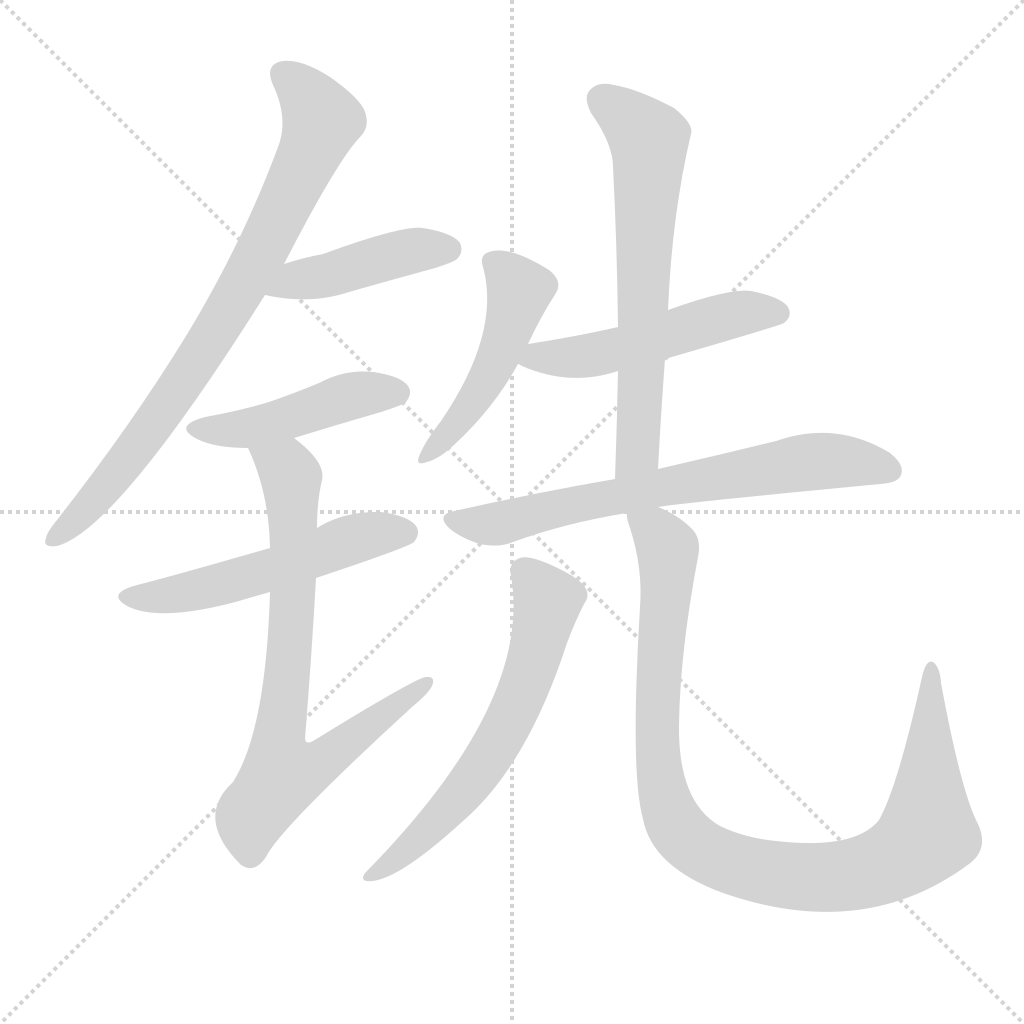
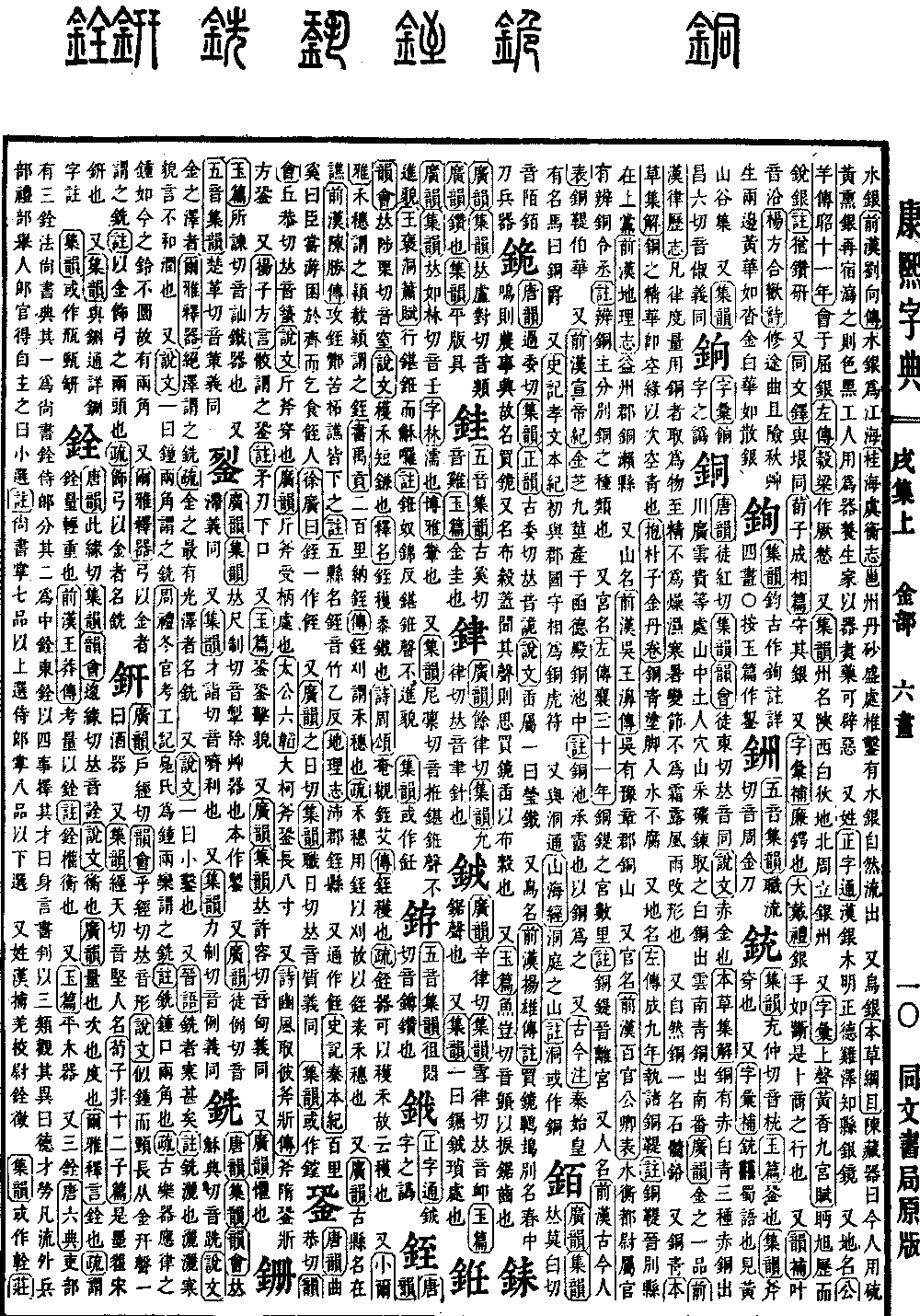
Xu Collection, Upper Volume
Radical: Metal (jīn)
Kangxi Strokes: 14
Page 1304, Entry 01
Pronounced xiǎn.
According to the Explaining Graphs and Analyzing Characters (Shuowen jiezi), it refers to the most lustrous among metals.
According to the Approaches to the Classics: Explaining Implements (Erya: Shiqi), to have exceptional luster is called xian. The commentary states that the most lustrous among metals is called xian.
Another definition in the Explaining Graphs and Analyzing Characters suggests it refers to a small chisel.
In the Discourses of the States (Jinyu), it says that xian describes extreme cold. The commentary notes that xian refers to cold. The phrase describes a shivering, chilly appearance, implying a lack of warmth or smoothness.
Another definition in the Explaining Graphs and Analyzing Characters states that the two corners of a bell are called xian.
In the Rites of Zhou: Winter Offices, Record of Trades (Zhouli: Dongguan Kaogongji), it states that the Fu clan makes bells, and the two edges are called xian. The commentary explains that xian refers to the two corners of the mouth of a bell. The sub-commentary adds that ancient musical instruments, specifically bells designed to harmonize with the musical pitch, were not perfectly round like modern bells, and therefore possessed these two corner projections.
According to the Approaches to the Classics: Explaining Implements (Erya: Shiqi), a bow adorned with metal is called xian. The commentary notes that this refers to using metal to decorate the two ends of a bow. The sub-commentary explains that a bow decorated with metal is called xian.