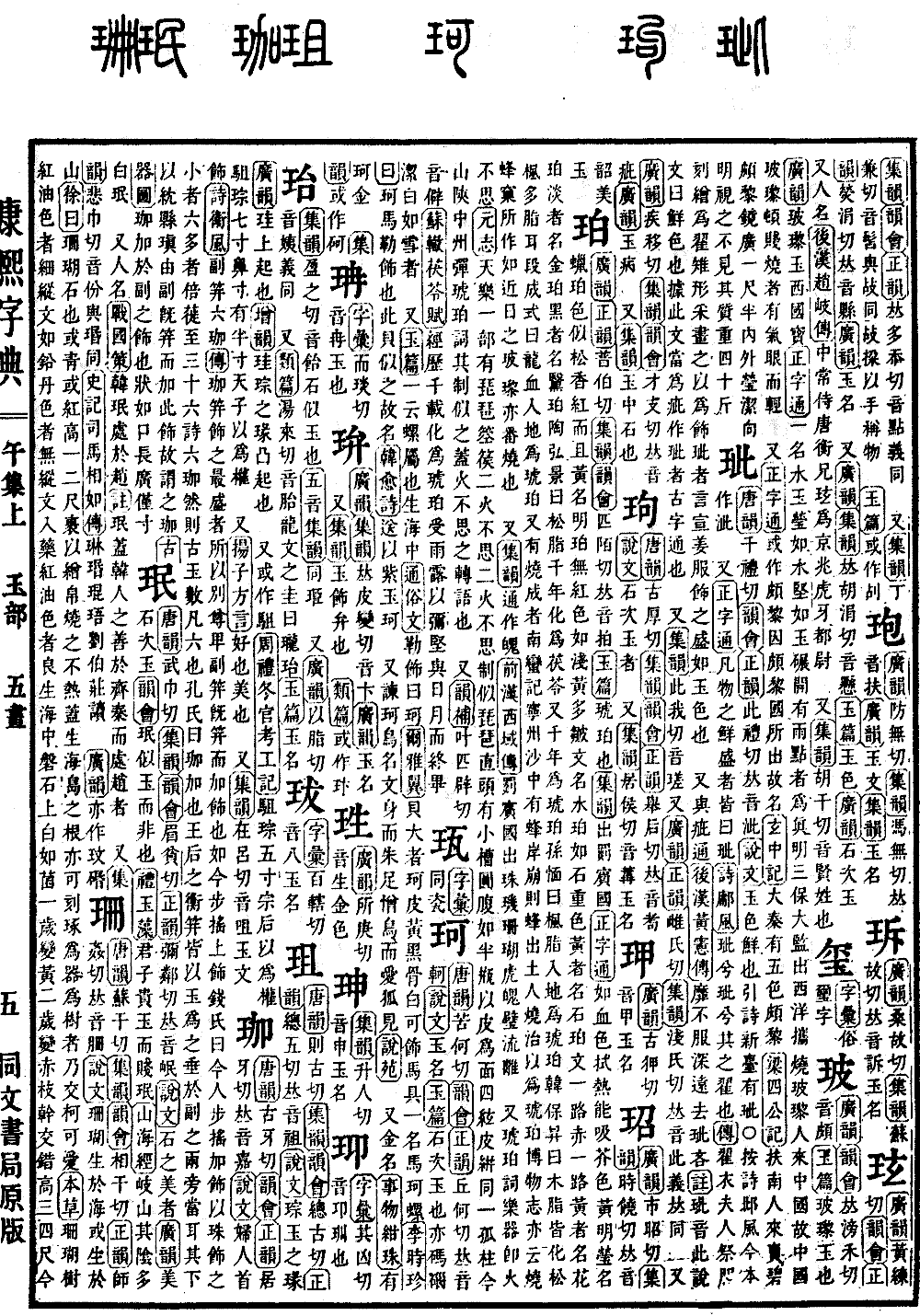
Wu Collection, Upper Volume
Radical: Jade (yù)
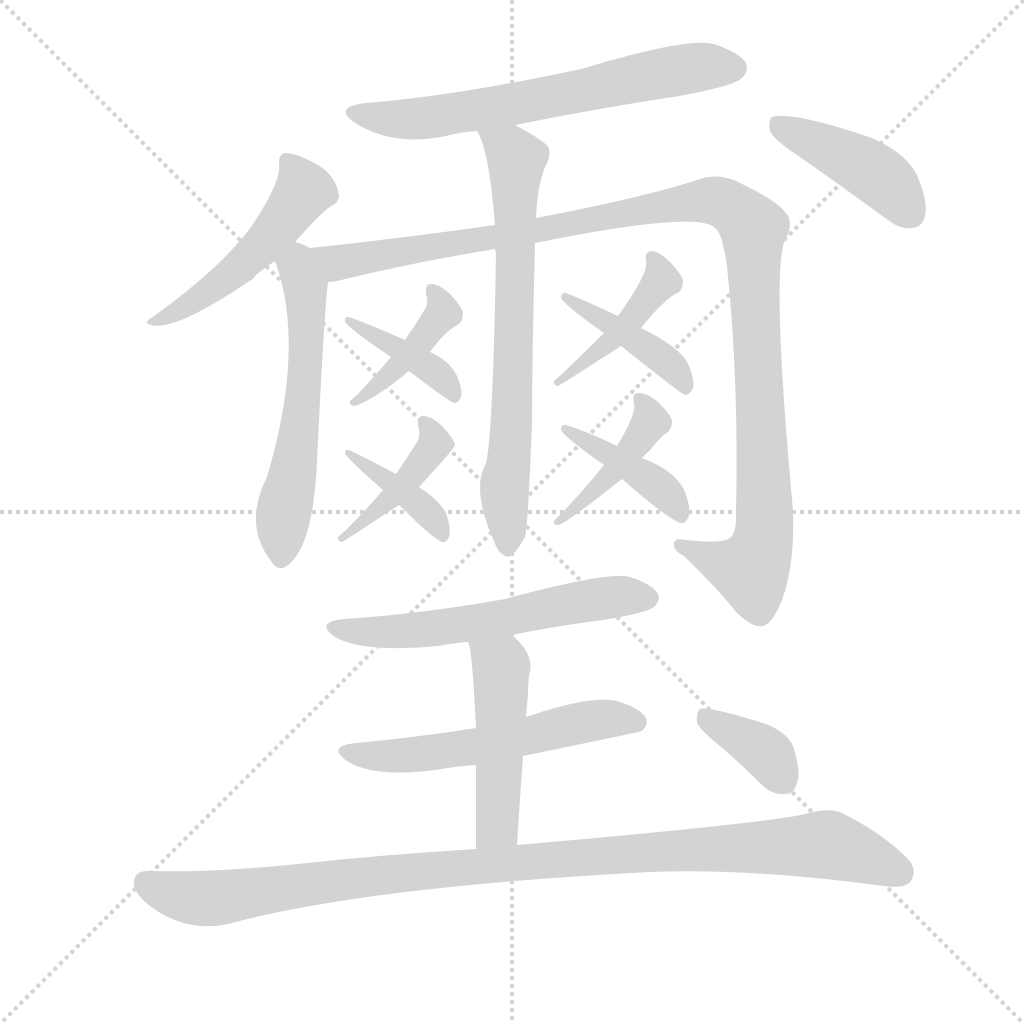
Seal (xǐ)
Kangxi stroke count: 19
Page 729, Entry 01
Guangyun: Pronounced xi. Yunhui: Pronounced xi. Pronounced xi (rising tone).
Shuowen: The seal of a ruler. Originally written as the character composed of the radical for earth and the element xi.
Yupian: The seal of the Son of Heaven or a feudal lord.
Shiming: Seal (xi) means to move (xi). It is used to seal objects so they may be moved, but not opened.
Yunhui: Trust. In ancient times, the term was shared by superiors and inferiors alike; since the Qin and Han dynasties, it has been reserved exclusively for the supreme ruler.
Zuo Zhuan, 29th Year of Duke Xiang: The Duke was in Chu, and Ji Wuzi sent Gongye to inquire, using a sealed document to pursue and give it to him.
Commentary: This refers to the seals used by feudal lords and senior officials as seals.
Rites of Zhou, Earth Officials, Market Overseer: In all trade and movement of goods, use a seal-tally for entry and exit.
Commentary: A seal-tally is an official stamp, similar to the modern doujianfeng (a diagnostic seal for inspecting goods).
Cai Yong, Du Duan: The Emperor possesses six seals.
Book of the Later Han, Records on Carriages and Attire: Seals were all made of jade with dragon and tiger knobs. The inscriptions were: Emperor's Traveling Seal, Emperor's Seal, Emperor's Credential Seal, Son of Heaven's Traveling Seal, Son of Heaven's Seal, and Son of Heaven's Credential Seal, totaling six. Additionally, there was the Great Lantian Jade Seal. The inscription read: Having received the mandate of Heaven, may the Emperor enjoy longevity and prosperity.
Zhengzitong: According to the old system, the imperial carriage carried six seals. During the Tang dynasty, these were renamed treasures. At the end of the Tang dynasty, they were lost. In the Guangshun era of the Zhou dynasty, it was decreed that two treasures be created: the Treasure of the Emperor Receiving the Mandate from Heaven and the Imperial Spirit Treasure. Initially, Emperor Taizong carved the Original Seal of Receiving the Mandate, using white jade with a dragon head. The inscription read: Brilliant mandate of august Heaven, those with virtue shall prosper. Empress Wu renamed all seals as treasures; upon the ascension of Emperor Zhongzong, they were reverted to being called seals. In the sixth year of the Kaiyuan era, they were changed back to treasures. Initially, the term sealed document was changed to treasure document, and the Heirloom Seal of the State was later renamed the Great Treasure of Receiving Heaven.
Also a surname. Xingpu: During the Ming dynasty, there was a person named Xishu.
Also a personal name. Classic of Mountains and Seas: The younger brother of Ji was named Taixi, who fathered Shujun.
Also the name of a country. Classic of Mountains and Seas: The country of Xi is located southeast of the Kunlun Mountains, situated within the shifting sands.
Zihui Bu: Baopuzi mentions the country of Xichan. The original character was written using the element huan.
Textual Research:
Rites of Zhou, Earth Officials, Market Overseer: In all trade and movement of goods, use a seal-tally for entry and exit.
Commentary: A seal-tally is an official stamp, similar to the modern doujianfeng (a diagnostic seal for inspecting goods).
We have corrected the character jian in doujianfeng to comply with the original text.