Si Collection, Upper Volume
Radical: Water (shuǐ)
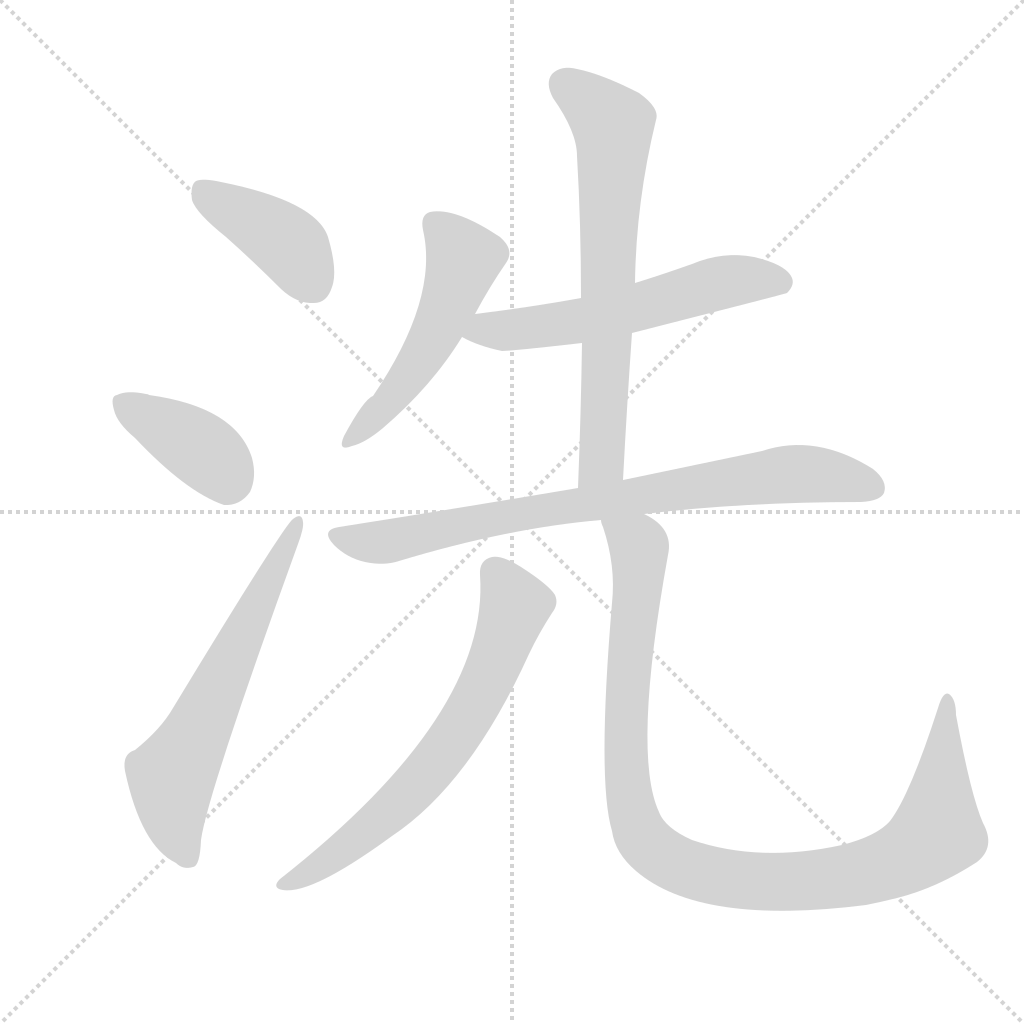
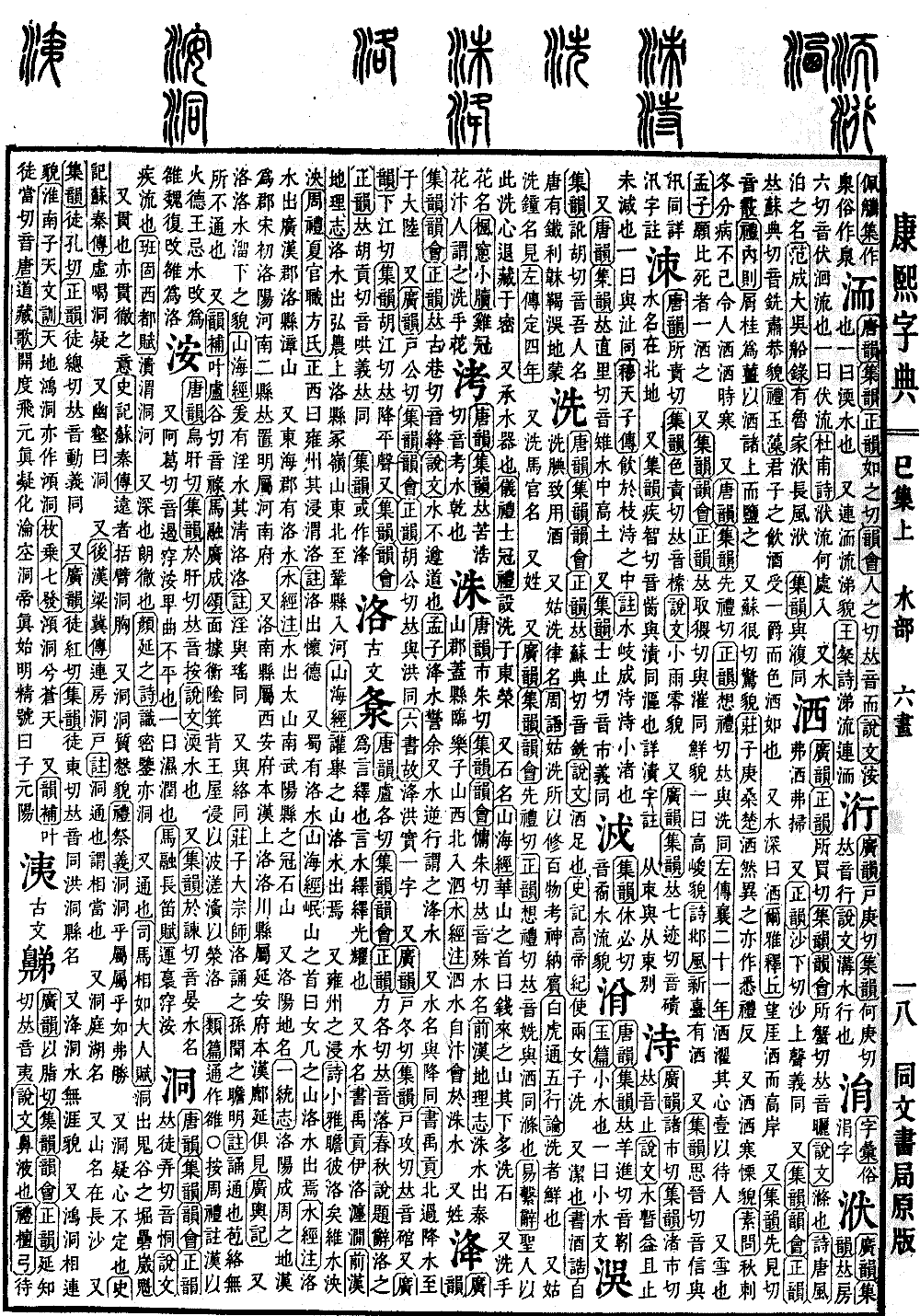
Wash; Kangxi stroke count: 10; Page 620, Entry 11
Pronounced xǐ. According to the Shuowen Jiezi (Shuowen), it means to wash the feet. Records of the Grand Historian (Shiji), Biography of Emperor Gaozu: Allowing two women to wash his feet. It also means to cleanse. Book of Documents (Shangshu), Announcement about Drunkenness (Jiugao): Prepare for yourself clean and abundant food to use for drinking.
Also Guxi, the name of a pitch pipe. Discourses of the States (Guoyu): Guxi is used to regulate all things, to respect the gods and welcome guests. Comprehensive Discussions in the White Tiger Hall (Baihu Tong), Discussions on the Five Phases (Wuxing Lun): Wash means fresh and clean. Also Guxi, the name of a bell. Seen in the Zuo Commentary (Zuozhuan), Year 4 of Duke Ding. Also a title for a horse-washing official. Also a surname.
Pronounced xiǎn. Same as the word for sprinkle or wash. Book of Changes (Yijing), Appended Remarks (Xici): The sage uses this to cleanse the inner heart and withdraw into hiding.
Also a vessel for holding water. Book of Etiquette and Ceremonial (Yili), Capping Ritual for Scholars (Shi Guanli): Set up washing vessels under the eaves of the eastern room.
Also the name of a stone. Classic of Mountains and Seas (Shanhaijing): The beginning of Mount Hua is called Mount Qianlai, and beneath the mountain there are many washing stones.
Also washing hands, the name of a flower. Fengchuang Xiaodu: The cockscomb flower, which people in Bianjing call the hand-washing flower.
Textual research: Records of the Grand Historian (Shiji), Biography of Emperor Gaozu: Allowing two women to wash. According to the original text, Gao Di has been changed to Gaozu. The character for foot has been added under the character for wash.