Wei Collection, Lower Volume
Radical: Meat (ròu)
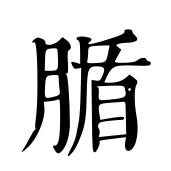
Tu
Kangxi strokes: 15
Page 989, Entry 12
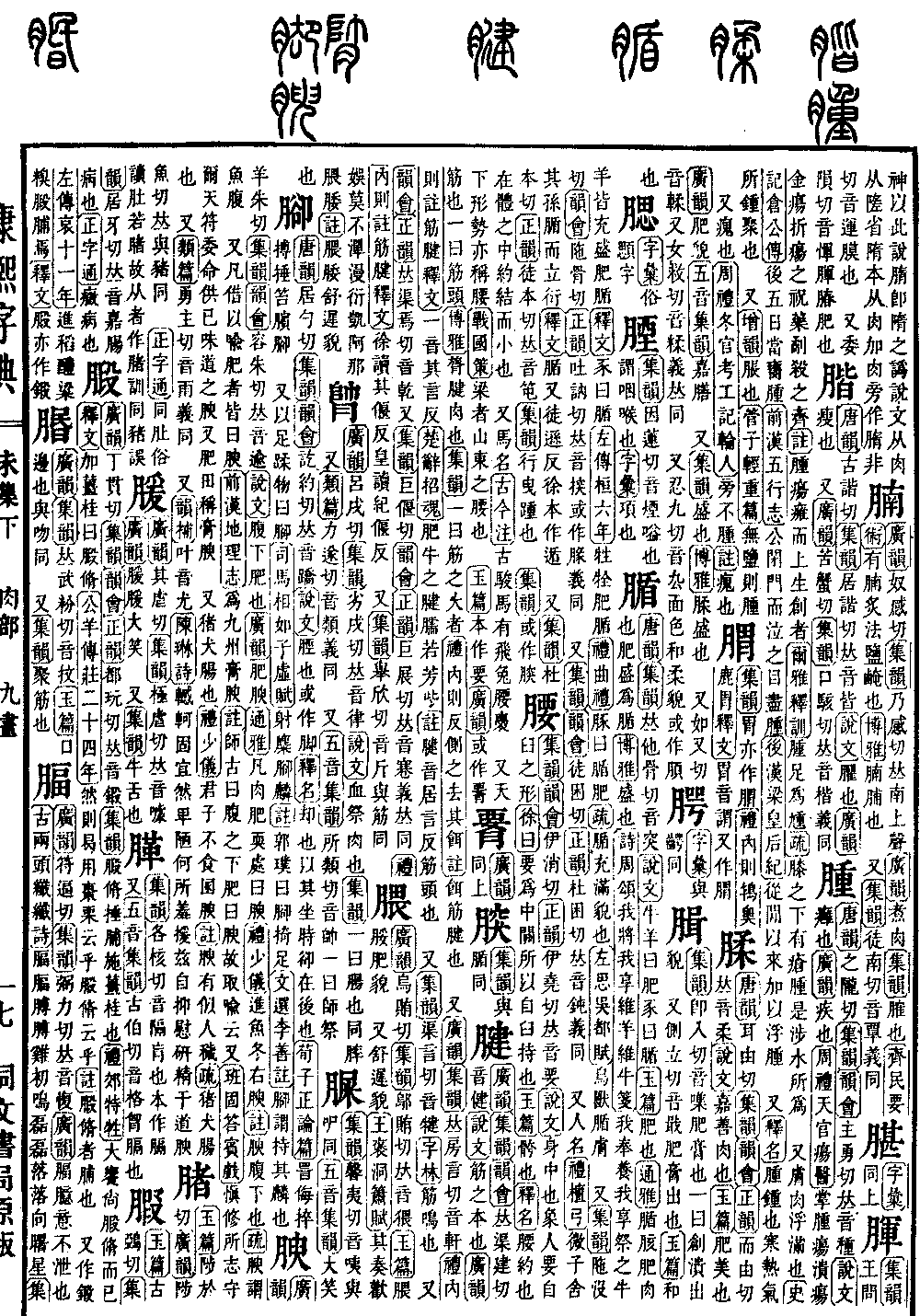
Pronounced tu. According to the Analytical Dictionary of Characters (Shuowen), it describes oxen and sheep that are fat, while for pigs it is called tu. According to the Jade Chapters (Yupian), it means fat. According to the General Refinement (Tongya), the term tu-gai refers to fat meat, and being fat and abundant is called tu. According to the Broad Refinement (Boya), it means abundant. In the Book of Odes (Shijing), Zhou Odes, in the I Offer and I Feast section, the commentary states that the oxen and sheep offered for sacrifice are all full and fat. The Textual Explanation (Shiwen) notes that for pigs it is called tu. In the Zuo Tradition (Zuo Zhuan), under the sixth year of Duke Huan, it refers to sacrificial animals being fat. In the Book of Rites (Liji), within the Qu Li section, it states that a small pig is called tu-fei. The sub-commentary states that tu refers to being full. In Zuo Si's Rhapsody on the Capital of Wu (Wu Du Fu), it describes birds and beasts as being fat.
Also pronounced tu. It is sometimes written in a variant form (zhuan). The meaning is the same.
Also pronounced dun. The meaning is the same.
Also used as a personal name. In the Book of Rites (Liji), within the Tan Gong section, it mentions that the Viscount of Wei set aside his grandson Tu and established Yan as his heir. The Textual Explanation (Shiwen) notes that Tu is also read as tu-sun. The Xu edition writes it as dun.
Also pronounced du. According to the Collected Rhymes (Jiyun), it refers to the appearance of dragging one's heels when walking. According to the Collected Rhymes (Jiyun), it is also written in a variant form.