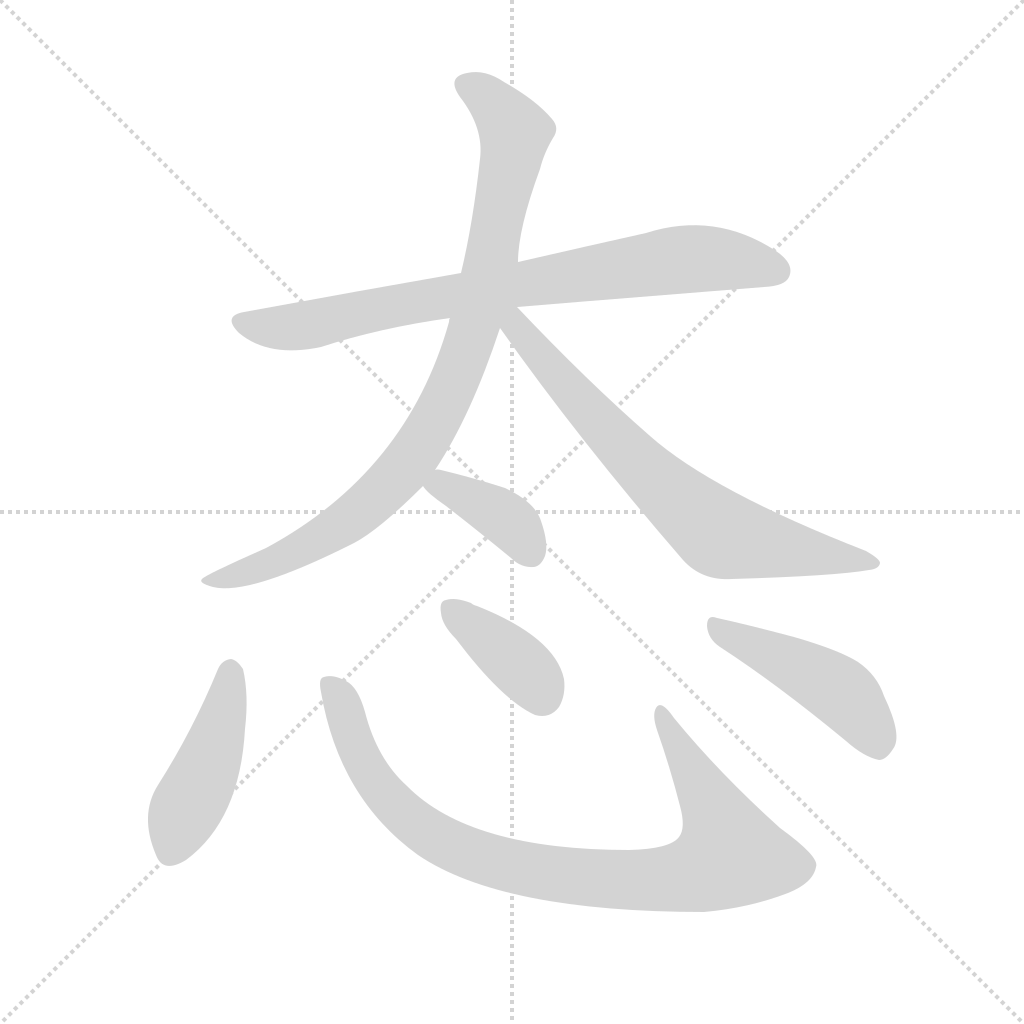
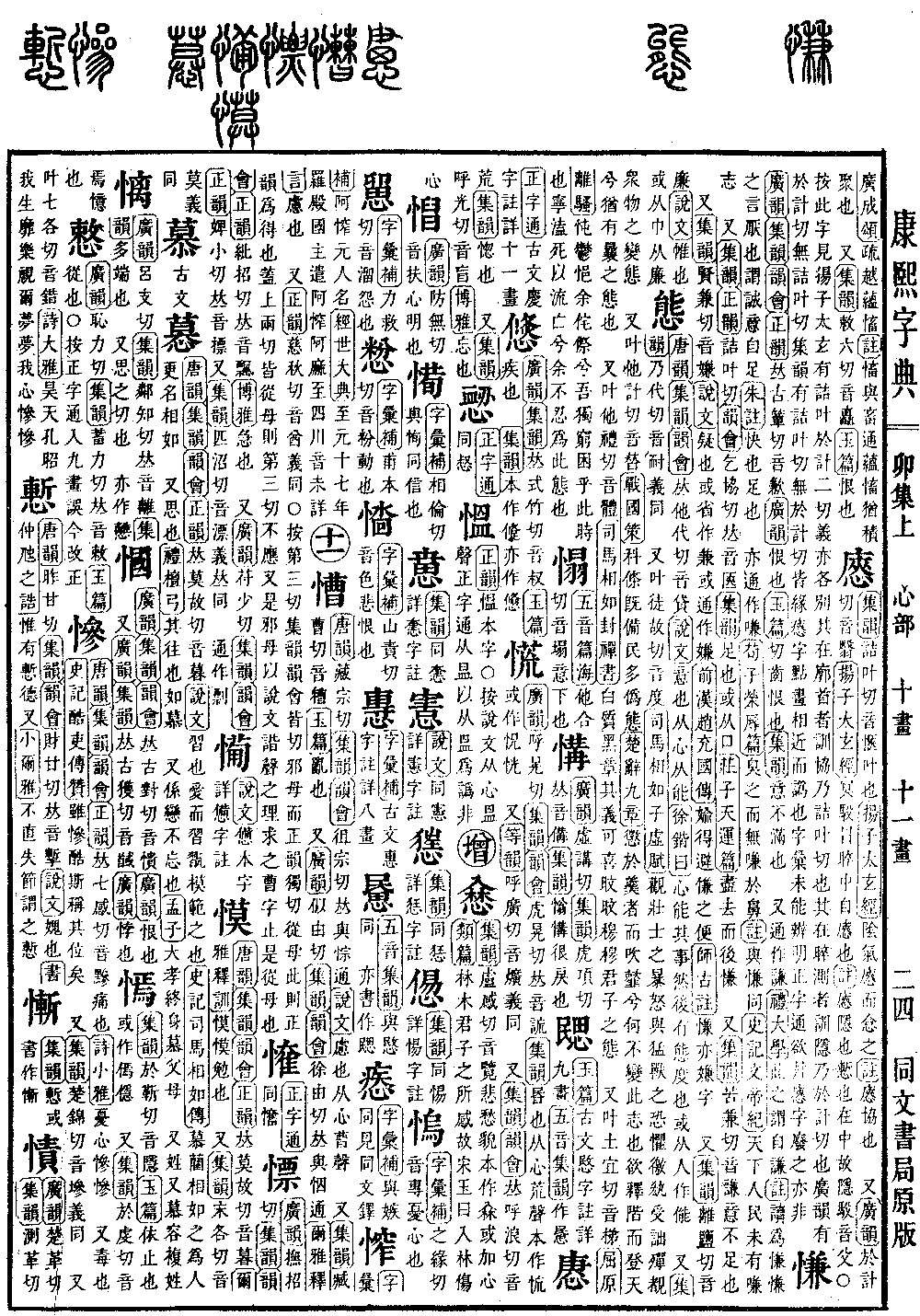
Mao Collection, Upper Volume
Radical: Heart (xīn)
Kangxi stroke count: 14
Page 398, Entry 02
Pronounced dai.
Shuowen Jiezi (Explanation of Simple and Compound Characters): Intent. Composed of the heart radical and the character for able (néng).
Xu Kai stated: When the heart is able to perform an action, only then does an attitude (tai) exist. Sometimes written in a variant form with the person radical.
Pronounced nai. Same meaning as above.
Rhyming with du.
Sima Xiangru, Rhapsody on Sir Fantasy (Zixu Fu): Observing the violent rage of a strong man, and the terror of a wild beast, circling, accepting, crouching, exhaustively viewing the changing attitudes (tai) of all things.
Rhyming with ti.
Strategies of the Warring States (Zhan Guo Ce): Once the statutes and regulations were prepared, the people frequently displayed false attitudes (tai).
Songs of Chu (Chuci), Nine Chapters (Jiuzhang): He who has been scalded by hot soup will blow upon it; why not change this aspiration? Wishing to release the stairs and ascend to heaven; still possessing the attitude (tai) of the past.
Rhyming with ti.
Sima Xiangru, Treatise on the Feng and Shan Sacrifices (Fengshan Shu): With white substance and black markings, its meaning is gratifying. Calm and solemn, the attitude (tai) of a noble man.
Rhyming with ti.
Qu Yuan, Encountering Sorrow (Lisao): I am depressed and frustrated, lonely and dejected; I am uniquely impoverished at this time. Rather than die suddenly and be cast away, I cannot bear to adopt this attitude (tai).