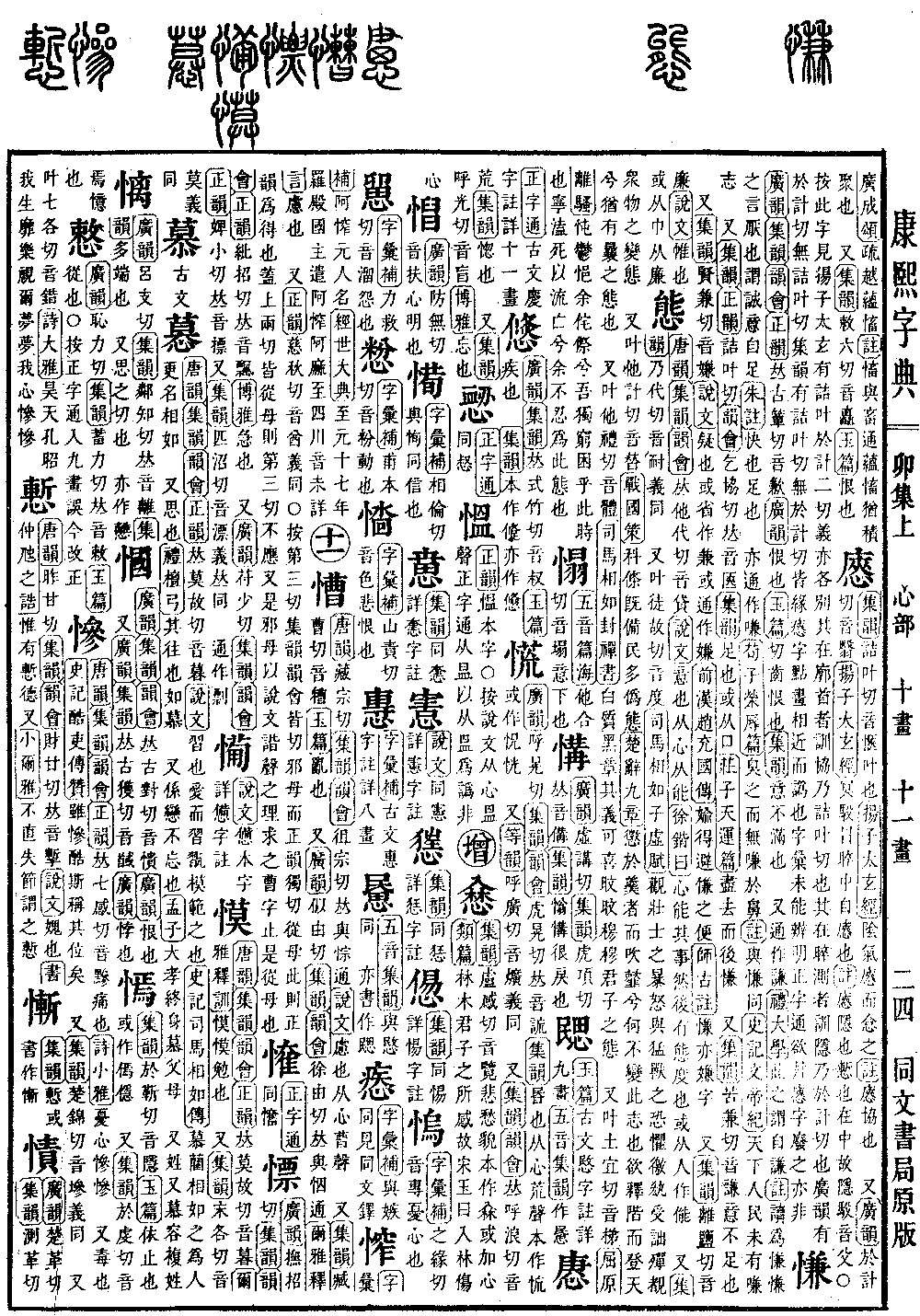
Mao Collection, Upper Volume
Radical: Heart (xīn)
Kangxi stroke count: 14
Page 398, Entry 03
Pronounced dai (falling tone).
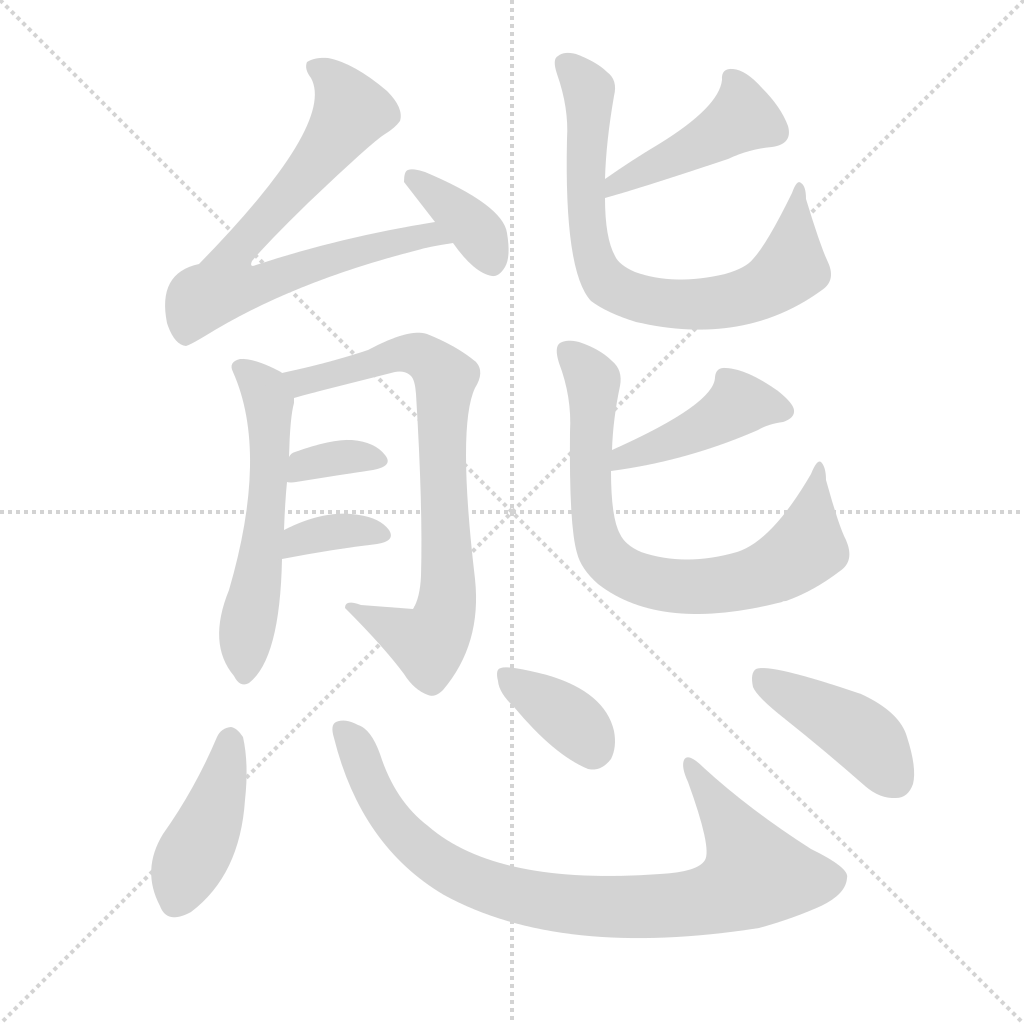
Shuowen Jiezi (Explanation of Graphs and Analysis of Characters) defines this as meaning intent. Formed from the radical Heart and the phonetic element Neng.
Xu Kai says: When the heart is capable of its affairs, only then is there bearing or manner. Sometimes also written in a variant form using the radical Person.
Also pronounced nai (falling tone). The meaning is the same.
Also rhyme-matched to be pronounced du (falling tone). Sima Xiangru, Zixu Fu (Rhapsody on Sir Fantasy): Watching the violent rage of sturdy men, and the fear of ferocious beasts, skirting round and recoiling, exhausting the view of the changing manners of all things.
Also rhyme-matched to be pronounced ti (falling tone). Zhan Guo Ce (Strategies of the Warring States): When the laws and regulations are complete, the people have many false manners. Chu Ci, Jiuzhang (Nine Chapters): One who has been scalded by hot soup blows on it, why not change this ambition? Wishing to release the stairs and ascend to heaven, yet still possessing the former manner.
Also rhyme-matched to be pronounced ti (rising tone). Sima Xiangru, Fengshan Shu (Treatise on the Sacrifices of Feng and Shan): White substance with black patterns, its significance is delightful. Harmonious and solemn, the manner of a noble person.
Also rhyme-matched to be pronounced ti (level tone). Qu Yuan, Lisao (Encountering Sorrow): Depressed and uneasy, I am lonely and in distress at this time; I would rather die suddenly than drift into exile, I cannot bear to act in this manner.