Xu Collection, Middle Volume
Radical: Mound (fù)
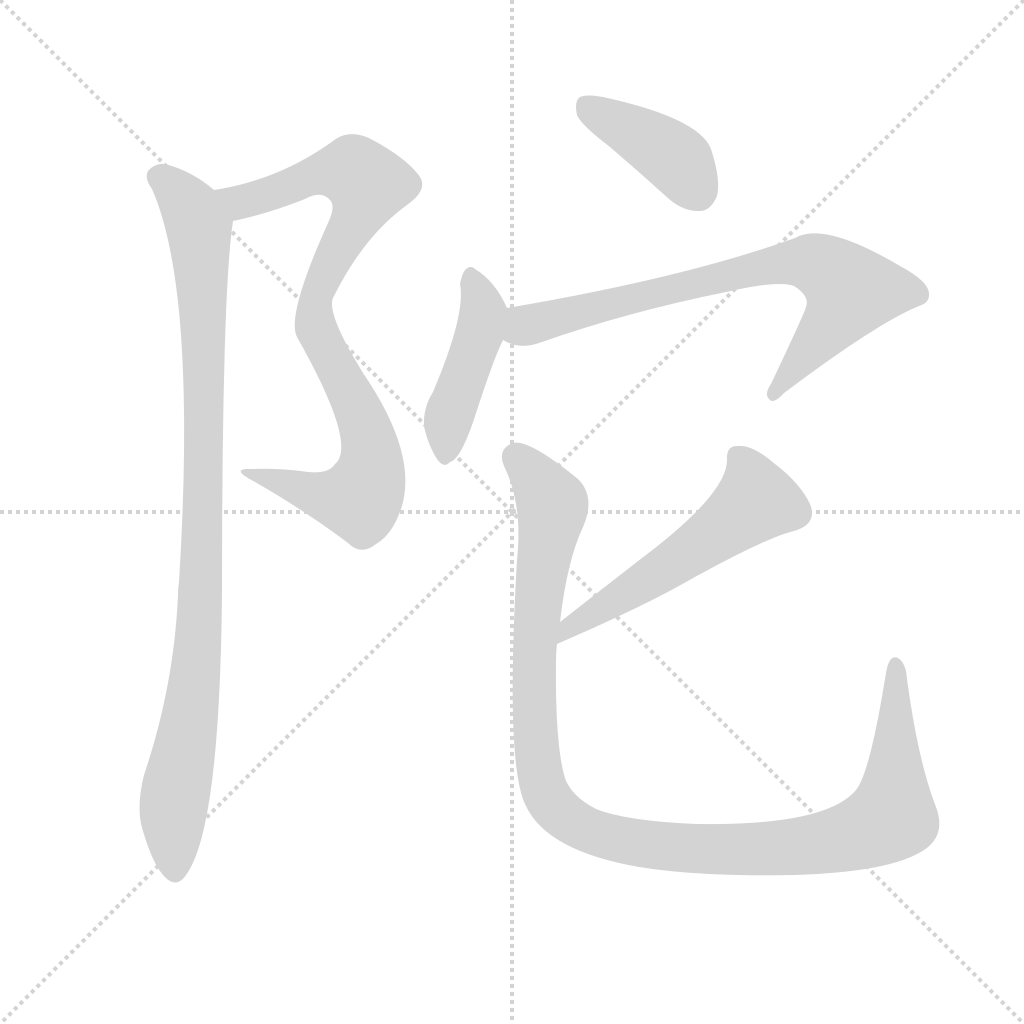
Character: 陀
Kangxi Strokes: 13
Page: 1348, Entry 07
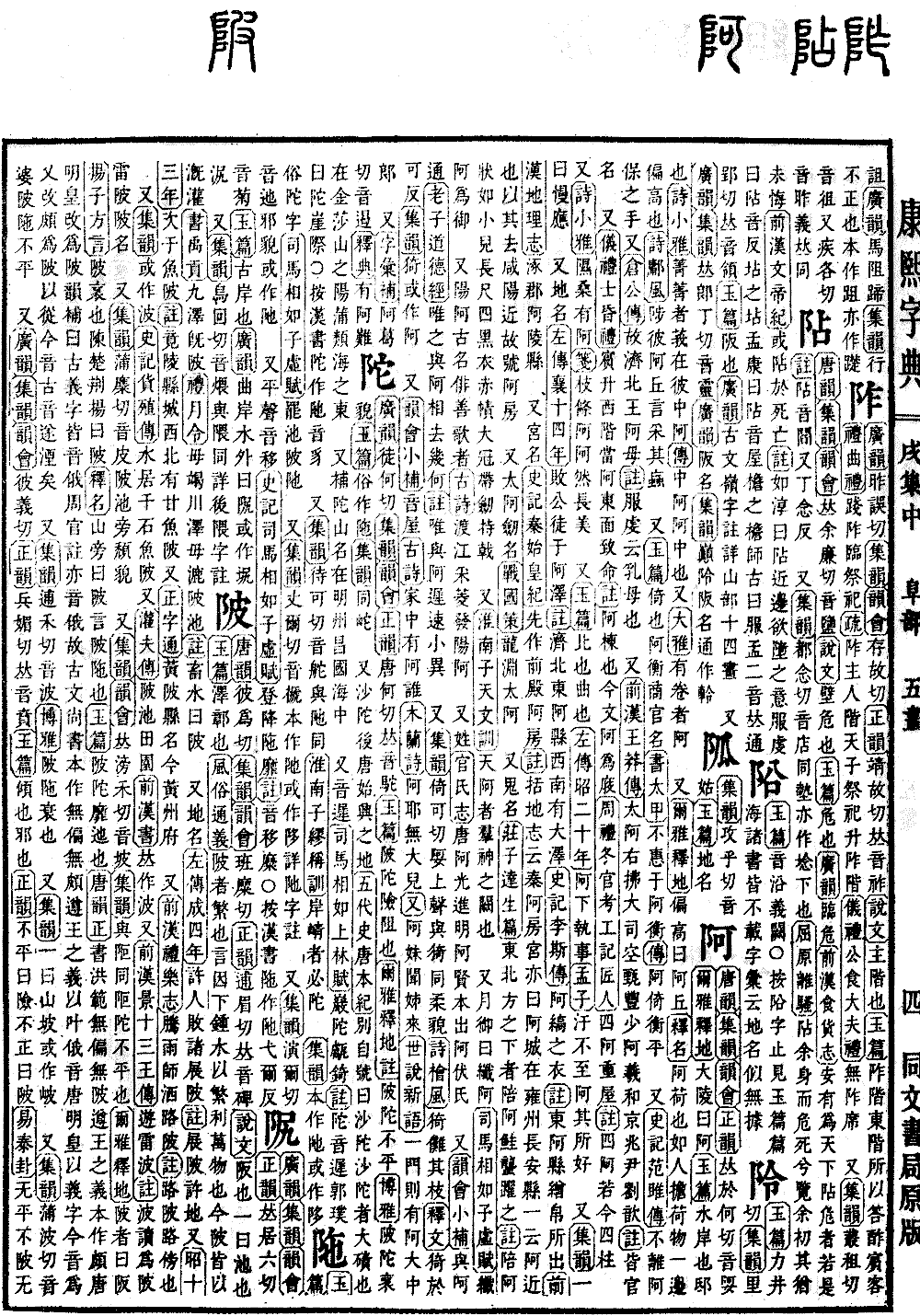
According to Guangyun (Guǎngyùn), Jiyun (Jíyùn), Yunhui (Yùnhuì), and Zhengdun (Zhèngdùn), the sound is tuó. Yupian (Yùpiān) states that bēituó means steep and dangerous. The Erya (Ěryǎ) Commentary on Geography states that bēituó means uneven. Boya (Bóyǎ) states that bēituó means a slanted appearance. Yupian (Yùpiān) notes that it is commonly written as 陁. Jiyun (Jíyùn) states it is synonymous with 岮. Also, Shatuo (Shātuó) was the place where the Later Tang dynasty originated. The History of the Five Dynasties (Wǔdài Shǐ), Annals of Tang records: "They called themselves Shatuo. Shatuo refers to a great desert, located south of Jinsha Mountain and east of Lake Pulai." Also, Putuo (Pǔtuó) is a mountain name, located in the sea off Changguo, Mingzhou.
Also pronounced chí. Sima Xiangru's Rhapsody on the Imperial Park (Shànglínfù) contains the phrase "rocky陀甗锜". The annotation states that 陀 is pronounced chí. Guo Pu remarked that 陀 means a cliff edge. According to the Book of Han (Hànshū), 陀 is written as 阤 and pronounced zhì.
Jiyun (Jíyùn) also gives a pronunciation approximating duò, synonymous with 阤. The Huainanzi (Huáinánzǐ), Chapter on Praising the Unseen, states: "A steep bank must collapse." Jiyun (Jíyùn) notes that the original character was 阤, and it is sometimes written as 陊.