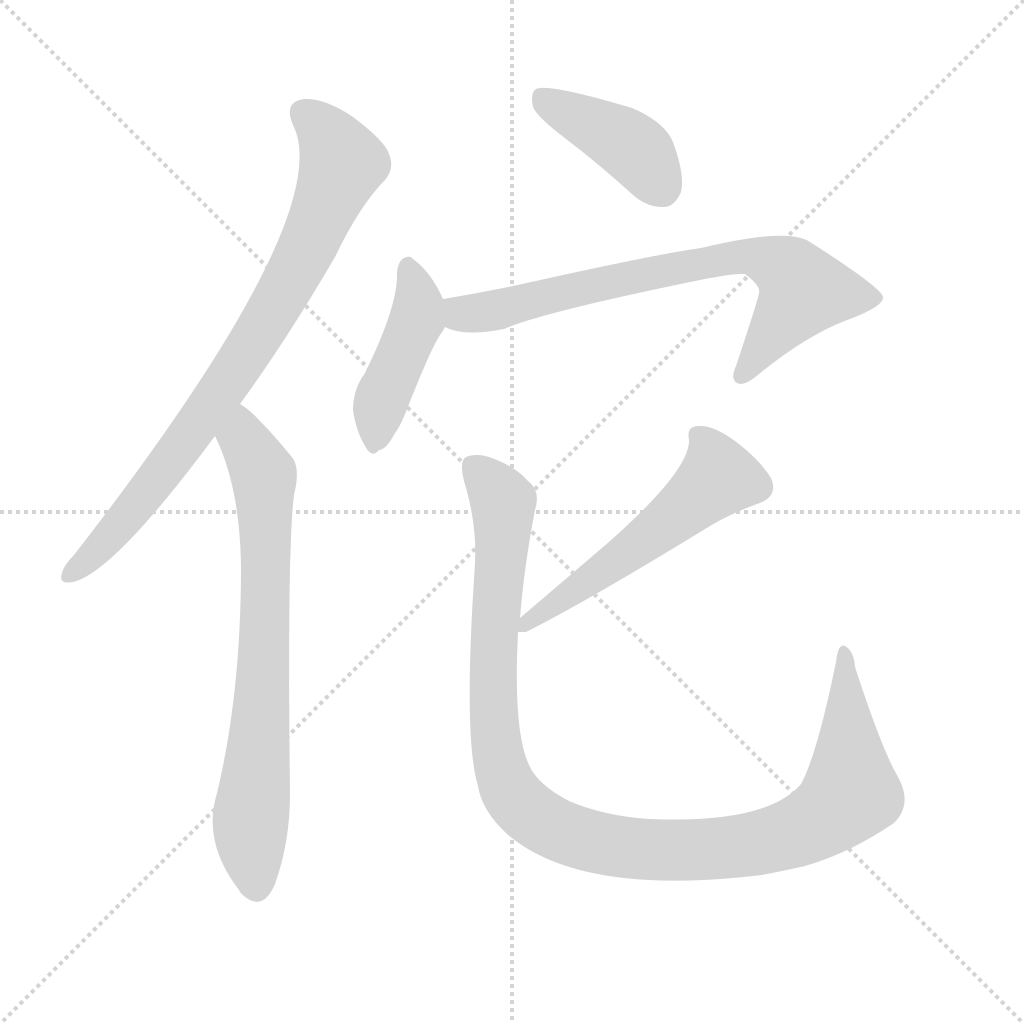
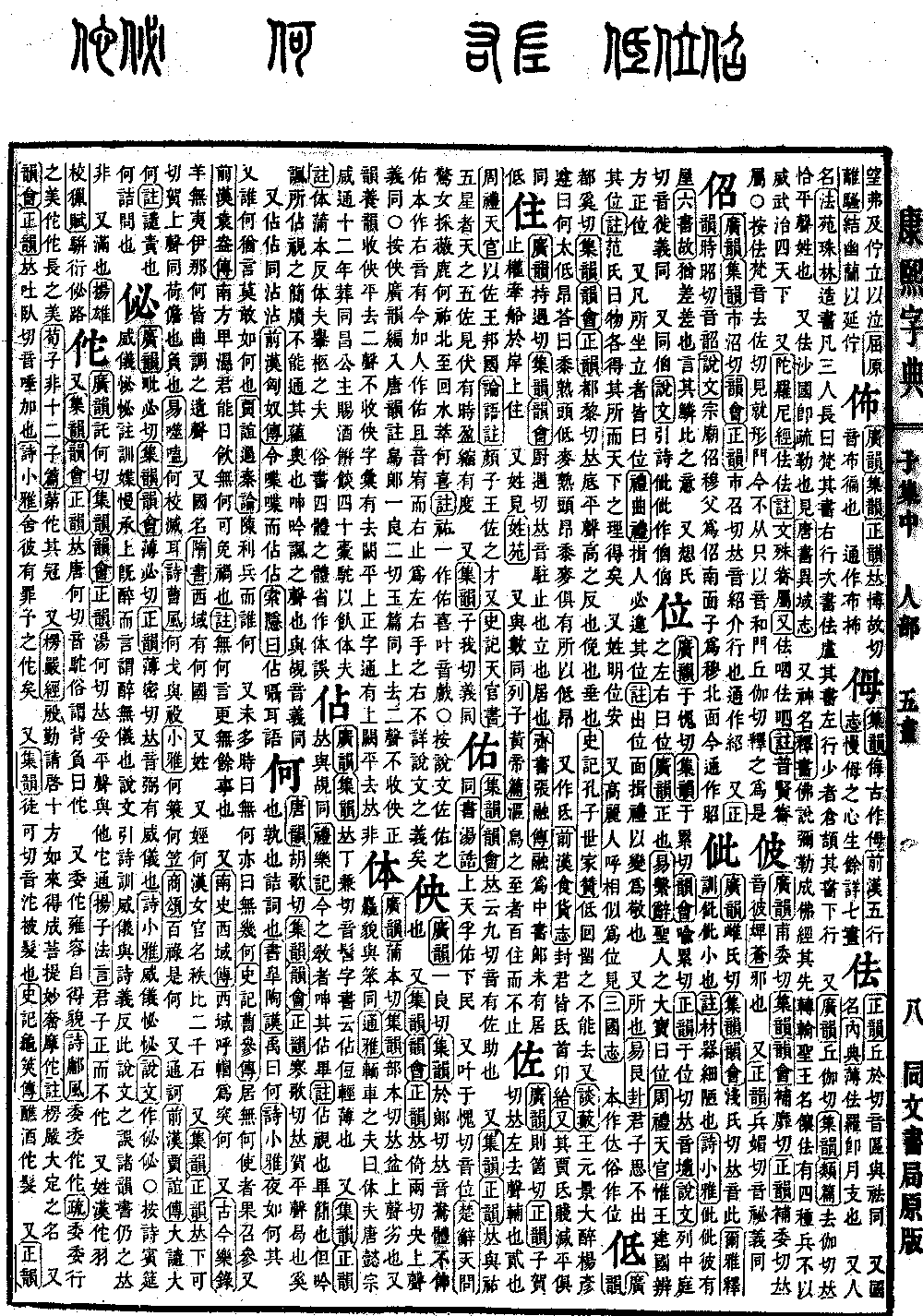
Zi Collection, Middle Volume. Radical: Person (rén). Kangxi stroke count: 7. Page number: Page 98, position 17.
Guangyun: Pronounced he. Jiyun, Yunhui, and Zhengyun: Pronounced he. It is interchangeable with the characters meaning other or it. Yangzi's Model Sayings (Fayan): The superior man is upright and not devious. Also a surname. Han dynasty figure Tuo Yu. Also according to Jiyun, Yunhui, and Zhengyun: Pronounced tuo. Colloquially, carrying something on the back is called tuo. Also wei tuo, meaning a poised and self-possessed appearance. Book of Odes (Shijing): Wei wei tuo tuo. Commentary: Wei wei describes the beauty of one's gait; tuo tuo describes the beauty of one's tall stature. Xunzi, Chapter on Denouncing the Twelve Philosophers: Wear the hat in a slouching manner. Also, in the Shurangama Sutra: Respectfully requesting instruction, the Thus Come Ones of the ten directions attained enlightenment through the wonderful samatha. Commentary: Shurangama is the name of a great meditative concentration. Also according to Yunhui and Zhengyun: Pronounced tuo. Meaning to add or bestow. Book of Odes (Shijing): Leave those who are guilty, and bestow the burden upon him. Also according to Jiyun: Pronounced tuo. Meaning to have hair disheveled. Records of the Grand Historian (Shiji), Biography of the Turtle and Yarrow Divination: Pouring libations with hair disheveled. Also according to Zhengyun: Pronounced yi. Records of the Later Han (Hou Hanshu), Eulogy for Ren Guang and Pi Tong: Returning the army in a leisurely, poised manner. In the Book of Odes (Shijing), the meaning of wei tuo is the same as wei yi. Also rhyming with the sound ta: Lu Chen's poetry: Righteousness is deep because of favor, and roles follow the closeness of the bond. Intimately linked in heart, we consider ourselves as one, not as others.