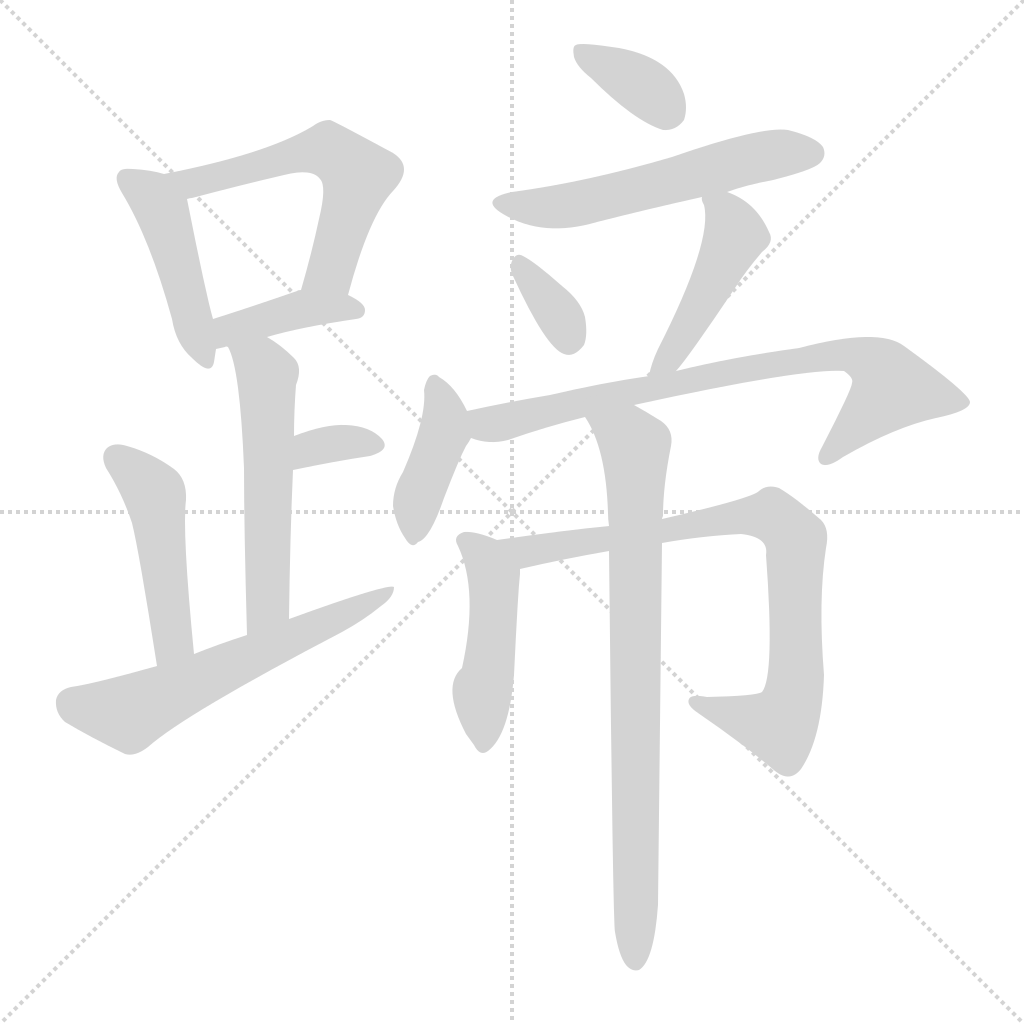
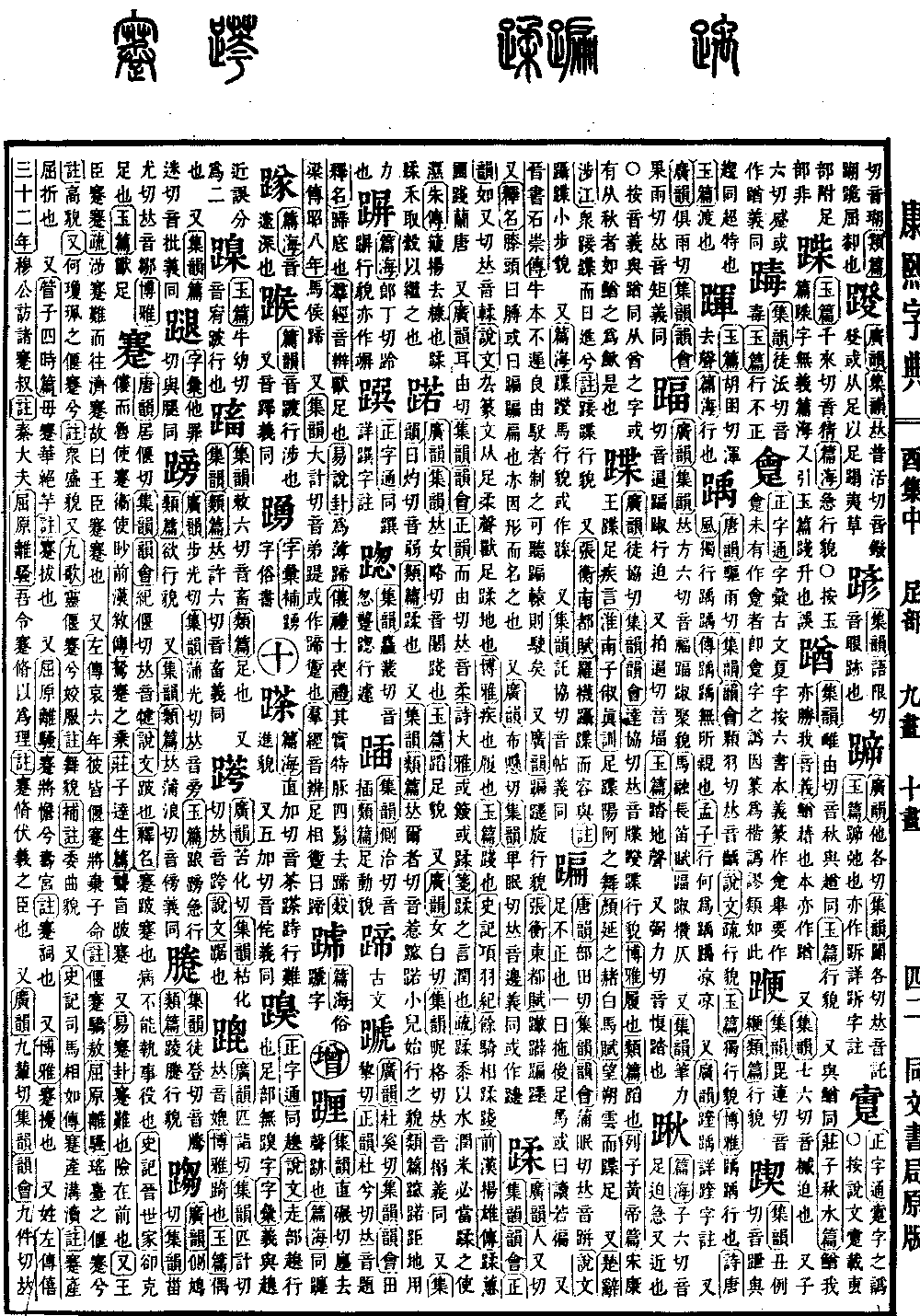
You Collection, Middle Volume. Radical: Foot (zú). Entry: Hoof. Kangxi strokes: 16. Page 1230, Entry 23. Ancient form is written as foot-ti (tí). According to the Extensive Rhymes (Guangyun), pronounced ti. According to the Collected Rhymes (Jiyun) and the Rhyme Collection (Yunhui), pronounced ti. According to the Corrected Rhymes (Zhengyun), pronounced ti. Explanations of Names (Shiming) states: A hoof is a base. Discrimination of Sounds in the Classics (Qunjing Yinbian) states: The foot of a beast. Book of Changes (Yijing), Explanation of the Trigrams: Acts as a thin hoof. Book of Etiquette and Ceremonial (Yili), Rites for the Funeral of an Officer: The offerings consist of a young pig, with the four hooves removed. Guliang Commentary (Guliang Zhuan), Eighth Year of Duke Zhao: The horse's hoof. Also, according to the Collected Rhymes (Jiyun), pronounced di. The character meaning to kick is sometimes written as hoof, referring to treading or trampling. Discrimination of Sounds in the Classics (Qunjing Yinbian) states: When feet tread upon one another, it is called a hoof.