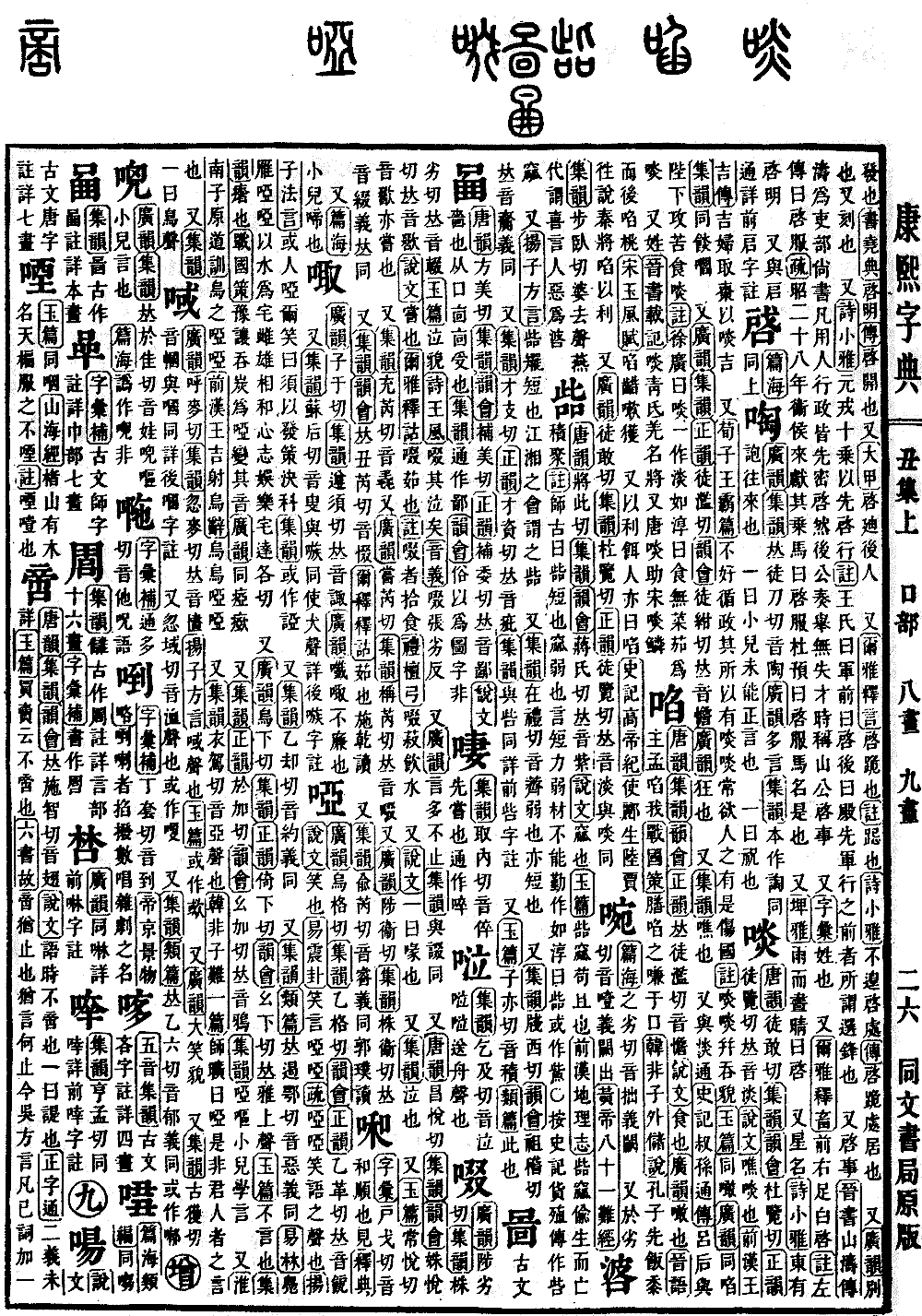
Chou Collection, Upper Volume
Radical: Mouth (kǒu)
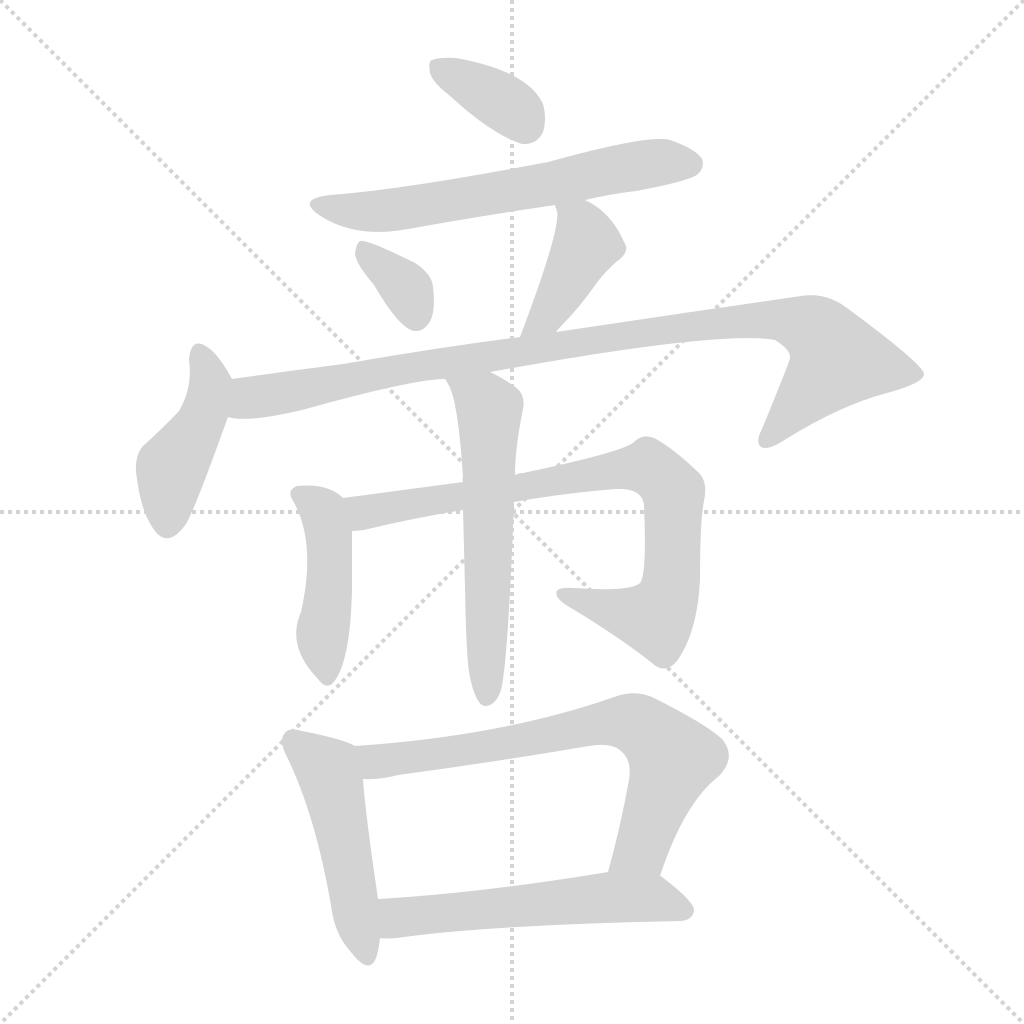
Character: chi
Kangxi strokes: 12
Page 196, Entry 29
Tang Rhymes (Tangyun), Collected Rhymes (Jiyun), and Rhyme Meeting (Yunhui) define this as pronounced chi.
Shuowen Jiezi states that when speaking, it means not merely. Another interpretation suggests it means to be cautious and prudent.
Correct Meaning Guide (Zhengzitong) notes that these two meanings are unclear.
Jade Chapters (Yupian) states that in trade, it means not merely.
Explanations of the Six Writings (Liushugu) states that this character is similar to the character for stop, as in the phrase why merely. Currently, in the Wu dialect, any term indicating already is supplemented with this character, which is similar to saying it is not merely this.
Book of Documents (Shangshu), Oaths of Qin (Qinshi): Not merely as if it came from one's own mouth.
Rhyme Meeting (Yunhui) notes it is sometimes written in a variant form (chi). It is also interchangeable with the character for suitable (shi).
Strategies of the Warring States (Zhanguoce): Those who suspect me do not exceed three people.
Commentary: Suitable and this character are the same.
Collected Rhymes (Jiyun) also defines it as being excessive.
Rhyme Meeting (Yunhui) defines it as being too much.
Collected Rhymes (Jiyun) also provides the pronunciation di. It means to speak in a loud voice. One interpretation says it means to be cautious and prudent.