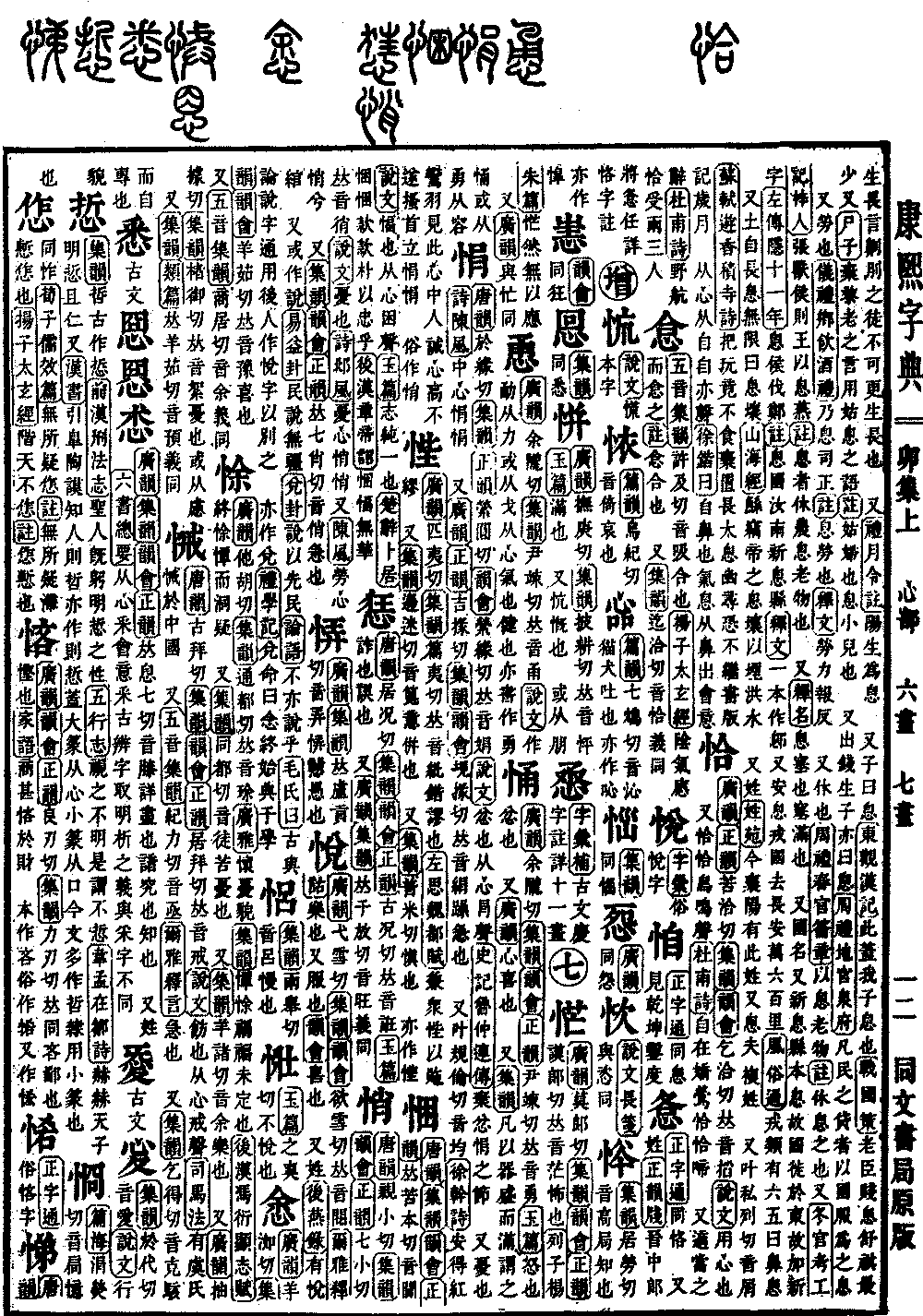
Mao Collection, Upper Volume
Radical: Heart (xīn)
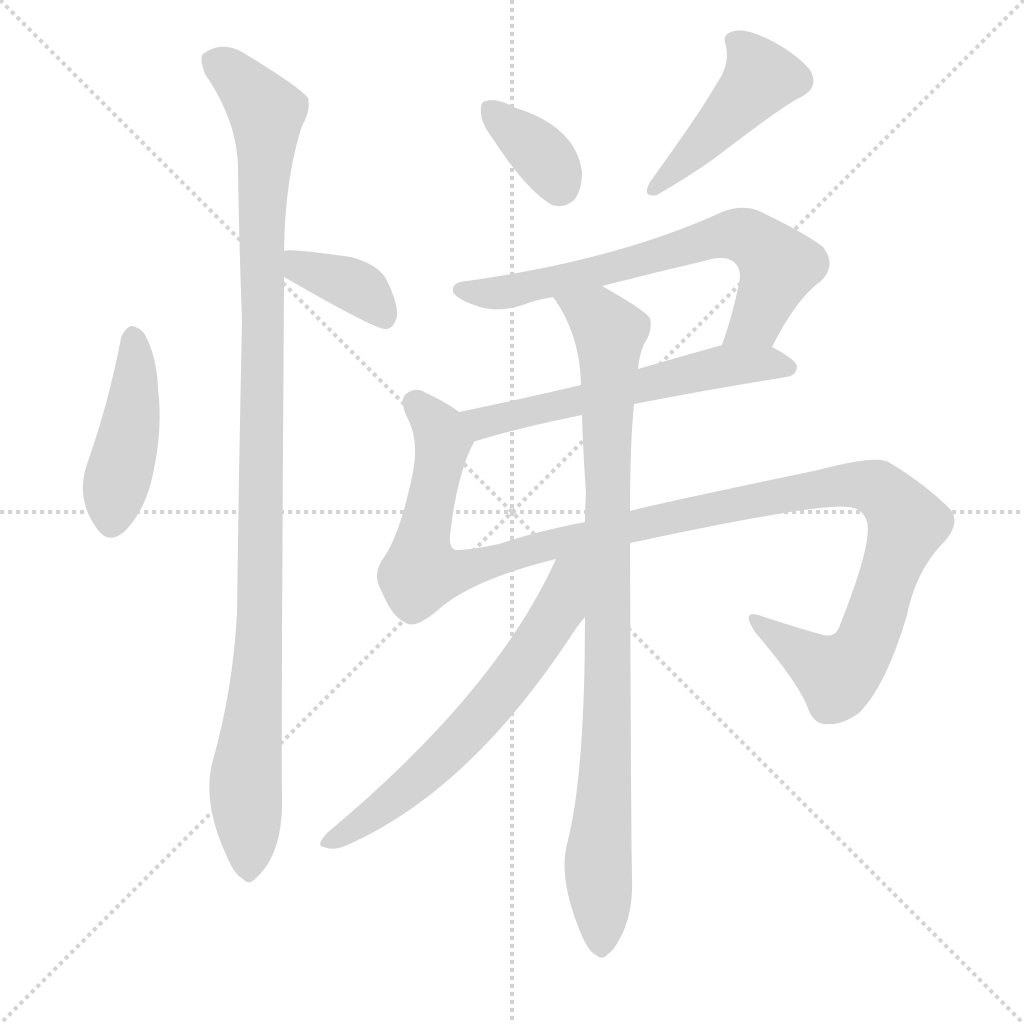
悌
Kangxi stroke count: 11
Page 386, Entry 43
Pronounced di (falling tone).
Shuowen Jiezi (Analytical Dictionary of Characters): To treat one's brothers well. Formed from the heart radical and the sound component di. In classical texts, it is generally used interchangeably with the character di.
Pronounced di (falling tone).
Yupian (Jade Chapters): The appearance of being harmonious, happy, and easy-going. It is the same as the term qi-di in the Book of Odes (Shijing). Note: qi means happy; di means easy-going.
Pronounced dai (falling tone). Same meaning.
Pronounced dai (falling tone). Meaning easy-going. Sometimes written in a variant form (di). Meaning is the same.
Erya (Approaching Nearness, Shiyan chapter): Qi-di means to set out. Guo Pu commentary: Fa means to set out or travel. Citing the Book of Odes (Shijing): The daughter of Qi is happy and easy-going. Commentary: Citing the notes of Zheng Xuan, the term qi-di here is like saying fa-xi (setting out at dusk). Qi is pronounced kai. Di, in the ancient text of the Book of Documents (Shangshu), uses the character di as yi. Yi means bright. Guo Pu says: Fa means to set out or travel; this adopts the commentary of Zheng Xuan as the explanation. Kong Yingda says: The qi-di here is like fa-xi; he is saying the meaning is different from qi-di used elsewhere. Read kai as kai. Shuowen Jiezi says: Kai means to open. The Great Plan (Hongfan) section discusses five types of divination signs, one of which is called yi. The commentary says: Yi means the color is bright. The previous text mentions fa-xi, meaning setting out at the beginning of the evening. This mentions kai-ming, meaning setting out at the first light of dawn; the meanings are consistent with the text above.
Note: Qi-di also has the meaning of setting out or traveling. The commentary by Mao Heng regarding the term qi-di in the poem Zaiqu from the Odes of Qi (Qi Feng) confuses its meaning with other instances of qi-di. Zheng Xuan's commentary does not adopt this view, as it must have been verified. The Jiyun (Compilation of Rhymes) also provides the pronunciation dai, which should be explained as fa (to set out). The current Jiyun still adopts the commentary of Mao Heng rather than the commentary of Zheng Xuan, so this additional pronunciation is redundant.
Verification: The Jiyun also lists the pronunciation te-ru. I have verified that the Jiyun entry for the character ti does not contain the pronunciation te-ru, but only dai. I have corrected te-ru to dai in accordance with the original text.