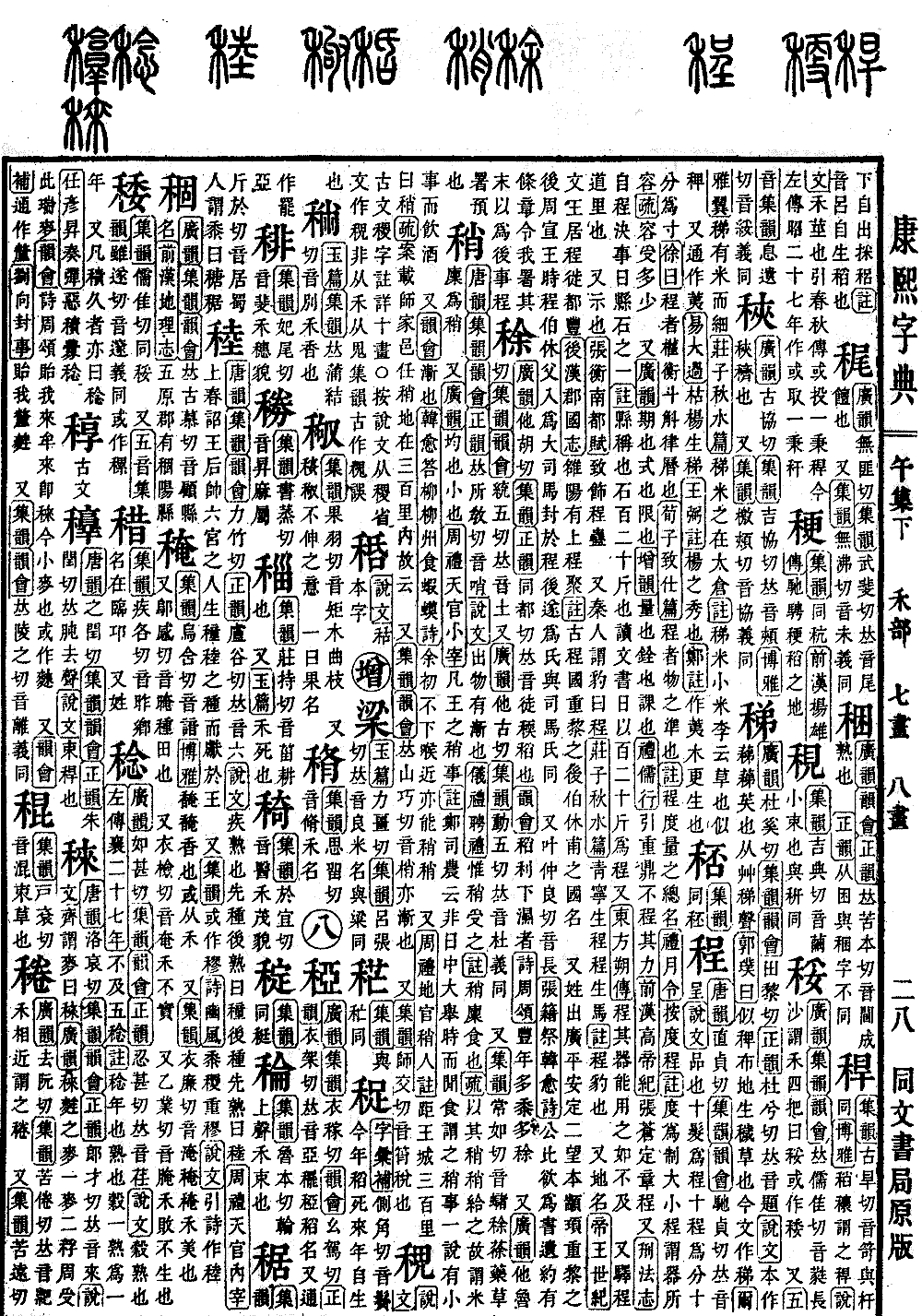
Wu Collection, Lower Volume
Radical: Grain (hé)
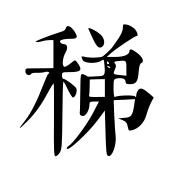
Character: ti
Kangxi stroke count: 12
Page 854, Entry 08
Pronounced ti
According to the Explanation of Scripts and Sight of Characters (Shuowen Jiezi), this was originally written as a variant form (ti). It refers to a type of sprout. Derived from the radical for grass (cao) with a phonetic component (ti).
Guo Pu states: It resembles a reed and is a weed that spreads across the ground. The current standard text is written as ti.
The Wings to the Er-ya (Erya Yi) notes: The ti plant produces grain that is fine.
Zhuangzi (Zhuangzi), Autumn Floods chapter: Like the ti grain within the great granary.
Commentary: Ti grain refers to millet. Li states: It is a type of grass that resembles a reed.
It is also used interchangeably with the variant form (ti).
Book of Changes (Yijing), Great Excess hexagram: The withered poplar produces sprouts.
Wang Bi commentary: This refers to the flowering of a poplar.
Zheng commentary: Written as ti, signifying the rebirth of the tree.