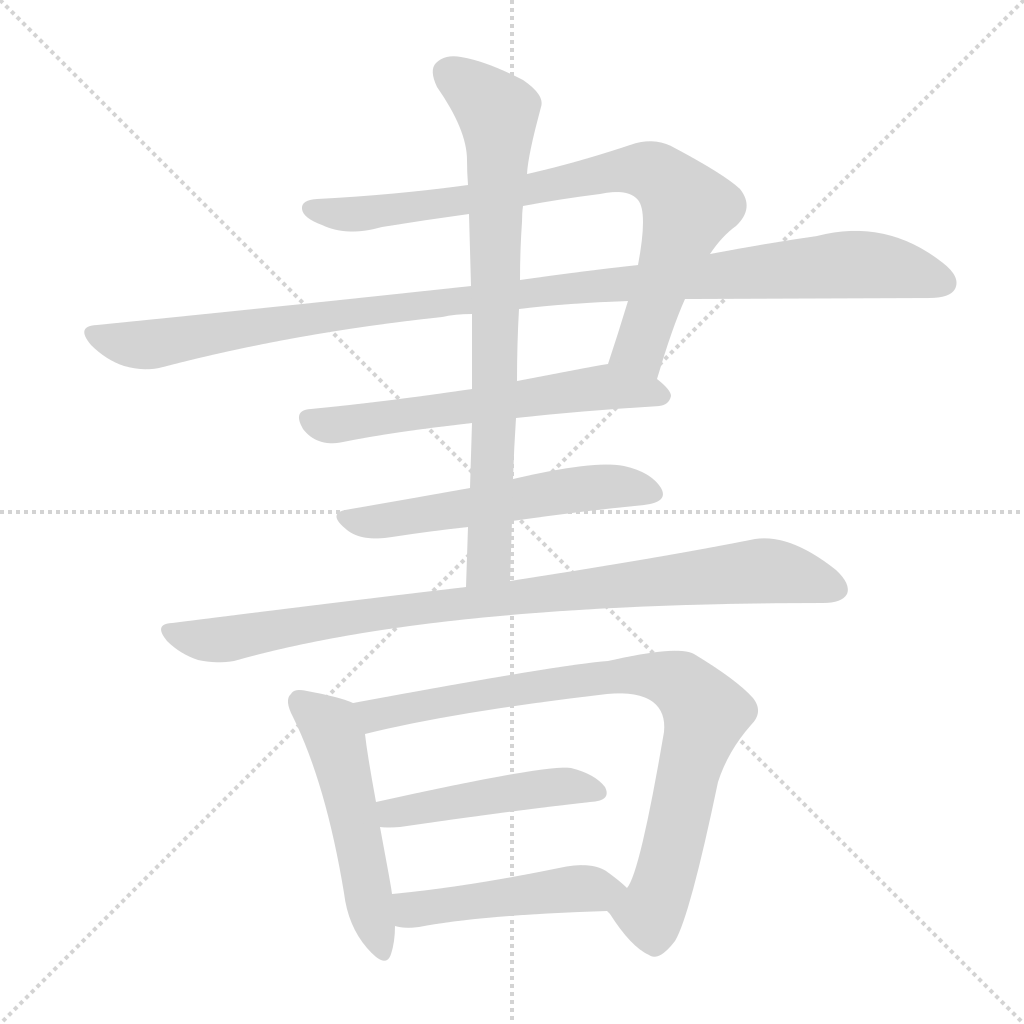
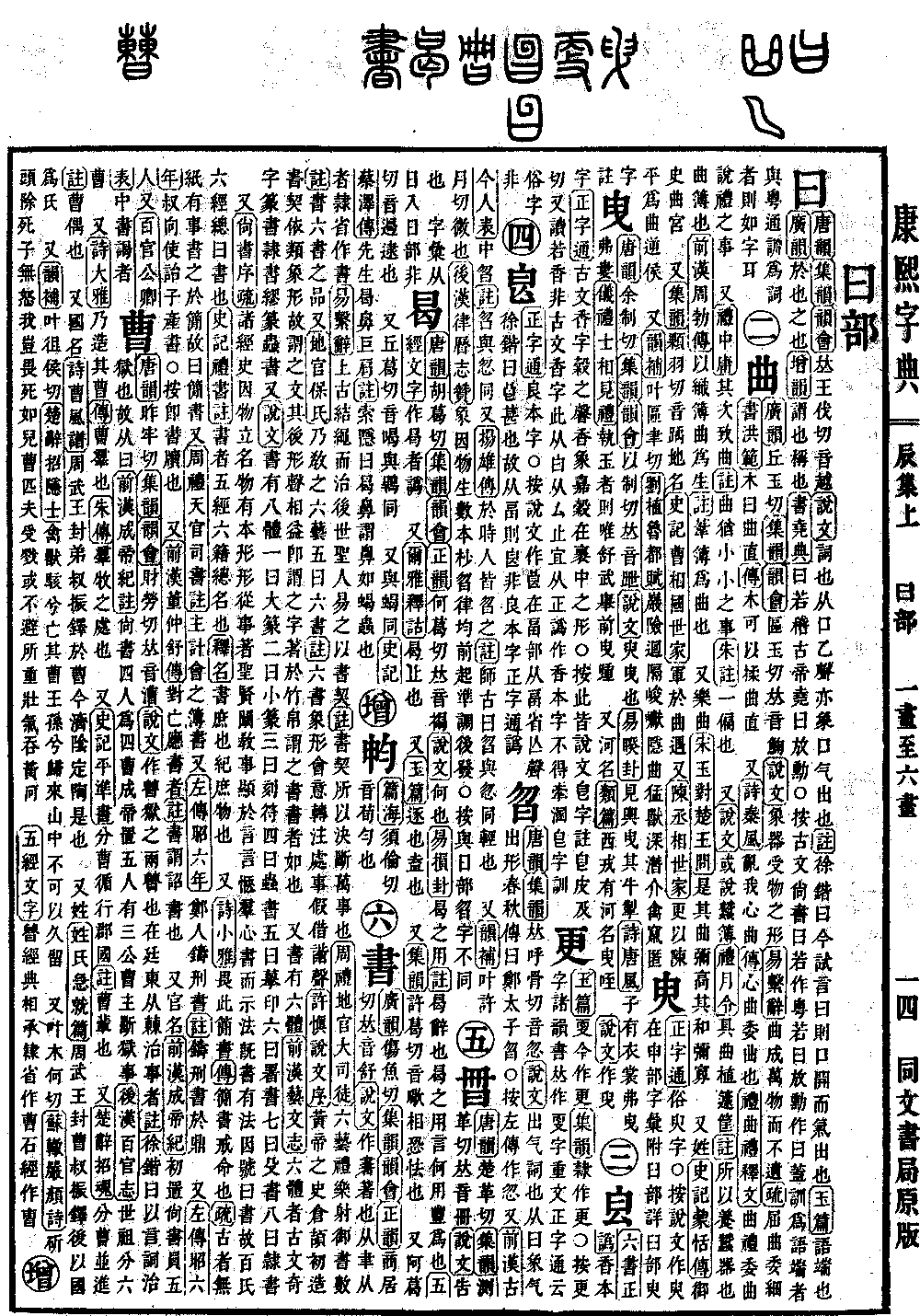
Chen Collection, Upper Volume
Radical: Say (yuē)
Kangxi Strokes: 10
Page 502, Entry 12
Guangyun (Comprehensive Rhymes): Pronounced shu. Jiyun (Collected Rhymes), Yunhui (Collection of Rhymes), Zhengyun (Correct Rhymes): Pronounced shu. Shuowen (Explaining Graphs and Analyzing Characters): Written as a character meaning to set down. Composed of the graph for brush and the phonetic indicator. In clerical script, it is simplified to its current form.
Book of Changes (Yijing), Commentary on the Appended Statements: In high antiquity, knotted cords were used to govern, but later sages replaced them with written documents. Commentary: Written documents are used to make decisions in all affairs.
Rites of Zhou (Zhouli), Earth Offices, Grand Minister of Instruction: The Six Arts are rites, music, archery, charioteering, writing, and mathematics. Commentary: Writing refers to the categories of the six scripts.
Earth Offices, Instructor of the Protector: They taught the six arts; the fifth is the Six Scripts. Commentary: The six scripts are pictographs, associative compounds, mutually explanatory characters, derivative characters, phonetic loans, and phonetic compounds.
Xu Shen, Preface to Shuowen: The Yellow Emperor's historian, Cang Jie, first created written records by imitating the forms of objects according to their categories; these were called graphs. Later, when form and sound complemented each other, they were called characters. What is written on bamboo slips and silk fabric is called a book. The word book means to imitate.
There are also six forms of writing. Former Han (Qianhan), Treatise on Arts and Literature: The six forms are ancient script, strange characters, seal script, clerical script, evolved seal script, and bird-worm seal script.
Shuowen: There are eight forms of writing: first is large seal script, second is small seal script, third is tally inscription, fourth is bird-worm script, fifth is seal-copying script, sixth is placard script, seventh is lance script, and eighth is clerical script.
Shangshu (Classic of History), Preface Sub-commentary: Various classics and historical texts establish names based on objects. Objects have original forms, forms are manifested through events, sages elucidate teachings, events are clarified through language, and language satisfies the intentions of the masses. These are written down as rules, and because they are written down as rules, they are called books. Thus, the various schools of philosophy and the six classics are collectively called books.
Records of the Grand Historian (Shiji), Commentary on the Treatise on Rites: A book is the collective name for the five classics and six records.
Shiming (Explanation of Names): A book means to be numerous, recording a multitude of affairs.
Classic of Poetry (Shijing), Lesser Odes: Fearing this command. Commentary: A book is an admonitory order. Sub-commentary: In ancient times, there was no paper, so affairs were recorded on bamboo slips, thus they were called books.
Rites of Zhou (Zhouli), Heavenly Offices, Ministry of Records: Refers to account books.
Zuo Commentary (Zuozhuan), Sixth Year of Duke Zhao: The people of Zheng cast the laws. Commentary: Casting the legal articles onto a tripod.
Zuo Commentary (Zuozhuan), Sixth Year of Duke Zhao: Shuxiang sent a book to Zichan. This refers to a letter.
Former Han (Qianhan), Biography of Dong Zhongshu: Those whose responses did not conform to the requirements of the imperial decree. Commentary: Book refers to an imperial decree.
Official title. Former Han (Qianhan), Annals of Emperor Cheng: The office of Imperial Secretary was established for the first time, with a fixed staff of five.
Table of Officials and Ministers: Imperial Secretariat attendant.