Chen Collection, Middle Volume
Radical: Tree (mù)
Kangxi Strokes: 16
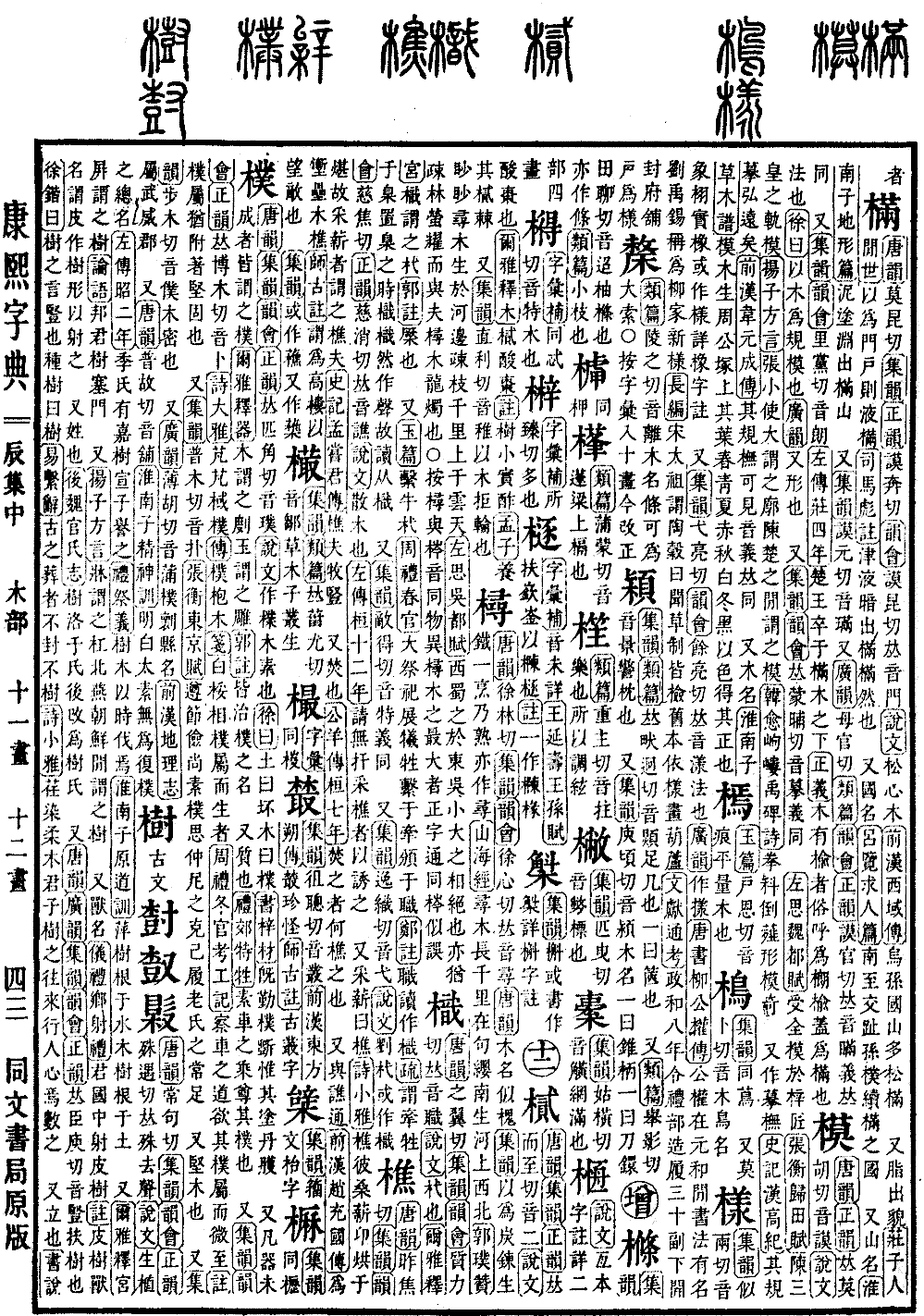
Page 551, Entry 29
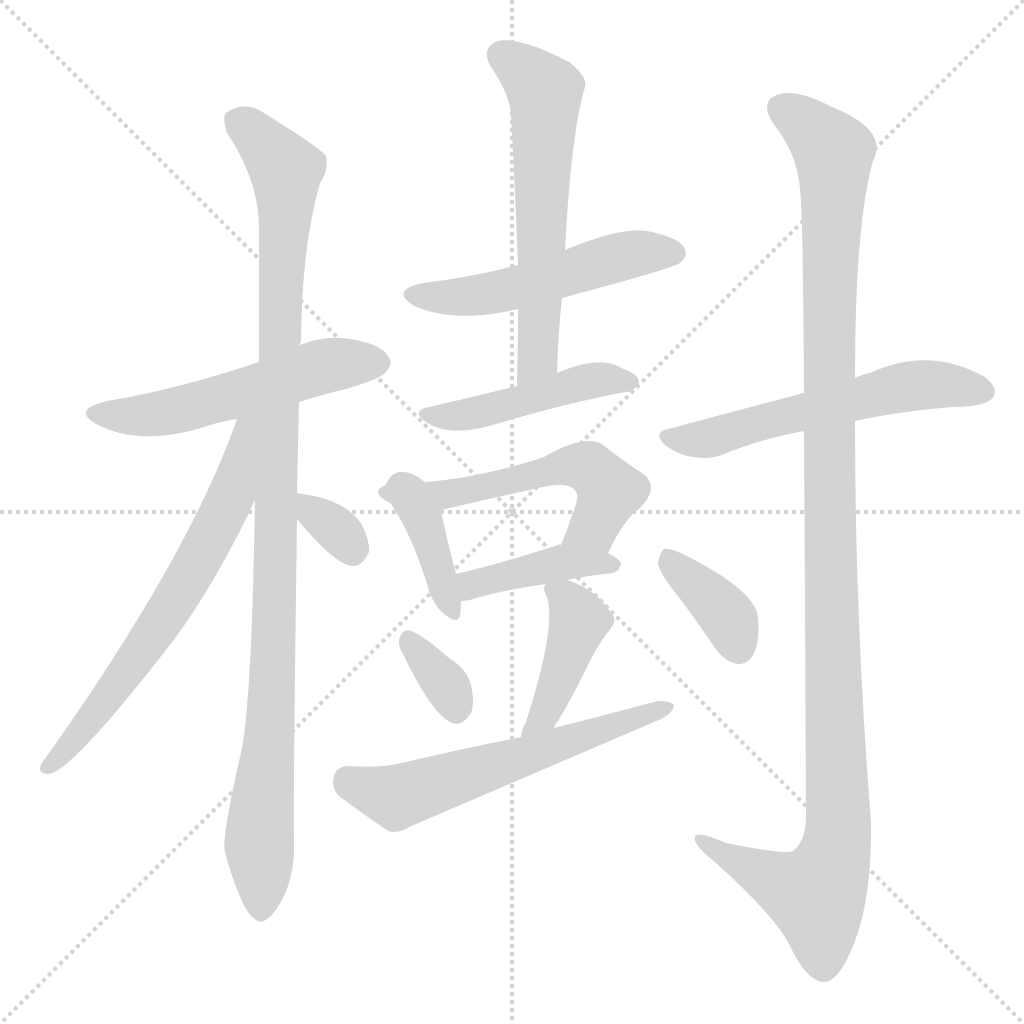
Pronounced shu. According to the Tang Rhyme (Tangyun), Collection Rhyme (Jiyun), Rhyme Compilation (Yunhui), and Orthodox Rhyme (Zhengyun), it is pronounced like the departing tone of shu. Explication of Written Characters (Shuowen Jiezi) defines it as a general term for plants that grow and are cultivated. Zuo Commentary (Zuozhuan), Year 2 of Duke Zhao: The Ji family had a fine tree, which Xuanzi praised. Book of Rites (Liji), Sacrificial Meaning: Trees must be cut down according to the seasons. Huainanzi, Original Way Training: The roots of duckweed are fixed in water, while the roots of trees are fixed in the soil.
Also, according to Erya, Explaining Palaces (Shigong), a screen is called a shu. Analects (Lunyu): The ruler of a state places a screen at the gate.
Also, according to Yangzi, Local Expressions (Fangyan), a bed or couch is called a gang. In the regions of Northern Yan and Korea, it is called a shu.
Also, it is the name of a type of wild animal. Book of Etiquette and Ceremonial (Yili), Village Archery Ritual: When the ruler holds an archery ceremony in the capital, he uses a pi-shu target (a target made from the skin of an animal). Commentary: Pi-shu is a type of wild animal. It refers to using animal skin shaped like a tree to serve as a target for archery.
Also, a surname. Records of Official Clans in Later Wei (Houwei Guanshizhi): There was the Shuluoyu clan, which later changed its surname to the Shu clan.
Also, pronounced shu (rising tone). According to the Tang Rhyme (Tangyun), Broad Rhymes (Guangyun), Collection Rhyme (Jiyun), Rhyme Compilation (Yunhui), and Orthodox Rhyme (Zhengyun), the pronunciation is the same as shu (vertical). It means to support or set upright. Xu Kai says: The meaning of shu is to set upright. Cultivating trees is called shu. Book of Changes (Yijing), Appended Remarks: In ancient times, when burying the dead, people did not heap up earth into mounds, nor did they plant trees as markers. Book of Odes (Shijing), Lesser Odes: Those pliant trees were planted by the gentleman. Travelers passing by all calculate them in their hearts.
Also refers to establishing or setting up. Book of Documents (Shangshu), Charge to Yue: Establish the Son of Heaven and the feudal lords, and appoint ministers and teachers to assist them. Great Declaration (Taishi): When establishing virtue, you must let it grow; when removing evil, you must root it out. Bi Ming: Commend good deeds, hate evil deeds, and establish good customs and reputation.
Also, the legitimate son of a feudal lord, confirmed by the command of the Son of Heaven as the heir, is called a shuzi. Guliang Commentary (Guliangzhuan), Year 9 of Duke Xi: Do not change a shuzi who has already been established.
Commonly written in a variant form, which is incorrect.
Textual research: In Book of Etiquette and Ceremonial (Yili), Village Archery Ritual, it is written as the ruler shoots the pi-shu in the capital. Following the original text, the character ze has been added before pi, and the character zhong has been added after shu.