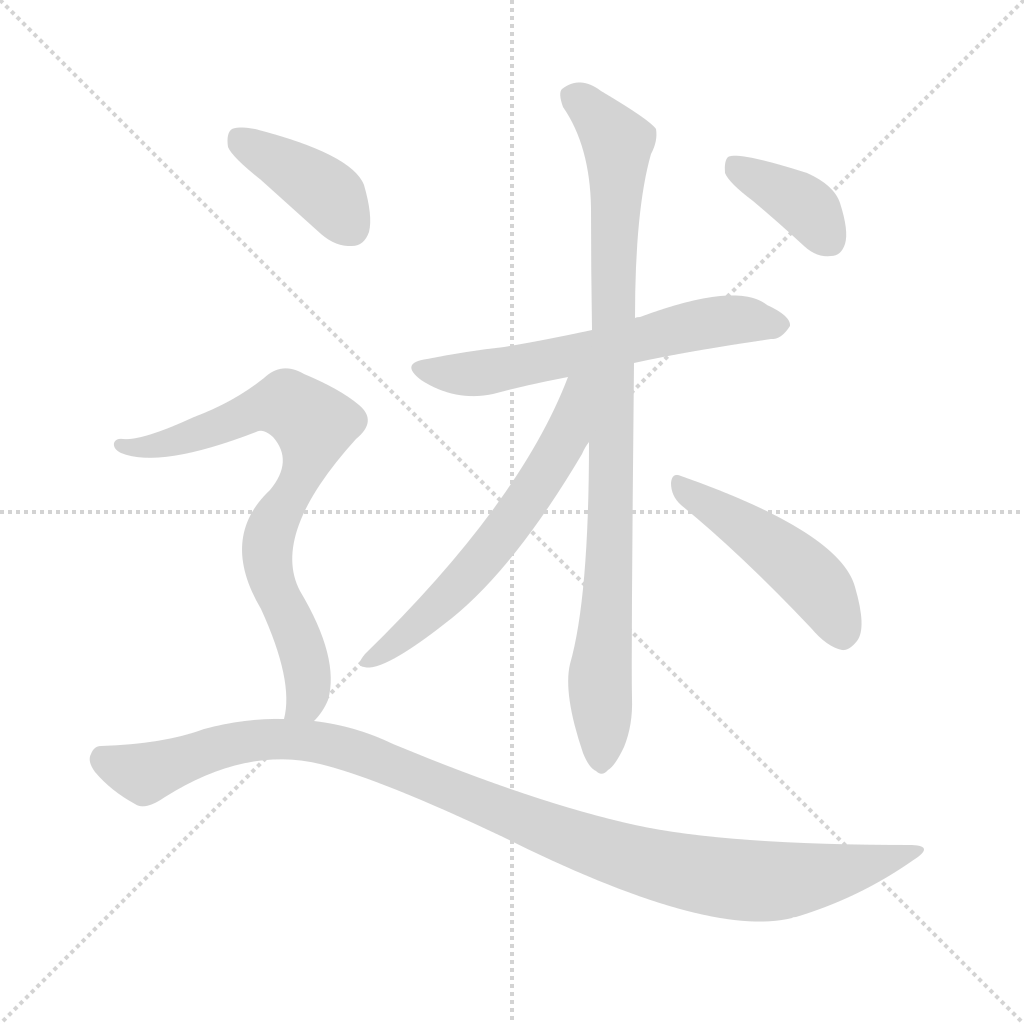
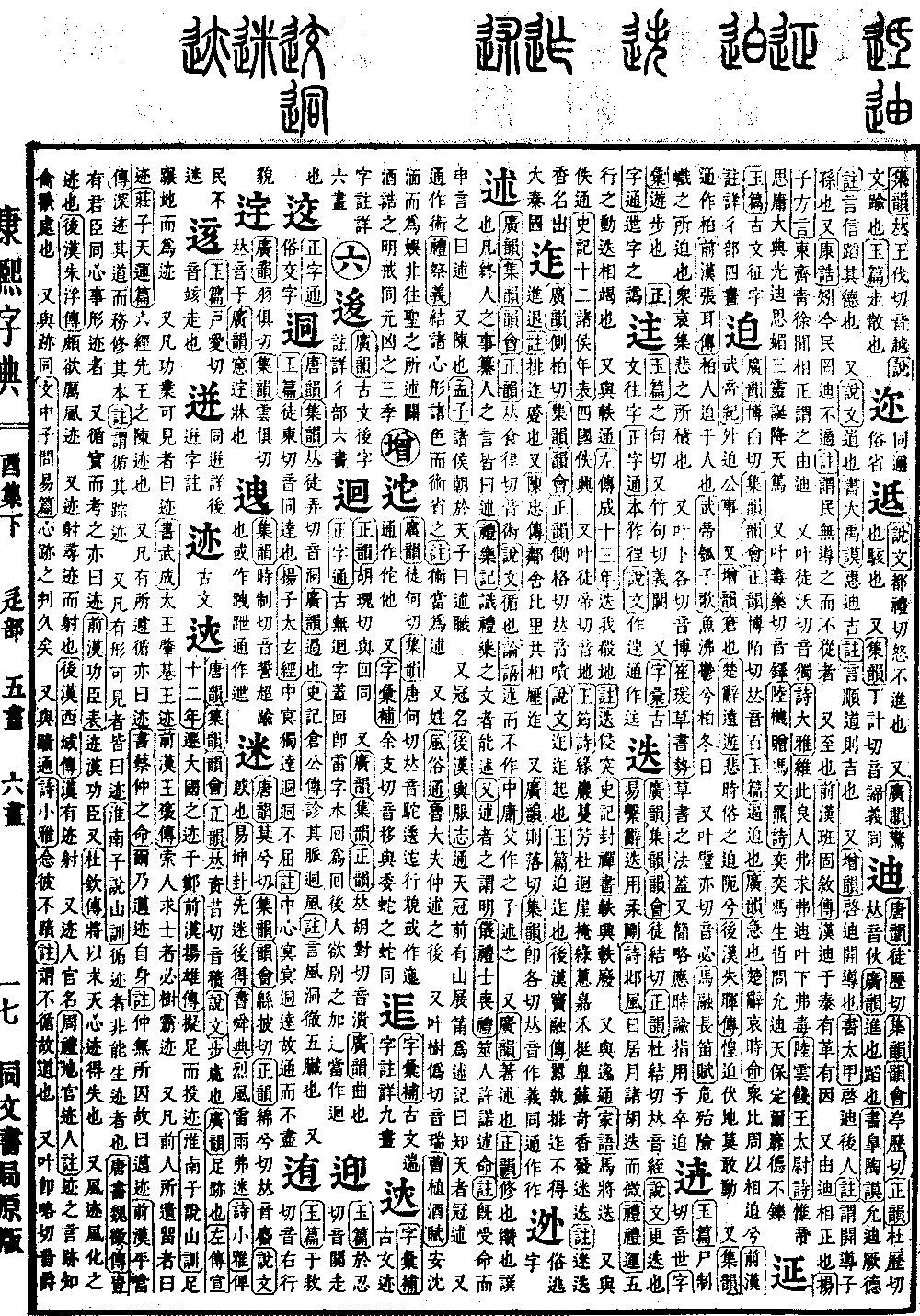
You Collection, Lower Volume
Radical: Walk (chuò)
Entry: shu
Kangxi Strokes: 12
Page 1255, Entry 11
Broad Rhymes (Guangyun), Collected Rhymes (Jiyun), Rhyme Compendium (Yunhui), Correct Rhymes (Zhengyun): pronounced shu.
Explaining Character and Writing (Shuowen): To follow.
Analects (Lunyu): To transmit but not to create.
Doctrine of the Mean (Zhongyong): The father creates it, and the son transmits it.
Also, Broad Rhymes (Guangyun): To write or compose.
Correct Rhymes (Zhengyun): To repair, to continue, to write. When completing another person's task or compiling another person's words, all are called shu.
Record of Music (Yueji): Those who recognize the texts of rites and music are able to transmit them.
Also: He who transmits is called enlightened.
Ceremonial Rites (Yili): The diviner gives consent and transmits the command.
Commentary: After receiving the command, stating it again is called shu.
Also: To report.
Mencius (Mengzi): Feudal lords holding court before the Son of Heaven is called shu zhi (reporting on duties).
Also: A type of cap.
History of the Later Han (Hou Hanshu): The Tongtian crown has a mountain-shaped upright piece in front, which is called shu. The Record states: He who knows heaven wears the shu.
Also: Commonly written as the variant form (shu).
Book of Rites (Liji): To tie it to the heart, show it in the face, and transmit and reflect upon it.
Commentary: Shu should be written as shu.
Also: A surname.
Customs and Traditions (Fengsutong): Descendants of Zhong Shu, a high official of the State of Lu.
Also: Rhyming with the sounds for rui.
Cao Zhi, Rhapsody on Wine (Jiufu): To sink into indulgence for pleasure, is not what the sages of the past transmitted. To reject the clear warnings of the Announcement on Wine, is the same as the great villains of the three dynasties.