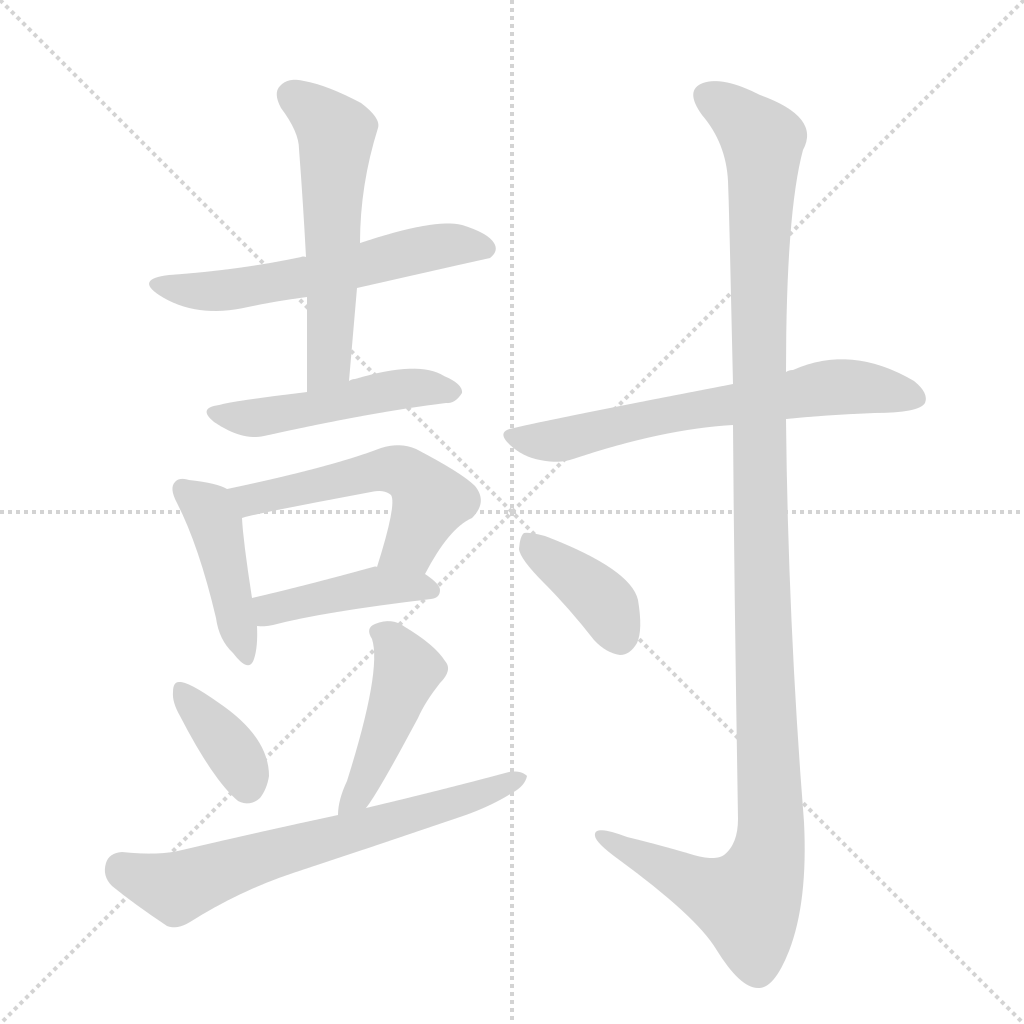
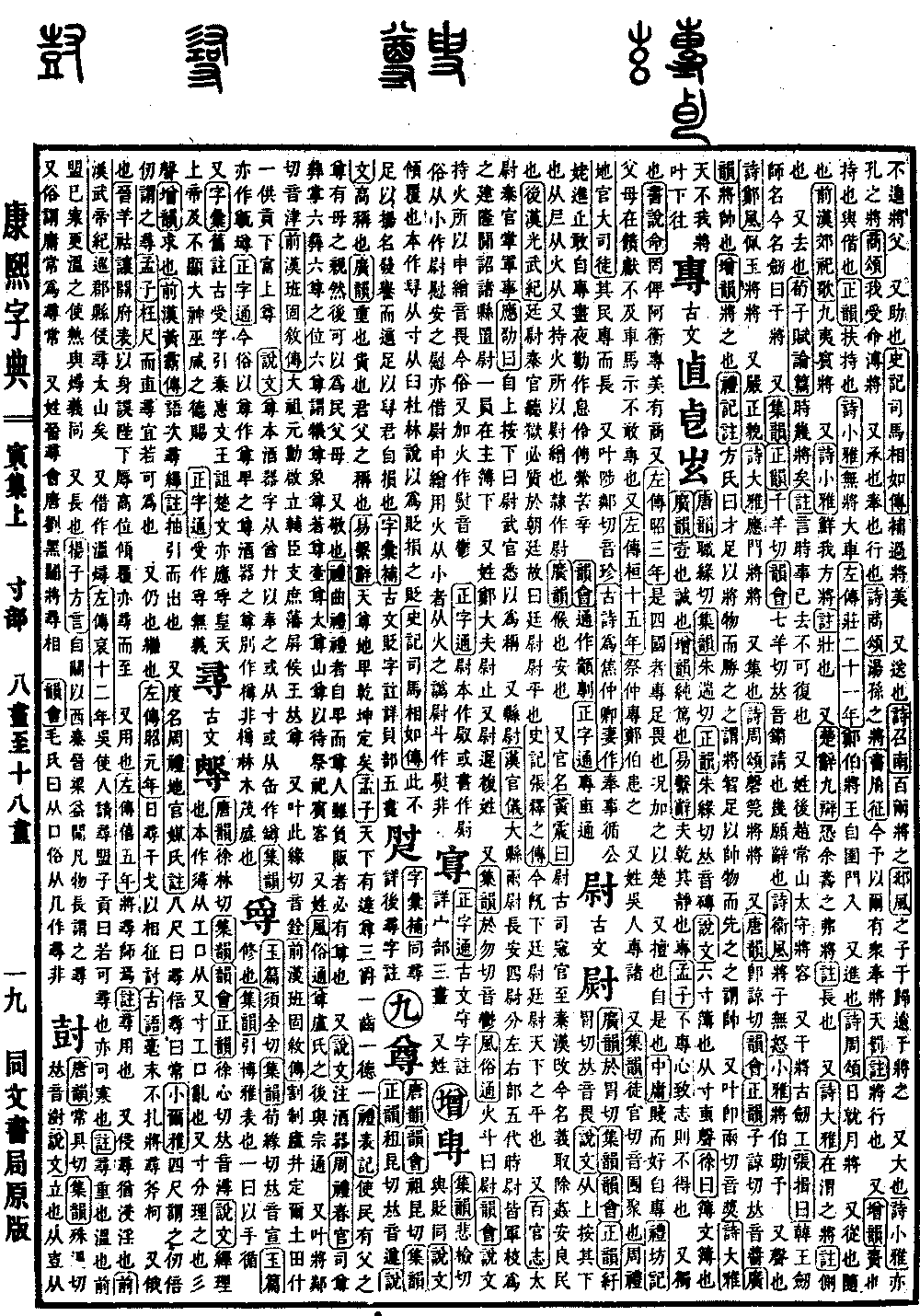
Yin Collection, Upper Volume
Radical: Inch (cùn)
12 Kangxi strokes
Page 295, Entry 14
Pronounced shu.
Pronounced shu.
Pronounced shu.
Pronounced zhu.
According to the Explaining Graphs and Analyzing Characters (Shuowen Jiezi), it means to stand. The character is composed of the components for a drum stand and an inch, representing the action of using one's hand to hold something upright.
In the Manual of Heaven and Earth (Qiankun Zaodu), it is mentioned that the wind sets the truth. Note: The sage sets up the hexagrams, and the hexagrams resonate with the wind.
It also refers to a young servant, known as a shuzi. The Book of the Later Han (Hou Hanshu), Biography of Shi, records the phrase, weeding men and herding boys.
It also serves as a surname. In the Zuo Tradition (Zuo Zhuan), there is a Zheng state official named Shufu.
According to the Collection of Rhymes (Jiyun), it is also pronounced zhu. The meaning is the same.
According to the Collection of Rhymes (Jiyun), it is sometimes written in a variant form (dou).
According to the General Essentials (Zongyao), the character form includes the component for inch and phonetically resembles the sound of qi.
In the small seal script, it is written as shu (a vertical standing form), and in regular script, it is written as shu (the standard vertical form).
It is also used as a loan character for the character meaning to plant or stand. Xu Kai states: The meaning of planting is to stand upright.
The Correct Meaning of Characters (Zhengzitong) notes: Both the words for standing and for cultivation borrow the character for tree. They derive from the sense of planting and standing, so the meanings are shared. The character for tree does not exclusively refer to the category of timber; the actions of standing and cultivation do not necessarily require the use of this specific character.