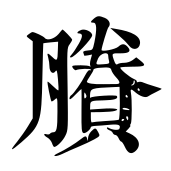
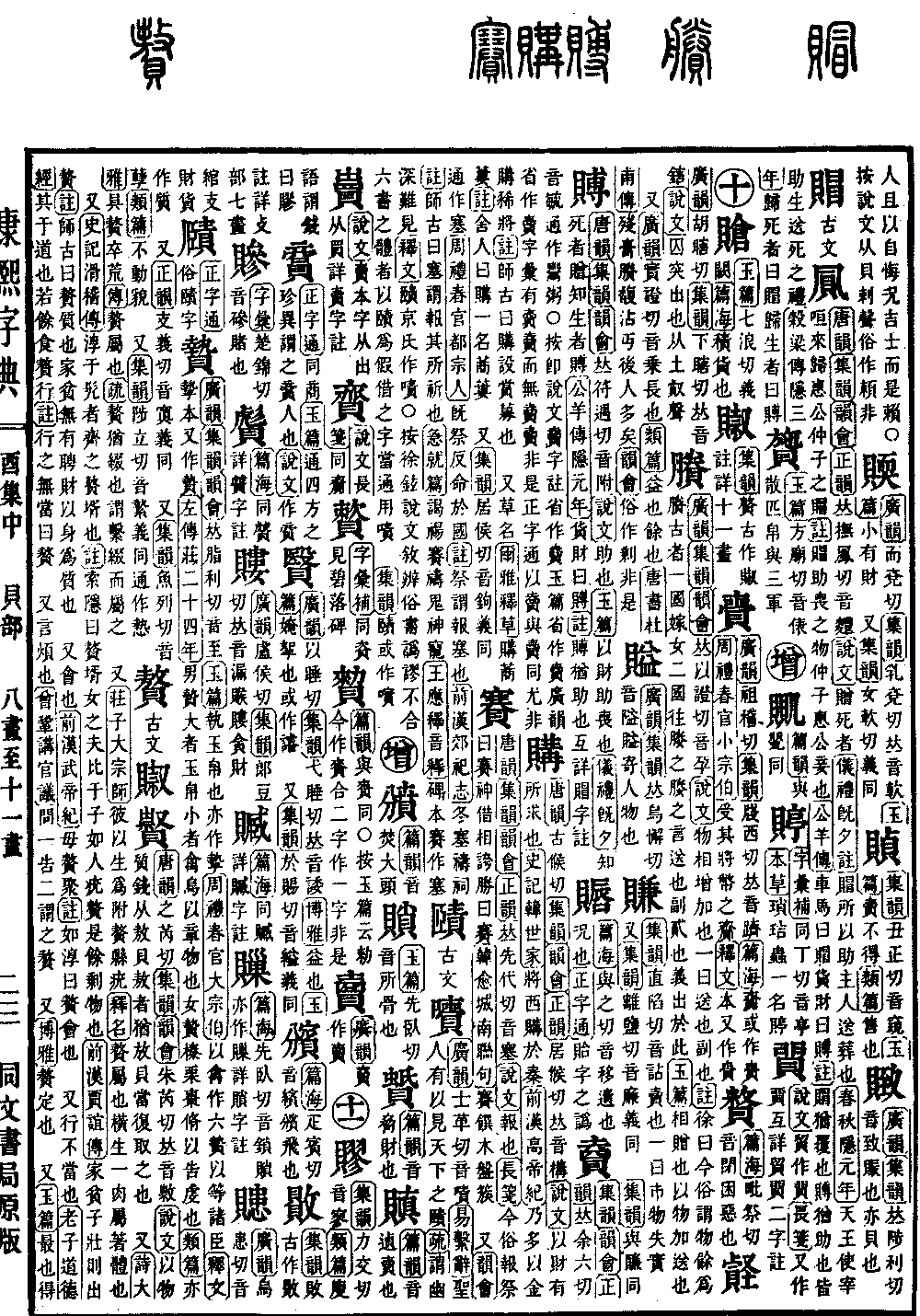
You Collection, Middle Volume. Radical: Shell (bèi). Kangxi stroke count: 17. Page 1211, Entry 15.
According to Broad Rhymes (Guangyun), Collected Rhymes (Jiyun), and Rhyme Compendium (Yunhui), the pronunciation is yun (falling tone).
According to Explaining Graphs and Analyzing Characters (Shuowen), it means an increase in objects. Another meaning is to send or to supplement.
Commentary: Xu states that in common usage, things that are left over are called sheng. In ancient times, when a woman from one state was married off, two other states would send attendants with her. The word ying means to send or to supplement, and the meaning of this character originates from that custom.
Jade Chapters (Yupian) defines it as giving something as a gift or adding an extra item as a supplement to a shipment.
Also, according to Broad Rhymes (Guangyun), pronounced cheng (rising tone). It means to be long or to exceed.
Categorized Chapters (Leipian) defines it as to increase or to remain as a surplus.
Book of Tang (Tangshu), Biography of Du Fu: The remaining ointment and left-over fragrance have greatly benefited those who came after.
Rhyme Compendium (Yunhui): The common form written as sheng is incorrect.