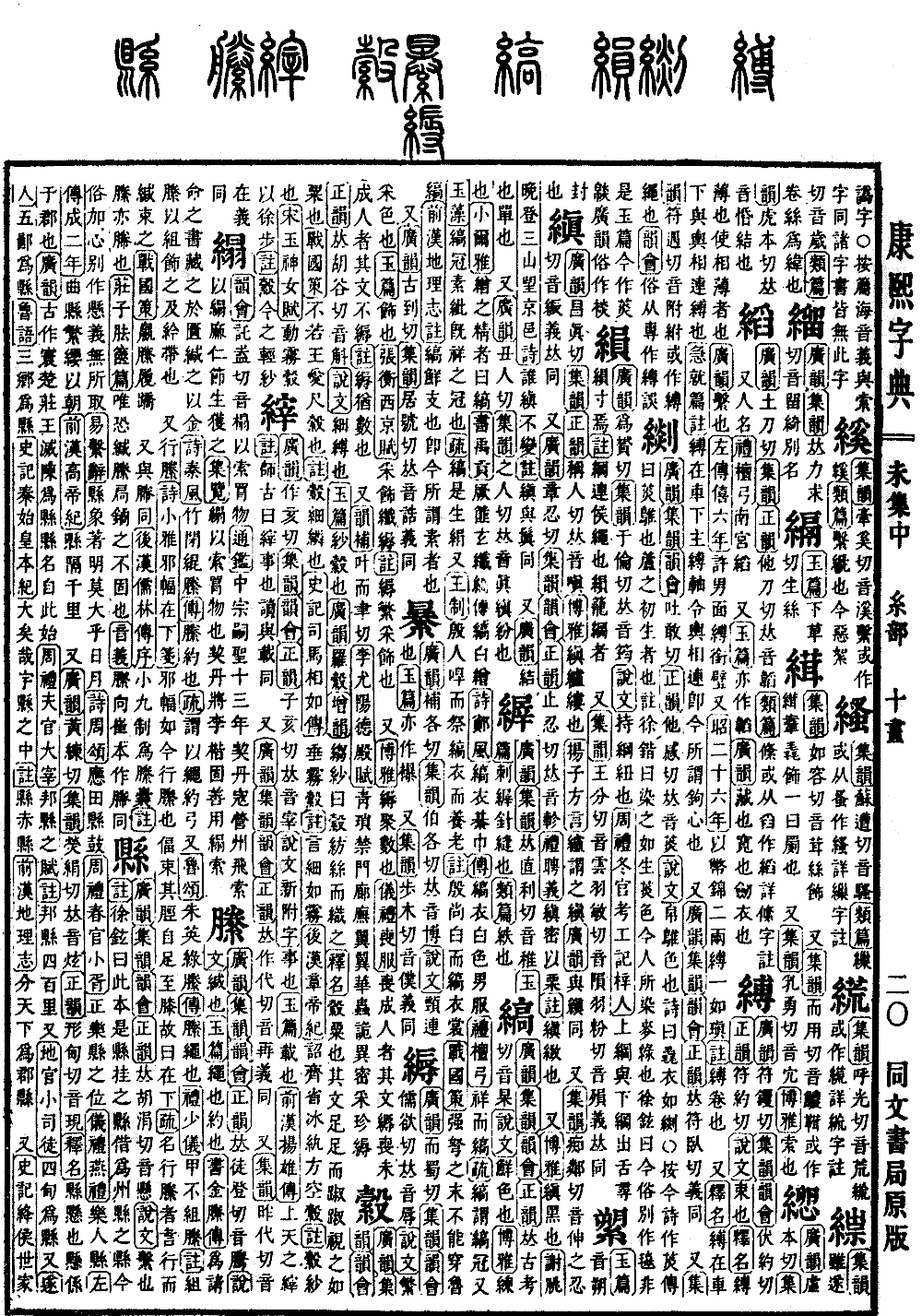
Wei Collection, Middle Volume
Radical: Silk (mì)
Kangxi Strokes: 16
Page 934, Entry 22
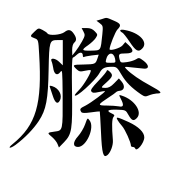
Pronounced teng.
According to the Explaining Graphs and Analyzing Characters (Shuowen Jiezi), it means to seal or bind. According to the Jade Chapters (Yupian), it means a cord or to bind. In the Book of Documents (Shujing), specifically the Metal Bound Coffer (Jin Teng) commentary, it refers to a written prayer for a life, placed in a chest and sealed with metal. In the Book of Odes (Shijing), Qin Wind section, it mentions bamboo, covers, and cords; the commentary states that the cord refers to a binding. The sub-commentary explains this as using a rope to bind a bow. Also in the Odes, Lu Eulogies, it mentions red tassels and green cords; the commentary states that the cord is a rope. In the Book of Rites (Liji), Shanyi section, it says armor should not be bound with silk cords; the notes explain that these are cords made of silk, including the sash. Also, a leg wrap (xing teng). In the Book of Odes (Shijing), Minor Odes, the notes on wrapped leggings mention that these are like modern leg wraps, used to bind the shin from the foot to the knee, hence they are described as being at the bottom. The sub-commentary explains that they are named leg wraps because one walks while they are bound. In the Strategies of the Warring States (Zhan Guo Ce), it mentions Ying binding his shoes. It is also synonymous with the term for a bag (teng). In the Preface to the Biographies of Confucian Scholars in the History of the Later Han (Hou Hanshu), it says the small ones were fashioned into bound bags; the notes explain that this cord is the same as a bag. In the Zhuangzi, section on Opening Trunks, it says one only fears that the seals, bindings, bars, and locks are not secure; the phonetics and meanings section notes that in the Xiang Cui edition, it is written as the character for bag, and they are identical.
Textual research: In the Preface to the Biographies of Confucian Scholars in the History of the Later Han (Hou Hanshu), the original text contains a typo, which has been corrected according to the source.