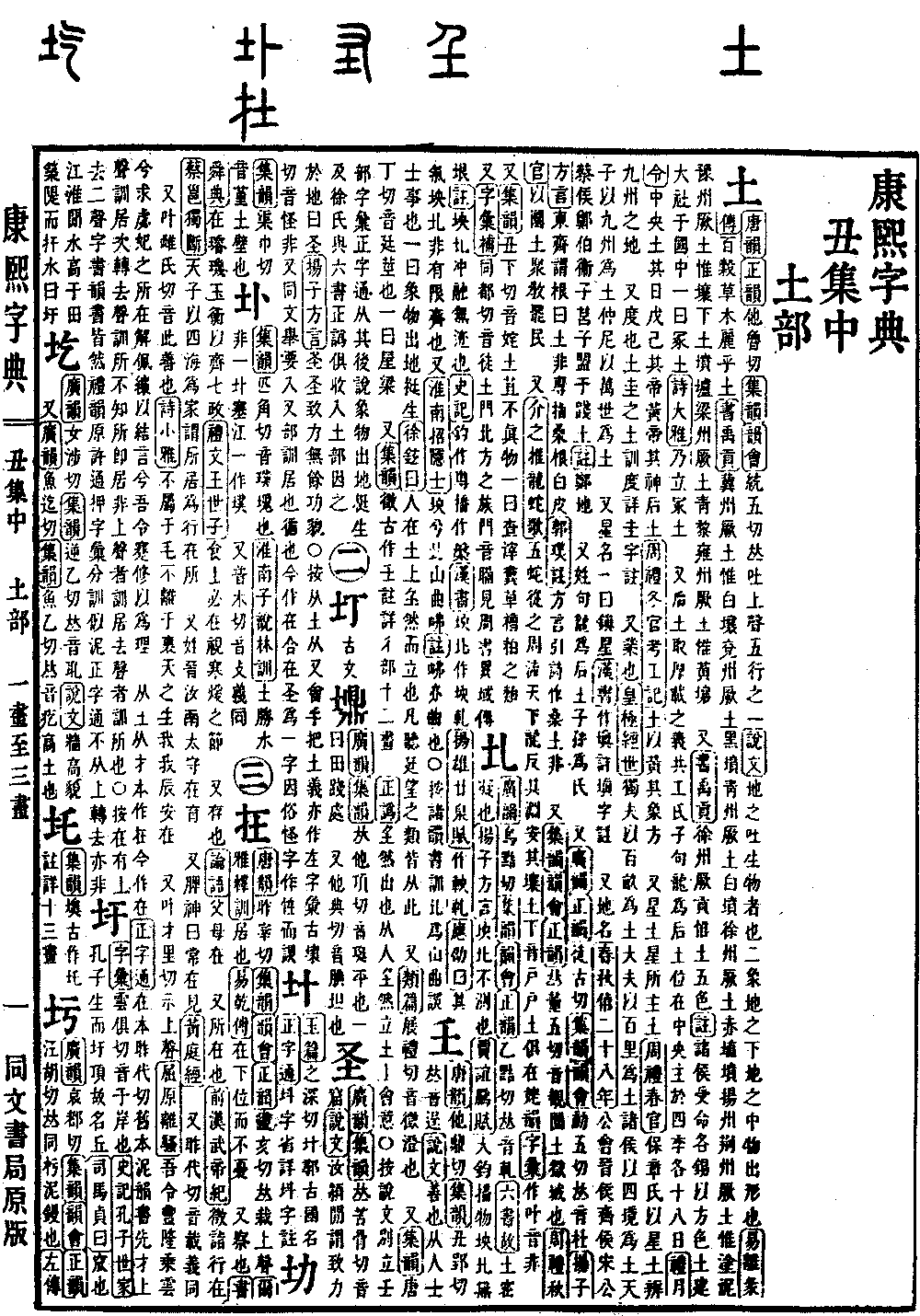
Wei Collection, Middle Volume
Radical: Ear (ěr)
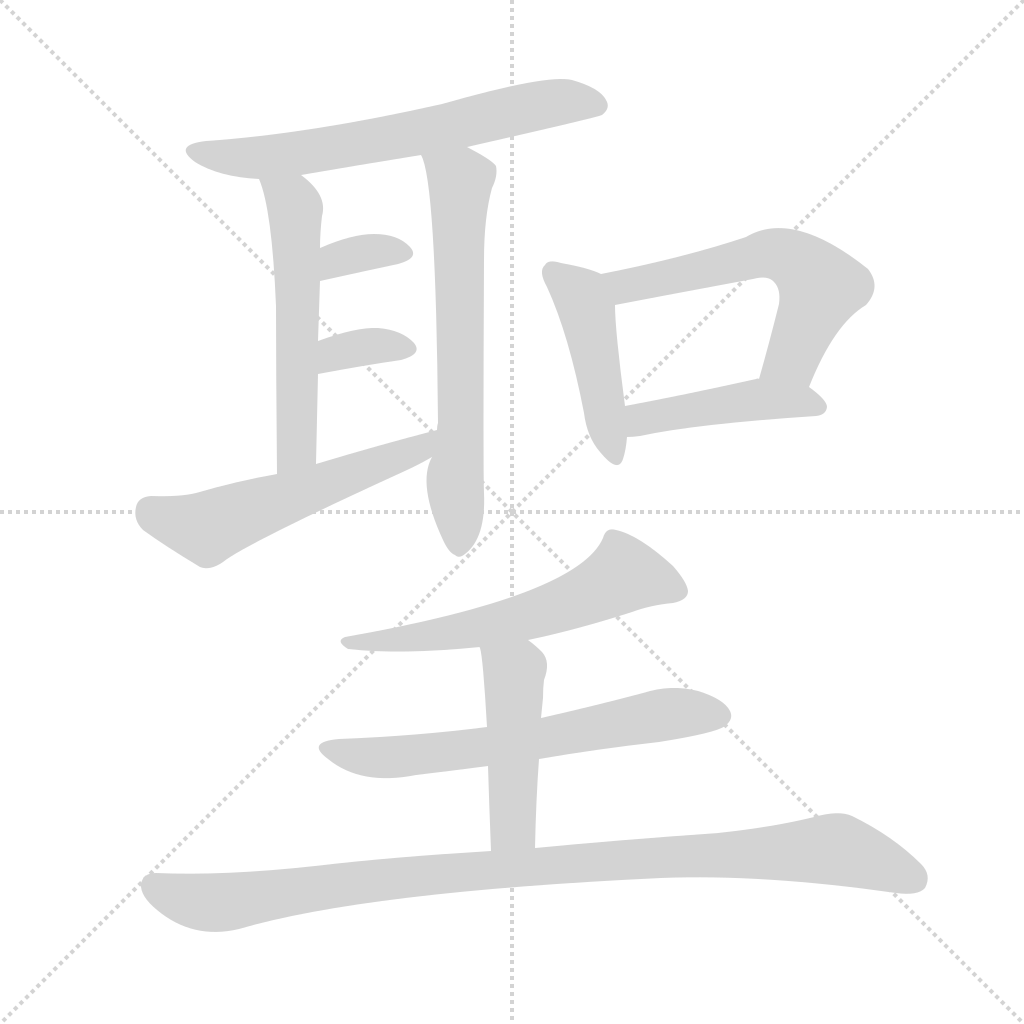
Saint (shèng)
Kangxi Strokes: 13
Page 223, Entry 06
Ancient script forms. From Tang Rhymes (Tangyun), Collection Rhymes (Jiyun), Rhyme Gathering (Yunhui), and Standard Rhymes (Zhengyun), all indicate the pronunciation is sheng (falling tone).
Book of Changes (Yijing), Qian Hexagram: The saint appears and all things are made visible.
Book of Documents (Shangshu), Great Plan (Hongfan): To be wise and reach understanding is called saintly.
Commentary: To be thorough and without gaps in understanding matters is called saintly.
Book of Rites (Liji), Rite Evolution (Liyun), Commentary on the Elites of the Three Dynasties: One who stands out among ten thousand is called a hero, one whose ability is doubled compared to a hero is called a saint.
Mencius: One whose virtue is vast and who can integrate all knowledge is called a saint.
Customs and Traditions (Fengsutong): Saint means sound. It refers to the ability to understand the reality of a situation merely by hearing its sound, thus it is called saintly.
Also, in the Law of Posthumous Titles: One who is skilled in composing literary works is called saintly; one who treats guests with profound respect and generous etiquette is called saintly.
Also, a type of tree. Classic of Mountains and Seas (Shanhaijing): To the north of Mount Kaiming stands the saint-tree. Commentary: Eating its fruit allows one to possess wisdom and deep understanding.
Also, a river name. Commentary on the Water Classic (Shuijingzhu): The Saint River originates in the east of Shanggu, flows north of Changxiang County, then flows east past Anci County, before entering the sea.
Also, a surname.
Also, Rhyme Supplement (Yunbu): Rhymes with cheng. Chang Qu, Eulogy for the Chronicles of Huayang (Huayang Guozhi): Zhongyuan is humble and rigorous, serving as a model for the state. Ziyun possesses broad learning, with literary talent that is bright and grand.