Zi Collection, Page Position: Lower
Radical: Strength (lì)
Kangxi strokes: 12
Page number: 148, entry 31
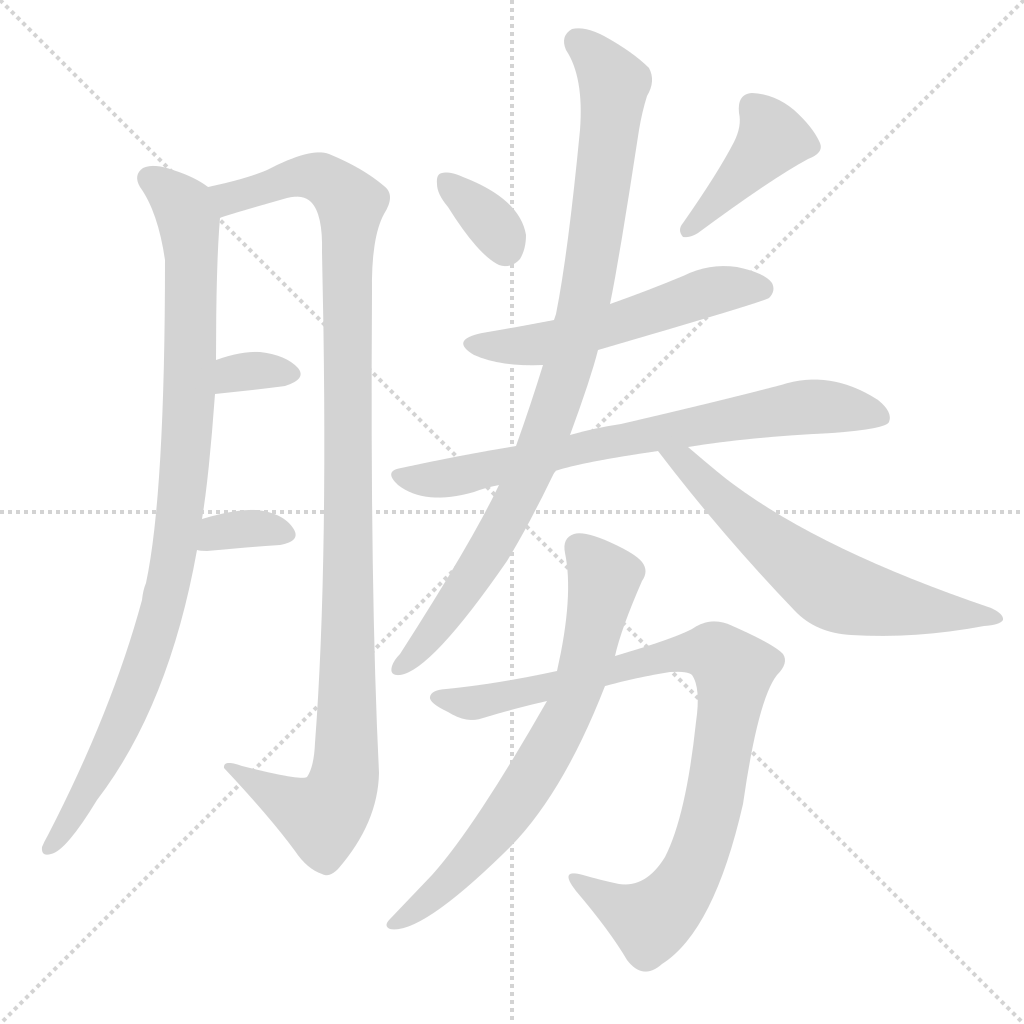
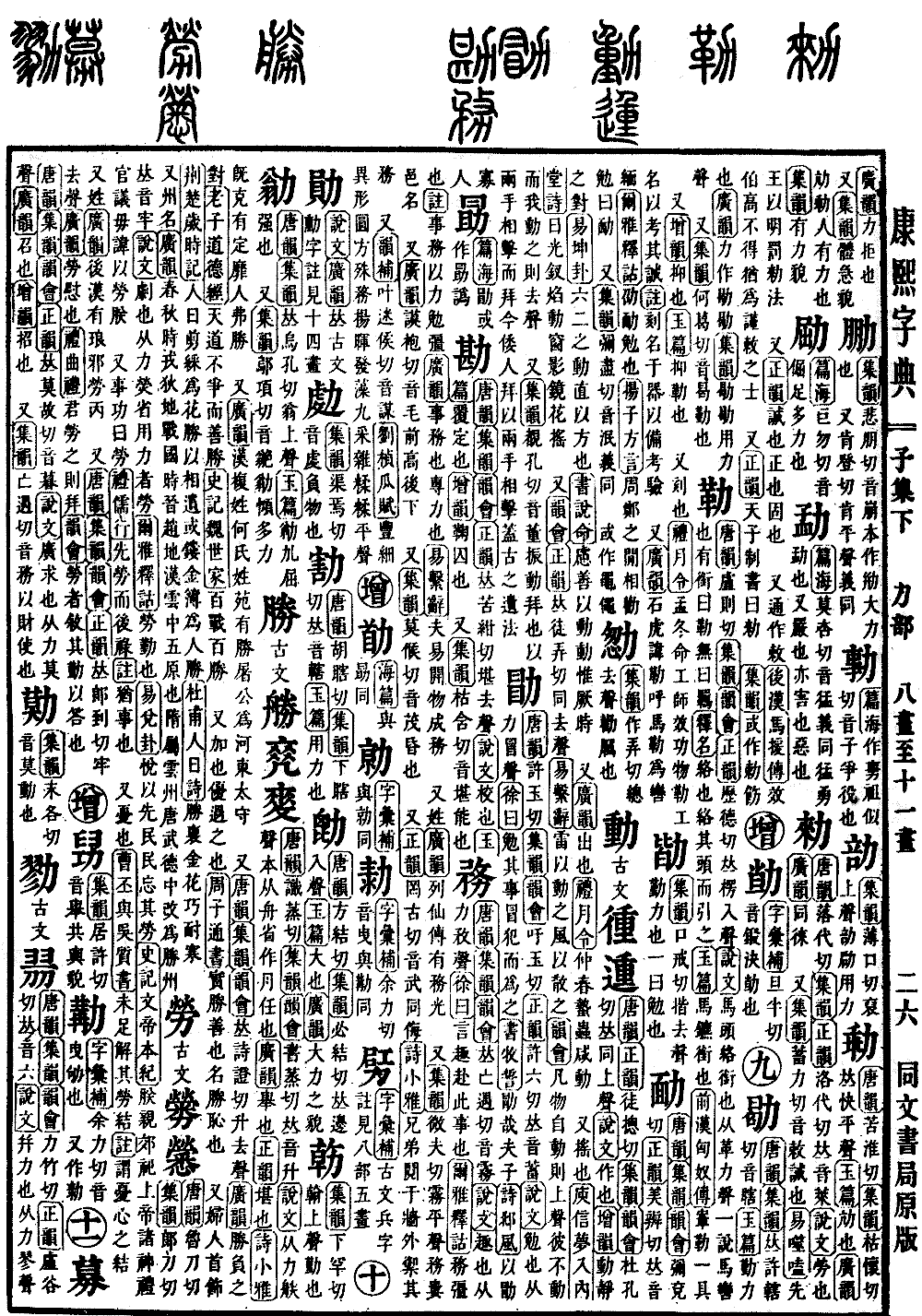
Ancient form. According to Tangyun, the pronunciation is shī zhēng qiè. According to Jiyun and Yunhui, the pronunciation is shū zhēng qiè, sounding like sheng. Shuowen says: It is formed from the radical Strength (lì), with sheng as the phonetic component. Originally formed from zhou, simplified to yue. It means to bear or undertake. Guangyun says: to lift. Zhengdun says: to be capable. 'Once established and resolute, there is no one who cannot prevail' — Book of Odes (Shijing).
Also, according to Guangyun, a double-barrelled surname from the Han dynasty. He's Compendium of Surnames (He Shi Xingyuan) mentions Sheng tu gong, who was the Grand Administrator of Hedong.
Also, according to Tangyun, Jiyun, and Yunhui, the pronunciation is shī zhèng qiè. Sheng in the departing tone (qù shēng). Guangyun says: Sheng is the opposite of fù (defeat). 'The Way of Heaven does not contend, yet it excels at winning' — Laozi's Daodejing (Laozi Daodejing). 'A hundred battles, a hundred victories' — Records of the Grand Historian (Shiji).
Also, to add, to surpass, to excel. From Master Zhou's Explanations (Zhouzi Tongshu): 'Substance excelling goodness, fame excelling shame.'
Also, a woman's head ornament. From Seasonal Records of Jingchu (Jingchu Suishiji): 'On Renri, people cut colored silk to make huasheng as gifts, or carve thin gold sheets to make rensheng.' From Du Fu's 'Poem on Renri' (Renri Shi): 'Within the sheng, golden flowers cleverly endure the cold.'
Also, a name of a prefecture. According to Guangyun: In the Spring and Autumn period, it was the land of the Rongdi; in the Warring States period, the land of Jin and Zhao; in the Han dynasty, it was Yunzhong and Wuyuan. During the Sui dynasty, it belonged to Yunzhou. In the Wude reign of the Tang dynasty, it was renamed Shengzhou.
Correction: In Seasonal Records of Jingchu (Jingchu Suishiji), 'cut colored silk to make huasheng as gifts, or carve jinbu to make rensheng.' The original text jinbu is hereby corrected to jinbo.