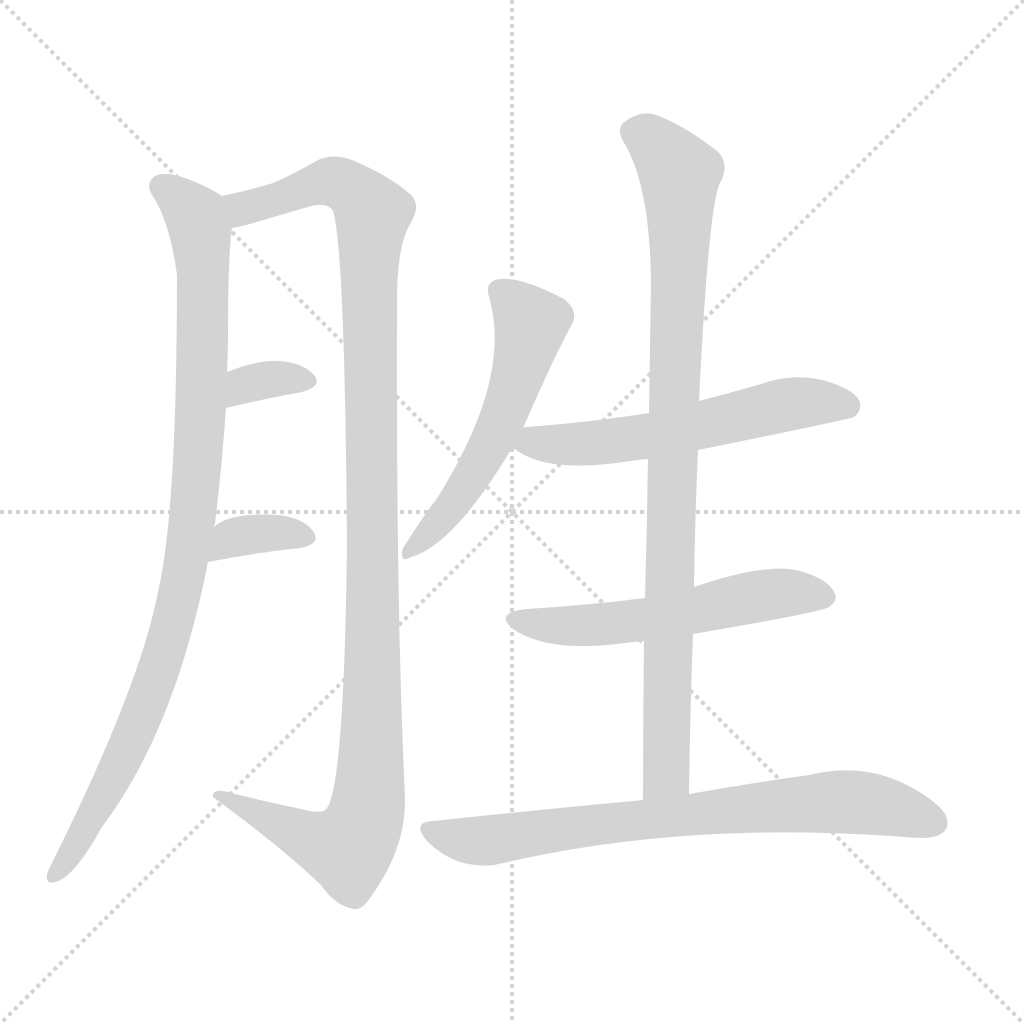
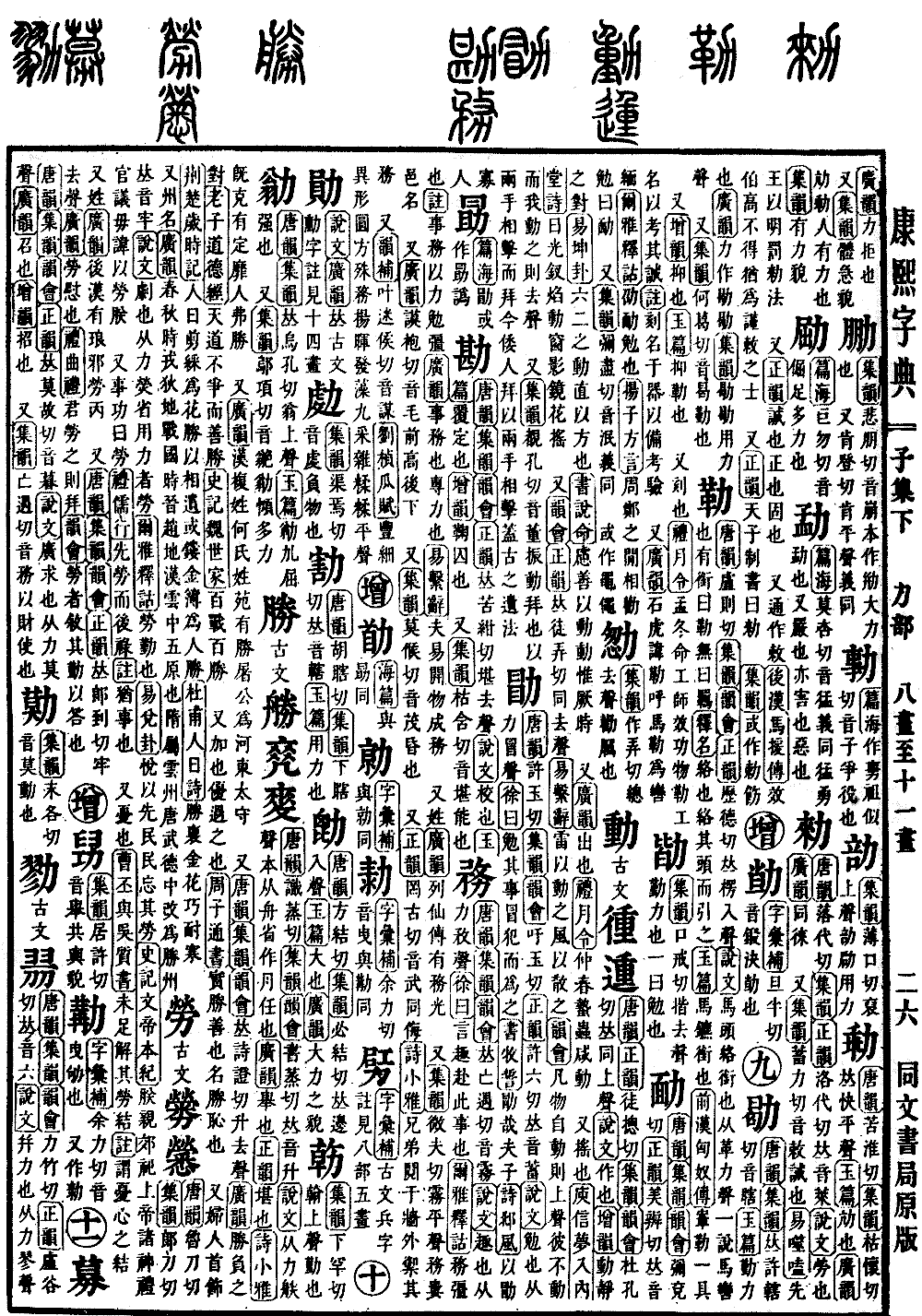
Wei Collection, Lower Volume
Radical: Meat (ròu)
Kangxi stroke count: 12
Page 148, Entry 01
Tang Rhyme (Tangyun), Collection Rhyme (Jiyun), and Rhyme Assembly (Yunhui) define it as pronounced xing (level tone).
Explaining Writing (Shuowen) states it refers to the odor of dog fat. The character is formed from the elements for meat and life, which serve to represent both the meaning and the sound. One interpretation is that it refers to food that is not thoroughly cooked. Xu Kai cites the Book of Rites (Liji), stating that when rice is cooked with this fat, it reaches a state of being fully prepared. The commentary on the Book of Rites, Internal Rules (Neize), specifically regarding the section on autumn offerings of veal and fawn, notes that the pronunciation is xing (level tone), referring to chicken fat. Explaining Writing (Shuowen) records the character as this, stating: the odor of dog fat.
Additionally, according to Collection Rhyme (Jiyun), it is pronounced jing (falling tone). The Classic of Mountains and Seas (Shanhaijing) mentions a bird found on Jade Mountain named sheng-yu. The commentary states the pronunciation is xing (falling tone).
It is also pronounced xing (falling tone). This is a variant of the character for raw or rank meat (xing). When stars appear, feeding pigs is said to cause small polyps to grow in the meat.
Additionally, according to Five Sound Collection Rhyme (Wuyin Jiyun), it is pronounced sheng (level tone). It refers to raw meat used for sacrificial offerings.
Textual research: One interpretation is that it refers to being uncooked. Xu cites the Book of Rites (Liji), writing: the rice is cooked with fat and the vegetables are fully prepared. Based on the original text, the phrase has been corrected from drink to rice.