Wei Collection, Lower Volume
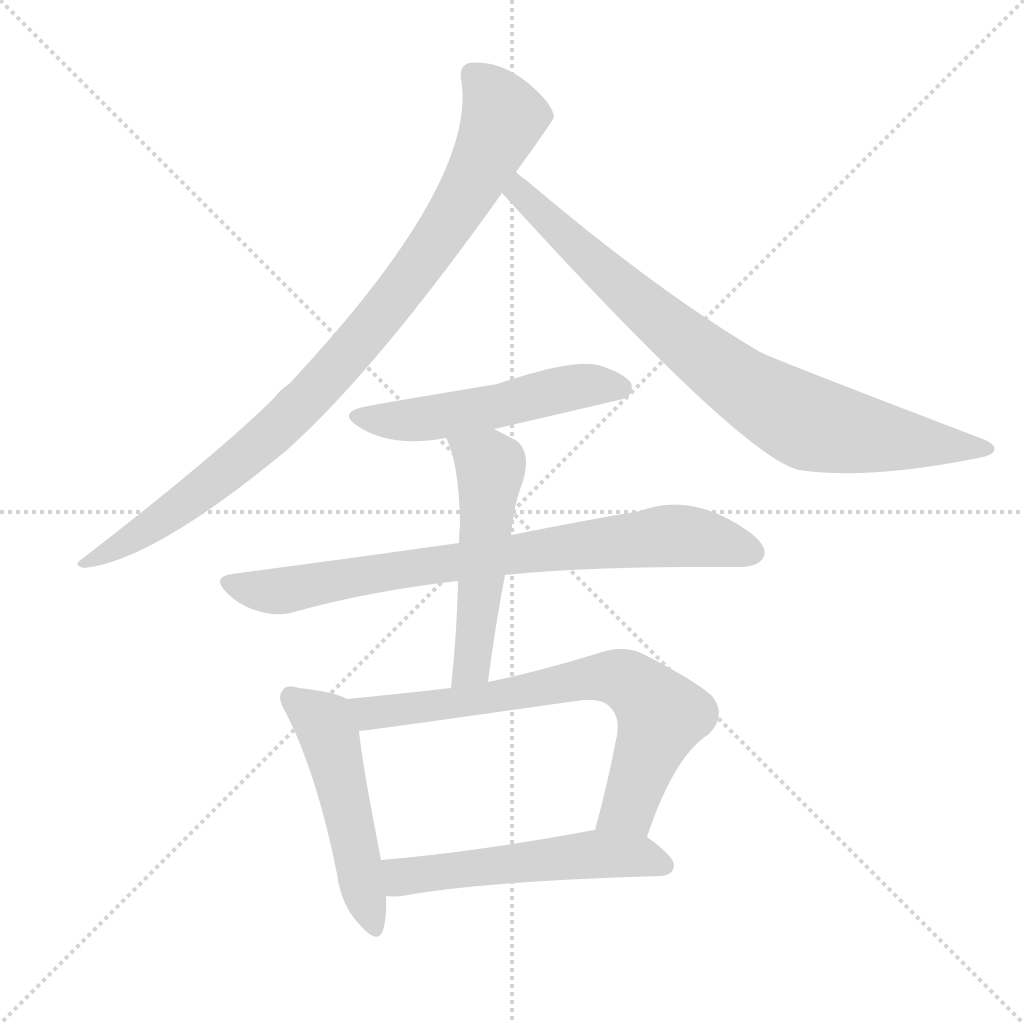
Radical: Tongue (shé)
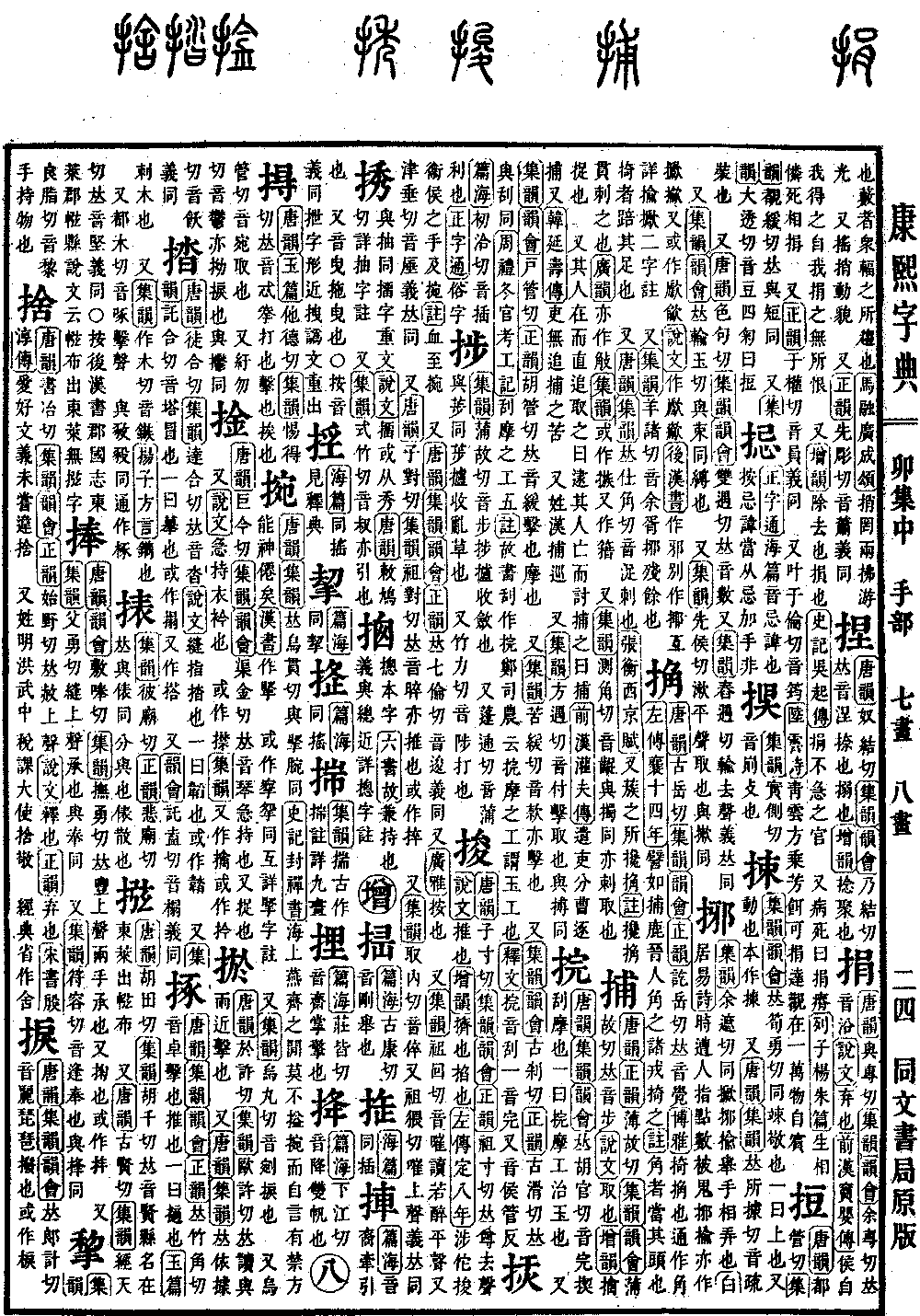
Page 434, Entry 01
Guangyun (Guǎngyùn): Pronounced she (falling tone).
Jiyun (Jíyùn), Yunhui (Yùnhuì), Zhengyun (Zhèngyùn): Pronounced she (falling tone).
Shuowen (Shuōwén): To reside in a market is called she.
Shiping (Shì míng): She implies resting within a space.
Book of Rites (Lìjì), Qu Li: When traveling and seeking lodging, do not be rigid.
Commentary: This refers to traveling and staying at an inn.
Sub-commentary: To go means to travel. She refers to the host's house.
Rites of Zhou (Zhōulǐ), Heavenly Officials, Palace Master: At the appropriate time, manage the government offices within the palace and the number of subordinate lodges.
Commentary: Subordinate refers to officials on duty or sleeping over, similar to the current arrangement of rooms. She refers to the office where they reside.
Book of Han (Hànshū), Annals of Emperor Gaozu: Emperor Gaozu happened to come from a side lodging.
Also, in the Biography of Wang Mang: A village district and a visiting lodge.
Commentary: A place that does not lodge guests is called a village district; one that lodges guests is called a visiting lodge.
Also means to rest.
Book of Odes (Shījīng), Xiaoya: If you can walk safely, why not take time to rest?
Commentary: If you can walk safely, why not take time to rest?
Book of Han (Hànshū), Annals of Emperor Gaozu: Then traveled west to enter Xianyang, intending to stop at the palace to rest.
Commentary: Shigu stated: She means to rest, to relax within the palace.
Also, the sun’s journey has stopping points.
Huainanzi, Treatise on Astronomy: The sun enters the abyss of the Yu abyss, and dawns at the banks of the Meng valley. It travels nine continents and seven stops.
Guo Pu, Traveling Immortal Poems: Returning the sun toward three stops.
Commentary: Of the twenty-eight mansions, one mansion is called one she.
Also, when an army stops for one night, it is called a she.
Zengyun (Zēngyùn): Also, thirty-five li is one she.
Zuo Tradition (Zuǒzhuàn), Year 23 of Duke Xi: Jin and Chu were organizing their troops and met at Zhongyuan; they avoided the ruler by three she.
Commentary: One she is thirty li.
Also, in Buddhist texts: One krosa.
Commentary: Four li make one krosa. One li is three hundred and sixty steps, so one krosa counts as one thousand four hundred and forty steps.
Also, to stop.
Book of Rites (Lìjì), Monthly Ordinances: In the month of mid-spring, farmers do little stopping.
Commentary: She is synonymous with stopping.
Guanzi, Four Qualifications Chapter: A good minister does not employ, yet lets the slanderous and wicked stay.
Commentary: She means to stop, meaning to let the slanderous and wicked stop by his side and stay near him.
Also, to discard or stop.
Book of Changes (Yìjīng), Qian Hexagram: Seeing the dragon in the field; it is a time to pause.
Zuo Tradition (Zuǒzhuàn), Year 5 of Duke Zhao: Discard the central army; it belongs to the public house.
Commentary: To disband the central army.
Also, to place or set aside.
Stratagems of the Warring States (Zhànguócè): It would be better for the king to put the necessities aside and observe what the two men are doing.
Commentary: She is synonymous with placing.
Also, to bestow.
Zuo Tradition (Zuǒzhuàn), Year 12 of Duke Xuan: For the old, offer kindness; for the travelers, provide handouts.
Also, Year 13 of Duke Zhao: Giving and bestowing without fatigue.
Commentary: To give and bestow is like speaking of spreading grace and virtue.
Also, an official title.
Rites of Zhou (Zhōulǐ), Heavenly Officials, Master of Lodging: Manages the lodging for the king's meetings.
Also, Earthly Officials: Lodging Officials.
Commentary: She is like a palace. It refers to those who manage the grain used in the palace. Shigu stated: Lodging officials is a common term for those close to the ruler, which later became the title for private attendants.
Also, to reside.
Book of Odes (Shījīng), Zheng Feng: That person, his dwelling is unwavering.
Commentary: She is synonymous with residing.
Shiewen (Shìwén): She is pronounced zhe. Wang stated: To receive.
Also, to remove.
Book of Odes (Shījīng), Xiaoya: Remove those who have sinned.
Commentary: She means to remove.
Also, to release.
Book of Odes (Shījīng), Xiaoya: Not missing the target, releasing the arrow as if breaking it.
Also, Daya: Releasing the arrow as if balanced.
Commentary: To release means to let go.
Also, to hit.
Book of Rites (Lìjì), Meaning of Archery: Archery is called releasing, or perhaps it means hitting.
Sub-commentary: To hit is the meaning.
Also, to harbor or conceal.
Book of Han (Hànshū), Biography of the Prince of Huainan: Those who harbor or conceal others are all subject to legal judgment.
Commentary: This refers to harboring and hiding someone.
Also, interchangeable with pardon (she).
Book of Han (Hànshū), Biography of Zhu Bo: Deceiving the ruler in affairs, never pardoned.
Also, Jiyun (Jíyùn), Yunhui (Yùnhuì), Zhengyun (Zhèngyùn): Pronounced she (rising tone). To stop and rest, to discard, to set aside.
Analects (Lúnyǔ): Never ceasing day or night.
Book of Documents (Shūjīng), Tang's Oath: Abandoning our farming work to destroy the summer order.
Shiewen (Shìwén): She is pronounced she (rising tone), meaning to discard.
Zuo Tradition (Zuǒzhuàn), Year 4 of Duke Zhao: Ordered Du Xie to discard the road.
Commentary: To place aside.
Shiewen (Shìwén): She is pronounced she (rising tone).
Also, Wuyin Jiyun (Wǔyīn Jíyùn): Pronounced xie.
Yangzi, Dialects (Fāngyán): To set out or release a carriage.
Also, Jiyun (Jíyùn): Pronounced shi. Zhengyun (Zhèngyùn): Pronounced shi. Identical to the character for release (shi).
Rites of Zhou (Zhōulǐ), Spring Officials, Grand Usher: In the spring, students enter school to perform the rite of releasing vegetables and performing dances.
Commentary: She is the same as releasing. Vegetables is read as greens. When first entering school, one must release vegetables to honor the teachers.
Shiewen (Shìwén): She is pronounced shi.
Guanzi, Five Aids Chapter: Therefore, the superiors must be broad and have a way to release and absolve.
Commentary: Jie means to release; she means to exempt.
Shiewen (Shìwén): She is the same as releasing.
Also, Yunbu (Yùnbù): Rhymes with shu (departing tone).
Qu Yuan, Li Sao (Lísāo): I truly knew that being outspoken would be a disaster, yet I endured and could not let go. Pointing to the high heavens as my witness, this is only because of my love for the spiritual being.
Also, rhymes with she (rising tone).
Bai Juyi, Poem imitating Yuanming style: Therefore, in the rain and clouds, I have not left my dwelling for ten days. I begin to realize that for a man living alone, peace of mind makes the time pass.