Xu Collection, Upper Volume
Radical: Gate (mén)
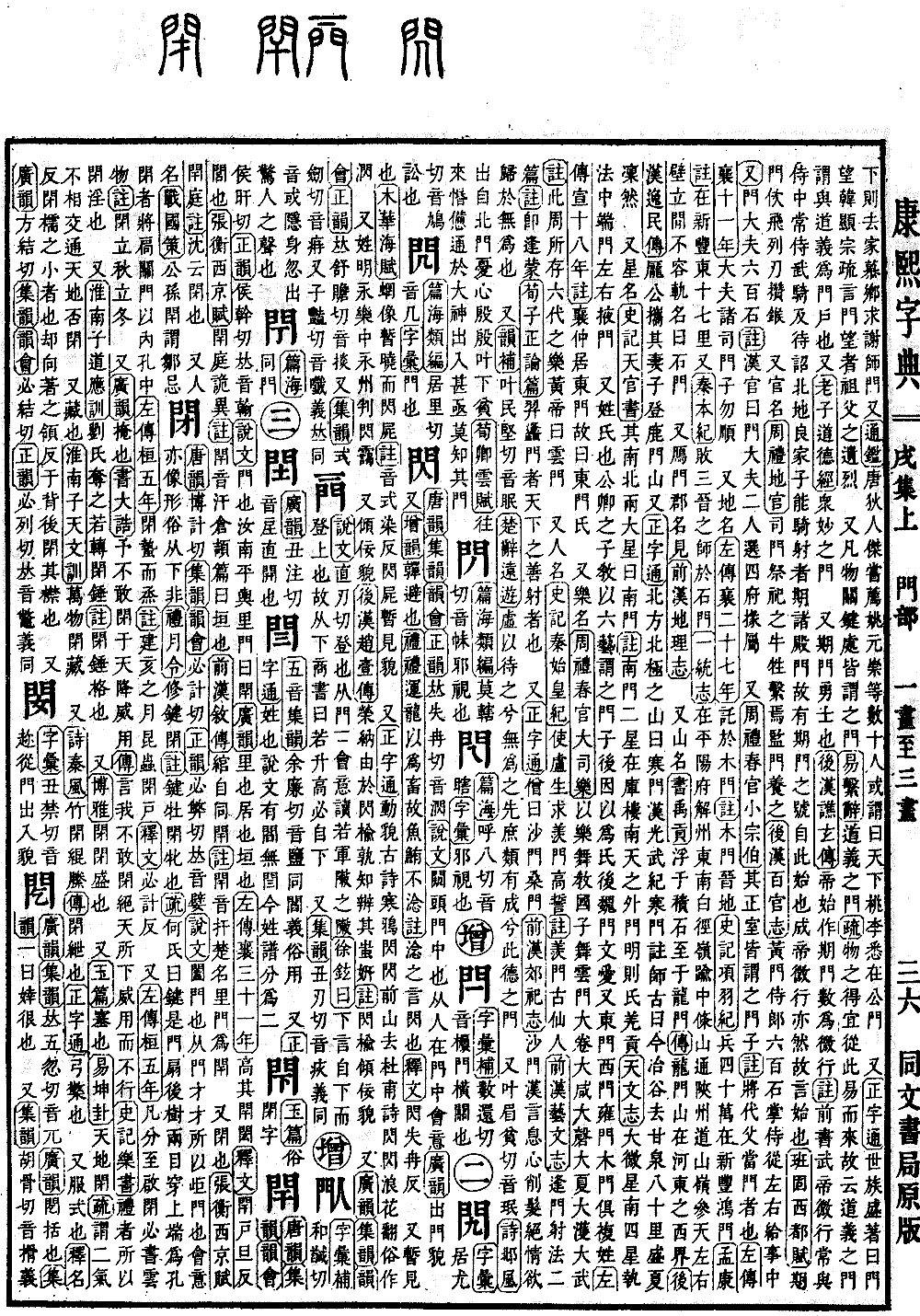
閃
Kangxi strokes: 10
Page 1330, Entry 02
Pronounced shan (rising tone).
Shuowen Jiezi (Dictionary of Explaining and Analyzing Characters): To peer or look through a crack in a door. The character form uses Person (rén) as a component, depicting a person within a door. It is a compound ideograph.
Guangyun (Broad Rhymes): The appearance of exiting a door.
Zengyun (Augmented Rhymes): To dodge or avoid quickly.
Book of Rites (Liji), Record on the Function of Rites: Dragons are considered domestic animals, therefore fish and sturgeons do not dodge (nien). The commentary states that nien means to dodge (shan).
Jingdian Shiwen (Explanation of Classics): Shan is pronounced shan (rising tone).
Appearing briefly.
Mu Hua, Sea Rhapsody (Haifu): The specters appear and vanish briefly. The commentary states the pronunciation is shan (rising tone); it describes the appearance of appearing briefly.
Zhengzitong (True Character Guide): The appearance of shaking or flickering. An ancient poem says: Cold crows flicker (shan shan) as they fly toward the front mountains. Du Fu, Poem: The crests of the waves flicker (shan shan) and turn over.
Commonly written as a variant form.
Surname. During the Yongle era of the Ming dynasty, there was a judge of Yongzhou named Shan Ai.
The appearance of fawning or sycophancy.
Book of the Later Han (Hou Hanshu), Biography of Zhao Yi: Honor is attained through sycophancy (shan yu), who can distinguish the beauty from the ugliness? The commentary states that shan yu refers to the appearance of fawning or sycophancy.
Pronounced shan (falling tone).
Pronounced jian (falling tone).
Pronounced yan (falling tone).
All meanings are the same.