Shen Collection, Upper Volume
Radical: Grass (cǎo)
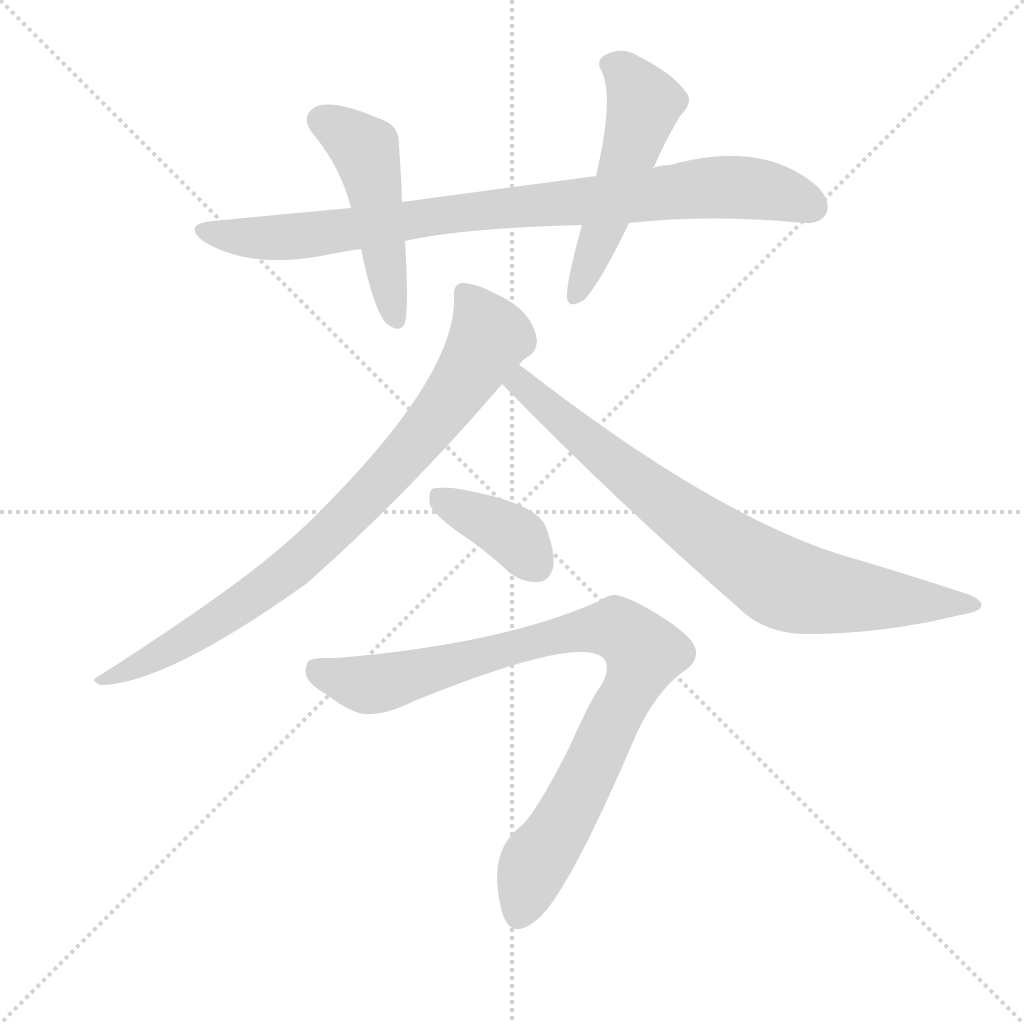
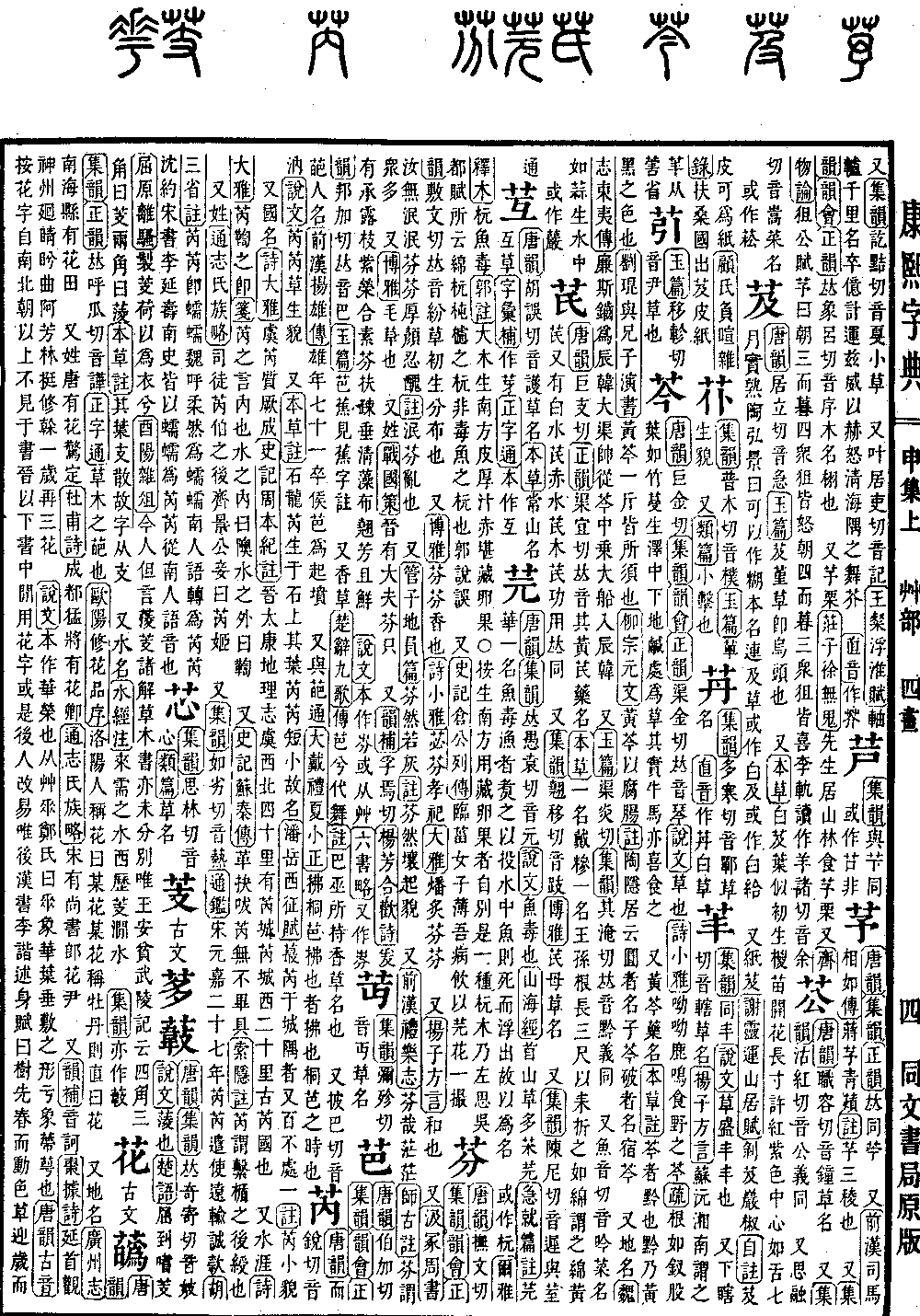
Qin
Kangxi strokes: 10
Page 1020, Entry 09
Pronounced qin.
According to the Explaining Graphs and Analyzing Characters (Shuowen Jiezi), it is a type of grass.
In the Book of Odes (Shijing), Small Odes (Xiaoya) section: The deer cry out "you you," and feed on the qin in the fields. The commentary states: The roots resemble hairpins, and the leaves resemble bamboo leaves; it grows in tangled masses in marshy, low-lying, saline-alkali lands. It is a type of grass, and both cattle and horses enjoy eating it.
Also, Huangqin (Yellow Qin) is a medicinal name. The commentary to the Materia Medica (Bencao) states: Qin is the same as qian. Qian refers to a yellowish-black color. Liu Kun in his letter to his nephew Yan says: One pound of Huangqin is needed. The writings of Liu Zongyuan state: Huangqin can erode the intestines. The commentary by Tao Hongjing says: The round ones are called ziqin, and the split ones are called suqin.
Also a place name. In the Records of Wei (Weizhi), Eastern Barbarians (Dongyi) chapter: Liansi Tan was a great leader of the Chenhan, who traveled from Qin in a large boat to enter Chenhan.
Also, pronounced qian. The meaning is the same.
Also, pronounced yin. A vegetable name. It resembles garlic and grows in water. Sometimes also written in a variant form.
Textual research: In the commentary to the Book of Odes (Shijing), the original text stated it is a grass and that its fruit is also eaten by cattle and horses. Following the original text, the term for fruit has been corrected to the term for true/actual.